💎 Gemstone Hardness Explained Without the Boring Part (Mohs in Real Life)
🧭 The 60-Second Take
You’re scrolling through an online jewelry store, eyeing a stunning sapphire ring. The pictures look dreamy, the price seems reasonable, and there’s a certificate attached. But is it as tough and durable as you hope? How do you navigate the sparkly world of gemstone hardness without getting lost in the jargon?
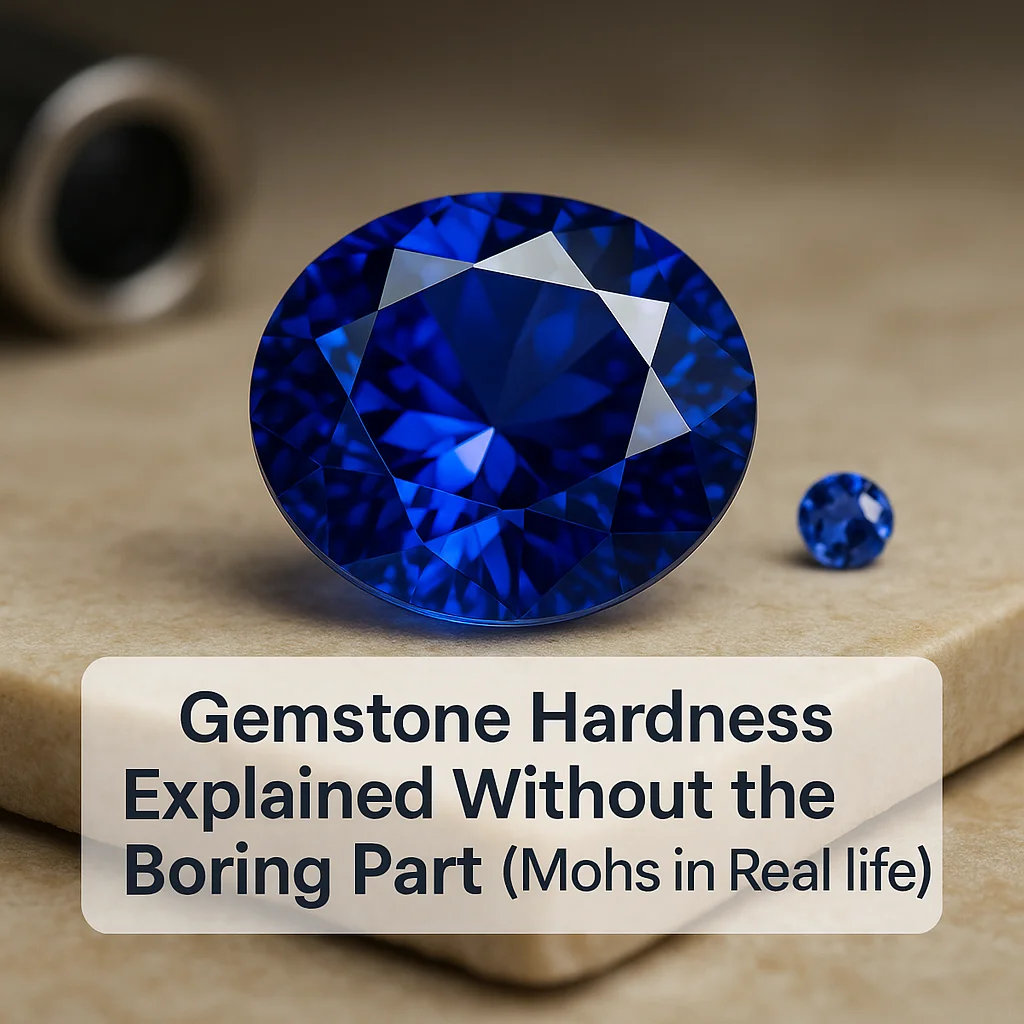
We’ve all heard about Mohs scale, but the real question is how it impacts your buying decision. Understanding why hardness matters helps protect your investment. Let’s cut through the clutter and arm you with practical tips.
- Research the type and hardness of the gemstone you're interested in.
- Check reputable sources for comparative hardness charts.
- Validate the gemstone’s origin and cut if possible through trusted jewelers.
- Avoid relying solely on pictures and certificates; understand their limitations.
- Ask sellers direct questions about treatments or enhancements.
- Examine return policies carefully to avoid regretful purchases.
- Understand that perfect-looking stones in photos can be misleading.
- Consider the setting type as it can affect gemstone durability.
🧪 What Actually Makes It “Real”
In today’s market, gems can be natural, lab-grown, imitation, or assembled. Natural gemstones come straight from the earth, while lab-grown gems are chemically identical but created in controlled environments. Imitations, often made from glass or plastic, mimic the appearance but not the substance. Assembled gems, like doublets or triplets, are combinations of materials bonded together.
What you see in photos often lacks the depth and detail necessary to make informed judgments. An unbeatable price may hint at an imitation. Certifications provide useful details, but they do not replace hands-on verification. Buy from reputable sources and consult professionals for valuable or complex pieces.
🔍 My Buyer Checklist (Step by Step)
- Explore the stone type and hardness: If unsure, research online guides.
- Check certifications: If available, understand what they verify.
- Compare pricing: If suspiciously low, investigate potential reasons.
- Evaluate the seller’s reputation: If unreviewed, proceed with caution.
- Ask about gemstone treatments: If yes, inquire about their impact.
- Inspect lighting in photos: If overly bright, manage expectations.
- Assess return policies: If inflexible, consider other vendors.
- Read customer testimonials: If possible, find unbiased reviews.
- Ask questions: If any doubts arise, contact the seller directly.
- Think about long-term use: If high-wear, prefer durable stones.
- Gage stone setting: If prone to damage, reconsider your choice.
Using this checklist can help clarify choices without panic. Methodically assess each factor instead of rushing into decisions guided by impulse or pressure.
⚠️ Mistakes People Make (And the Fix)
- Relying on perfect photos: Validate with real-life checks.
- Overvaluing certificates: Understand their scope and limits.
- Ignoring lighting effects: Test in various lights if possible.
- Skipping return policy reviews: Read terms before buying.
- Overlooking treatments: Ask what enhancements were applied.
- Trusting solely in price tags: Correlate price with value.
- Forgetting about wearability: Consider daily impact of use.
- Not asking about maintenance: Learn safe care practices.
- Assuming harder means better: Recognize that all gems have vulnerabilities.
- Skipping professional advice: Consult experts for high-value items.
🎨 Look & Red Flags That Matter
Understanding your stone's look under real conditions is crucial. Lighting can dramatically alter a gem's appearance, highlighting or concealing inclusions. Cut and polish affect brilliance, while surface coatings may fade with wear. Inclusions, natural or manmade, are part of a gem’s character.
Various treatments, like heat or irradiation, are common in the market. These can enhance beauty but may also impact durability. Always ask about treatments to understand these effects fully. Note that dyed gems, while visually appealing, might not retain their color.
🧼 Care & Storage (Safe Defaults)
- Use mild soap and water for routine cleaning.
- Avoid ultrasonic cleaners for porous or treated stones.
- Store gemstones separately to prevent scratches.
- Keep away from extreme temperature changes.
- Avoid chemical exposure, such as hairspray and perfumes.
- Use soft cloths for polishing to prevent surface damage.
- Inspect settings regularly to ensure gemstone security.
- Avoid rough handling, particularly for softer stones.
- Don’t expose dyed or treated gems to prolonged sunlight.
- Protect opals, pearls, and similar delicate gems from dry environments.
- Reserve special care for emeralds and other inclusively rich stones.
- Never use steam cleaning for fragile or composite stones.
🧾 What Certificates Can (and Can’t) Prove
Certificates are an invaluable source of information, detailing a gemstone’s characteristics, treatments, and sometimes, origin. Reputable labs provide assessments regarding a gem’s authenticity and quality, but they don’t necessarily capture everything about durability or wearability.
Sellers may exaggerate certificate information to enhance appeal, so it’s crucial to understand what these documents do and do not verify. If purchasing a high-value stone, investing in a certificate from a respected laboratory can provide peace of mind but shouldn't replace due diligence.
For buyers, a report adds an extra layer of transparency, so it's worth it for significant purchases. Always consider the overall context, including visual inspection and seller reputation.
❓ Quick Questions Buyers Ask
Q: How does the Mohs scale work in real life?
A: It measures scratch resistance. Hard gems scratch softer ones.
Q: Are natural gems always better?
A: It depends on your preference for uniqueness and budget.
Q: Can I rely on online photos?
A: Only partly; they can be misleading without further verification.
Q: What if the certificate is missing?
A: Request info from the seller or consider the purchase carefully.
Q: Do all gems need certificates?
A: Not always. They're most useful for high-value pieces.
Q: Is a lab-grown gem less valuable?
A: It can be; value often depends on rarity and preference.
Q: Should I worry about scratches?
A: Yes, particularly for daily-wear or softer stones.
Q: Are inclusions bad?
A: Not necessarily; they can add character but affect clarity.
📌 If You Only Remember 5 Things
- Understand the type and hardness of the gem you want.
- Certificates are helpful but not foolproof.
- Test gem appearances in varied lighting.
- Be mindful of common treatments and their impacts.
- Consider durability for everyday wear stones.
- Cleaning and storage matter: follow safe practices.
- Consult experts for significant gem purchases.