💎 Rose Quartz: Why Some Pieces Look Cloudy (And Which to Pick)
🧭 The 60-Second Take
You’ve finally found a piece of rose quartz jewelry online that checks all your boxes, but the images leave you perplexed. Some seem clear and radiant while others appear murky and dull. It’s enough to make any buyer wary.
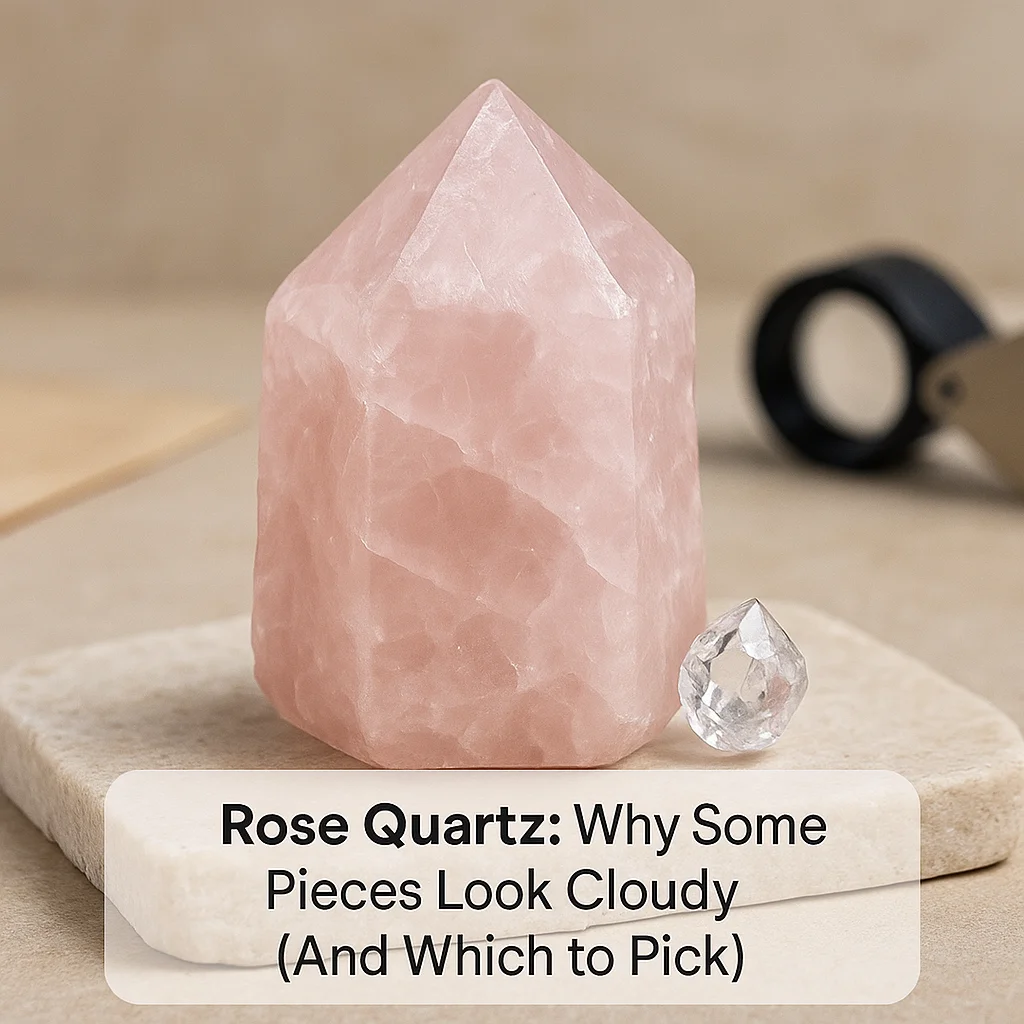
Lighting tricks and clever photography can play a significant role in this difference. The term "cloudy" is thrown around often, but without clear standards. Understanding why some rose quartz pieces appear cloudy can help you make more informed decisions.
Here's how to start making better buys today:
- Scrutinize seller photos critically; look for consistent lighting.
- Request detailed information on the stone's treatment history.
- Consider reputable gemological testing for high-value pieces.
- Familiarize yourself with common terms and biases found in “certificates.”
- Ask for a return policy that includes assessment time for authenticity.
- Be cautious of bargain-basement pricing if it seems too good to be true.
🧪 What Actually Makes It “Real”
The gemstone market offers natural, lab-grown, and imitation varieties. Natural rose quartz forms over millions of years, while lab-grown quartz mimics these conditions but in a shorter time. Imitations, often glass, merely look like the real thing.
It's crucial to understand that photos alone can’t reveal whether a stone is genuine. A low price might suggest an imitation, but this isn't a definitive indicator. Similarly, certificates can offer some insight, yet they vary in detail and legitimacy.
A gem’s authenticity often requires a trusted lab report. For everyday purchases, leaning on reputable sellers with transparent business practices can serve as a strong alternative.
🔍 My Buyer Checklist (Step by Step)
- Examine the gemstone's uniformity in online photos. If varied, request more images.
- If the price is lower than average, ask why. If not satisfied, move on.
- Check for visible inclusions; these are normal but should be limited.
- Confirm the seller's return policy; if it's restrictive, reconsider purchasing.
- If the stone looks “too perfect,” question its authenticity.
- Select sellers who provide clear treatment disclosures.
- Favor pieces with lab certificates, especially for high-value purchases.
- Identify the seller’s customer service reputation through reviews.
- Inquire about the stone’s origin if important to you; genuine sellers know details.
- If unsure, seek professional appraisal post-purchase for peace of mind.
Using this checklist, you can make informed decisions without falling prey to over-analysis. Focus on critical aspects that align with your priorities without succumbing to anxiety.
⚠️ Mistakes People Make (And the Fix)
- Trusting all photos without question. Always ask for different angles.
- Buying from a site with no return policy. Find sellers with customer-friendly policies.
- Ignoring red flags of too-low pricing. Investigate or look elsewhere.
- Not assessing lighting or white balance in photos. Request natural light images.
- Believing certificates as absolute truth. Know they vary in specificity.
- Forgetting to consider the seller’s review history. Prioritize transparency.
- Over-prioritizing clarity. Some cloudiness can be quite natural in rose quartz.
- Avoiding questions due to fear of annoyance. A good seller will address concerns.
- Assuming “perfect” stones are always natural. Real stones often have inclusions.
🎨 Look & Red Flags That Matter
The look of rose quartz in real life can be influenced by factors like lighting, cut, if polished correctly, and inclusions. Brilliant lighting can often enhance perceived clarity, while dull environments might exaggerate cloudiness.
Common treatments, such as irradiation and dye, are used to accentuate the pink hues of rose quartz but should be disclosed by sellers. Surface coatings might also be applied, and these can wear over time.
Market trends often dictate varying standards of what’s acceptable, but a keen eye can discern these subtleties. Transparency from sellers regarding treatments is indispensable. If transparency is lacking, rethink the purchase.
🧼 Care & Storage (Safe Defaults)
- Do use mild soap and water with a soft cloth for cleaning.
- Don’t use harsh chemicals or ultrasonic cleaners.
- Do store in a cloth pouch to avoid scratches.
- Don’t expose prolonged to direct sunlight which can fade colors.
- Do clean gently with lukewarm water regularly.
- Don’t mix with harder gems in storage to prevent abrasion.
- Do consider a professional cleaning service for valuable pieces.
- Don’t wear during rigorous activities that might scratch the stone.
🧾 What Certificates Can (and Can’t) Prove
Certificates from recognized labs provide information on a gem’s natural or synthetic origin, treatments, and sometimes its country of origin. However, they can occasionally omit details or use technical jargon that can mislead an uninformed buyer.
Sellers may exaggerate these certificates by being vague about details such as treatments. A reputable lab report is valuable when confirming the authenticity of high-value stones, but for everyday items, it may not be cost-effective.
Always cross-reference certificates with seller claims, and consult a gemologist if unclear. When acquiring a significant piece, these reports warrant their cost by granting peace of mind.
❓ Quick Questions Buyers Ask
Q: Are cloudy rose quartz pieces less valuable?
A: Not necessarily. Cloudiness can be natural but evaluate the overall gem’s allure.
Q: Can lighting in photos make a stone look clearer?
A: Yes, lighting can greatly enhance or obscure a stone's qualities.
Q: Should all rose quartz have a certificate?
A: Certificates are more crucial for high-value stones.
Q: Does genuine rose quartz change color?
A: Prolonged sun exposure can subtly fade colors.
Q: How can I avoid buying dyed stones?
A: Ask sellers for information on treatments and prefer transparent ones.
Q: Is imitation rose quartz easy to spot?
A: It can be tricky; rely on a combination of price, physical checks, and seller reputation.
Q: Can I use alcohol for cleaning?
A: Avoid using alcohol as it can damage the surface.
Q: What's a reasonable return window?
A: At least 14 days is advisable for proper assessment.
📌 If You Only Remember 5 Things
- Consider lighting and angles in photos critically.
- Availability of a return policy is non-negotiable.
- Natural inclusions are okay; “too perfect” isn’t always better.
- Read and assess certificates carefully, but don’t see them as infallible.
- Consistent seller transparency often indicates trustworthiness.