💎 The Best Gemstones for Daily Wear: My “Ring-Safe” List
🧭 The 60-Second Take
Online shopping for gemstones can feel daunting, especially with photos that sometimes seem too good to be true. Certificates and terms thrown around by sellers can add to the confusion—"Is it really worth this price?"
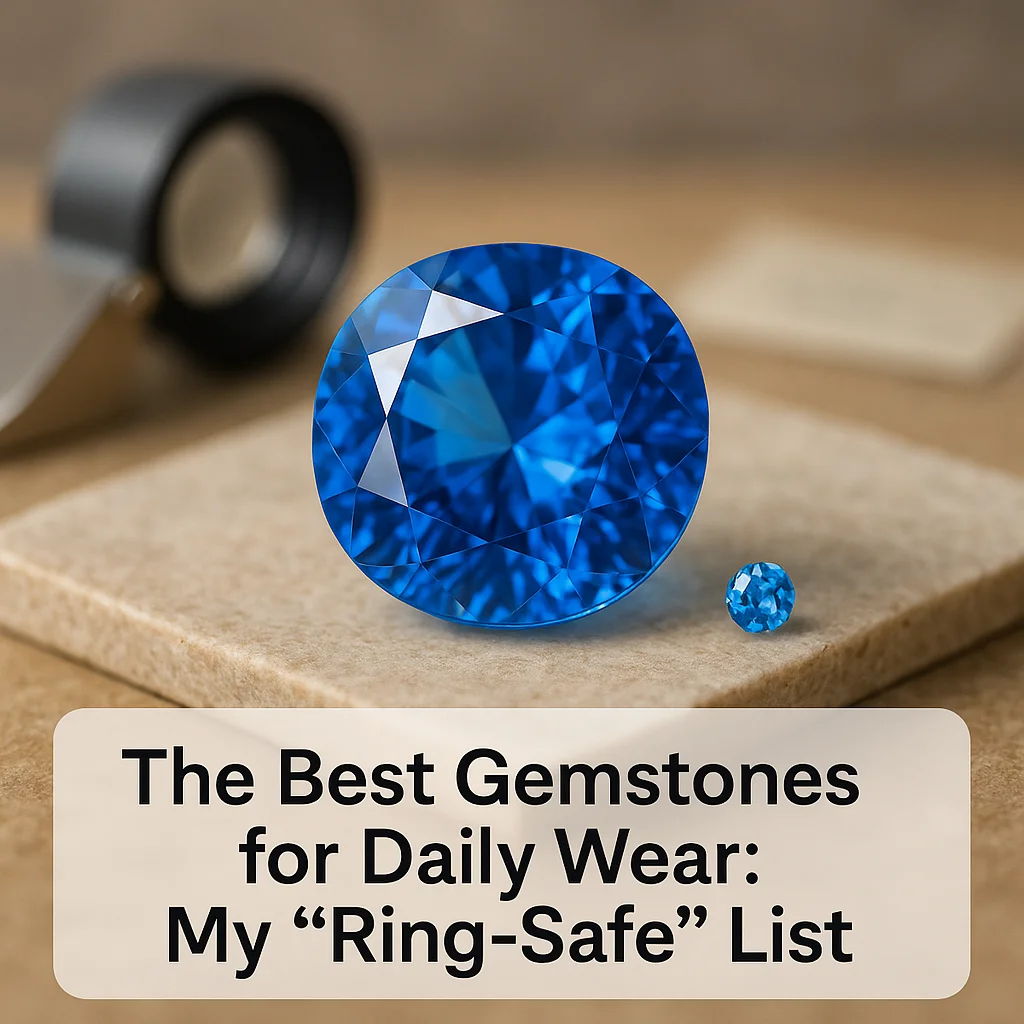
The key is learning what to look for and recognizing red flags that stand out. Many find themselves unsure about their initial choice when faced with various lighting tricks and professional photography that enhance the stone's appeal.
Here’s a practical bullet list to help you navigate through your decision-making journey today:
- Focus on reputable dealers with a return policy.
- Learn basic gemstone terminology to spot imitations.
- Check for consistency in colors across multiple photos.
- Understand the importance of certificates, but don’t rely solely on them.
- Compare prices with market averages to avoid overpricing.
- Investigate the seller’s reviews and past customer experiences.
- Visit a local jeweler to see similar stones in person if possible.
- Always consider lighting and white balance when reviewing photos.
🧪 What Actually Makes It “Real”
Understanding what makes a gemstone "real" involves distinguishing between natural, lab-grown, imitation, and assembled gems. Natural stones are mined from the earth and are unique. Lab-grown stones have the same physical properties as natural ones but are created in a controlled environment. Imitations mimic the appearance but lack the composition of the gemstone they replicate.
Assembled stones, such as doublets or triplets, combine layers of material to achieve a certain look or to improve durability. It’s important to recognize that photos can be deceptive; they may not reveal all aspects. Therefore, a lower price or a missing certificate might suggest a gem isn't natural or superior in quality.
🔍 My Buyer Checklist (Step by Step)
- Research the gemstone's specific properties, including hardness and toughness.
- Verify the source and reputation of the seller or brand.
- If the price seems too low, consider this a warning sign.
- Look for a reliable gemstone certification from recognized labs.
- Examine photos critically, noting any overly perfect, high-gloss images.
- Ask for details on treatments and enhancements.
- Confirm the return policy is clear and fair.
- Inquire about the gem’s provenance and supply chain transparency.
- If the gem is described as "rare," verify which aspect of rarity is being highlighted.
- Seek expertise if confused by conflicting information.
This checklist helps in methodically evaluating a gemstone, reducing the chance of impulsive purchases based on misleading impressions.
⚠️ Mistakes People Make (And the Fix)
- Falling for perfect photography — view stones under different lighting to verify color.
- Skipping the return policy — always confirm before purchasing.
- Assuming all certificates are equal — stick to reputable labs.
- Equating price with quality — research market prices instead.
- Ignoring hidden inclusions — request clarity and magnification details.
- Overlooking the importance of cut — study cutting quality since it impacts brilliance.
- Misjudging without seeing in person — consider visiting a showroom.
- Underestimating the impact of treatments — know what treatments mean for durability.
- Not asking about the stone’s history — query origin and ethical sourcing.
- Believing “too perfect” claims — natural imperfections usually exist.
🎨 Look & Red Flags That Matter
The appearance of a gemstone can greatly vary depending on multiple factors. Lighting can enhance or play down the color and can make inclusions less visible in photographs. The cut and polish determine how the stone reflects light and should be consistent with the quality claimed by the seller.
Watch for surface coatings or dyes as these can temporarily improve appearance but may wear off over time. Jewelers often use coatings, which although not always disclosed, can affect the stone’s durability. Be mindful of enhancements, particularly with rubies and sapphires, which are frequently heated.
🧼 Care & Storage (Safe Defaults)
- Use mild soap and water for regular cleaning.
- Always dry with a soft, lint-free cloth.
- Do not expose to harsh chemicals or ultrasonic cleaners.
- Be cautious with porous stones like opals, pearls, and turquoise.
- Avoid storing gemstones in direct sunlight or extreme temperatures.
- Store separately to prevent scratching.
- Regularly inspect and clean settings and clasps.
- Opals and pearls require moisture; beware of dry storage.
- Avoid sudden temperature changes to reduce the risk of fracturing.
- If unsure about care, consult a professional jeweler.
🧾 What Certificates Can (and Can’t) Prove
Certificates from reputable gemological labs provide detailed reports on a gemstone's authenticity, characteristics, and sometimes its treatment status. Such reports can confirm whether a gemstone is natural or lab-grown, detailing its properties including the cut, color, and clarity.
However, certificates cannot always determine the provenance or ethical sourcing of a gem. They also may not fully assure the stone's treatment history, as some enhancements are difficult to detect. Always weigh the certificate’s insights against other factors like seller reputation and visual inspections.
Investing in a certificate might be worthwhile when purchasing high-value gems as it adds a level of transparency and trustworthiness to your investment.
❓ Quick Questions Buyers Ask
Q: What’s the difference between natural and lab-grown gemstones?
A: They have the same properties; lab-grown stones are made in a lab, while natural ones are mined.
Q: Should I rely solely on certificates when buying a gemstone?
A: No, consider the seller’s reputation and the gem’s visual appearance as well.
Q: What’s a doublet?
A: A doublet combines two materials to mimic a single, higher-value stone.
Q: Are all treatments bad for gemstones?
A: Not always, but they can affect durability and should be disclosed.
Q: Can lighting affect how a gemstone looks?
A: Yes, lighting affects color perception and overall appearance.
Q: How often should I clean my gemstone jewelry?
A: Regularly, but gently, especially for daily-wear pieces.
Q: Do all gemstones need certificates?
A: Not necessarily for lower-value stones; consider certificates for high-value purchases.
Q: Is a perfect-looking gemstone always a good buy?
A: Not if it appears unnaturally perfect; natural stones usually show minor inclusions.
📌 If You Only Remember 5 Things
- Reputable sellers are worth their weight in gold.
- Lighting can change everything—trust your eye and real-world views.
- Certificates add value but aren’t the only proof of quality.
- Daily wear demands resilience—know the stone's durability.
- Clear return policies are non-negotiable.
- Carefully handle and store stones to maintain their beauty.
- Don't rush—consider every purchase a learning opportunity.