💎 Why Your Moonstone Looks Dead: The Lighting Mistake Everyone Makes
🧭 The 60-Second Take
Ever bought a moonstone online, only to receive a seemingly dim and lifeless gem? You're not alone. The allure of moonstones often lies in their captivating adularescence, a glow that seems to ebb and flow when light dances through the stone. However, one critical factor can make all the difference: lighting.
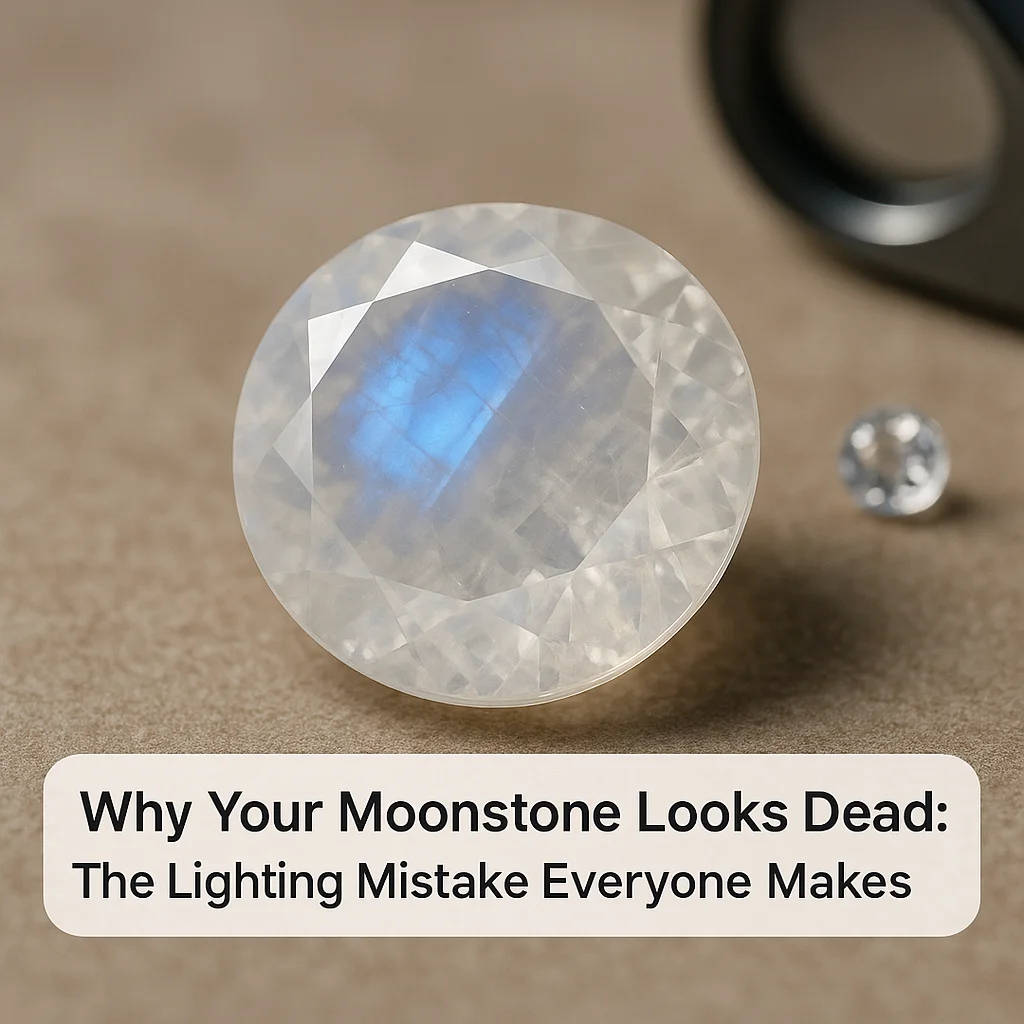
Many buyers fall for online photos with strategic lighting that enhances this effect. Once in the real world, under common household lighting, the magic can appear to diminish.
Here's what you need to do today to ensure your moonstone dazzles:
- Check how the stone is lit in photos; seek various lighting conditions.
- Test the stone under different types of lighting at home.
- Understand how natural, lab-grown, and imitation stones behave under light.
- Consult with a gemologist for professional advice.
- Don’t rely solely on certifications; examine the stone in person if possible.
- Read return policies carefully before buying.
- Be cautious with "too perfect" looking stones as they might be synthetic.
- Educate yourself on basic gem treatments and enhancements.
🧪 What Actually Makes It “Real”
Moonstones can be natural, lab-grown, or imitations, and telling them apart isn't always easy. Natural moonstones possess unique inclusions and adularescence, while lab-grown stones may appear more flawless.
Imitations could be made from glass or synthetic materials, mimicking the appearance but not the properties of genuine moonstone. Photos can be misleading; they often don't capture subtle inclusions or the interplay of light in the same way natural viewing does.
Price can be a clue, but it depends on the stone's origin and the seller's reliability. "Paperwork" might show authenticity, but remember, not all certificates hold the same value. Always consult a reputable gemologist if unsure.
🔍 My Buyer Checklist (Step by Step)
- Identify the type: If it's natural, look for inclusions. If flawless, suspect lab-grown.
- Check lighting conditions in photos: If under bright lights, it might not look similar at home.
- Ask about treatments: Be wary if no information is provided.
- Consider the source: If it's unusually cheap, investigate thoroughly.
- Request a return policy: If it’s restrictive, reconsider purchasing.
- Observe the cut and polish: If they're inconsistent, the stone might be subpar.
- Inquire about certification: Check the lab that issued it.
- Examine the stone under multiple lights: Daylight, incandescent, and LED.
- Consult expert guidance: Seek advice from a trusted gemologist.
- Reflect on personal needs: If unsure about a stone's quality or authenticity, do not hesitate to pass.
Use this checklist to approach your purchase calmly. Don't stress over a single factor; instead, weigh them collectively to make a secure decision.
⚠️ Mistakes People Make (And the Fix)
- Ignoring lighting: Always view moonstones in various settings.
- Falling for perfect imagery: Flawless stones might not be real.
- Overreliance on certifications: Not all labs have equal standards.
- Skipping return policy details: Always check terms before buying.
- Disregarding cut quality: Poor cut dims stone's appearance.
- Neglecting expert advice: Consult professionals when unsure.
- Being swayed by low prices: Cross-reference costs and quality.
- Ignoring potential treatments: Always inquire about enhancements.
- Forgetting about market norms: Familiarize yourself with standard practices.
- Assuming all moonstones are the same: Understand differences to avoid poor choices.
🎨 Look & Red Flags That Matter
The moonstone's appearance can change dramatically based on several factors. Lighting is paramount; under poor light, the stone may seem lifeless. The cut and polish also affect how light interacts with the stone and highlights adularescence.
Inclusions are part of the natural charm but when excessive, they can dull the gem. Surface coatings and dyes, common in other gems, are less so in moonstones but remain a possibility buyers should question.
Treatments like heat to enhance color or improve clarity are known but less typical for moonstones. Always ask sellers about any enhancements.
🧼 Care & Storage (Safe Defaults)
- Do use mild soap and water for cleaning.
- Don't use ultrasonic cleaners, as moonstones are porous.
- Do buffer with a soft cloth to preserve polish.
- Don't expose to extreme temperatures to avoid fractures.
- Do store separately to prevent scratches.
- Don't wear during rough activities to avoid damage.
- Do check settings regularly for loose stones.
- Don't soak for long periods; short cleaning sessions are better.
- Do keep away from harsh chemicals, including bleach.
- Don't use abrasive materials for cleaning.
- Do consider a safe, dry place for storage to preserve integrity.
- Don't expose directly to prolonged sunlight; it can affect color.
🧾 What Certificates Can (and Can’t) Prove
Certificates can validate a moonstone's authenticity and quality, detailing origins, treatments, and specific metrics like carat weight and clarity. However, not all labs are equal; some "certificates" may provide limited insight.
Sellers might exaggerate the significance of certain certificates, portraying them as unassailable facts. For this reason, the issuing body matters—a recognized lab will hold more weight.
A report is worthwhile if you're making a high-value purchase or want assurance on the stone's qualities. It's best to consult a gemologist for further investigation where necessary.
❓ Quick Questions Buyers Ask
Q: How can I tell if my moonstone is real?
A: A combination of professional appraisal and observing unique inclusions can help.
Q: Do moonstones change colors?
A: Not colours, but lighting can change their visible appearance.
Q: Is a low-cost moonstone a red flag?
A: It can be. Verify authenticity and quality first.
Q: Do inclusions affect value?
A: They can, especially if excessive, affecting light interaction.
Q: Are certificates always reliable?
A: Only those from reputable labs are truly reliable.
Q: How should I clean my moonstone?
A: Use mild soap, water, and a soft cloth for best results.
Q: Do all moonstones have adularescence?
A: Natural ones typically do, but intensity varies.
Q: Can sunlight damage moonstones?
A: Prolonged exposure might alter appearance; moderate exposure is better.
Q: Why is lighting so important?
A: It directly affects the stone's visible adularescence.
Q: Can I rely on pictures alone?
A: Pictures can be deceptive; verify in person if possible.
📌 If You Only Remember 5 Things
- Proper lighting makes or breaks a moonstone's appearance.
- Don't rely on photos alone; inspect if possible.
- Seek a reputable certificate, but know its limits.
- Care properly to preserve beauty and integrity.
- Understand that inclusions add charm, not flaws.
- Always check the return policy before purchasing.