💎 January Birthstone Rose Garnet Meaning
🪨 What It Is
Rose Garnet, often referred to as the January birthstone, is a vibrant gemstone belonging to the garnet mineral family. It is renowned for its soft pink to deep rose hues, making it a sought-after choice for jewelry enthusiasts. As a variety of garnet, it offers the allure of beauty combined with durability.
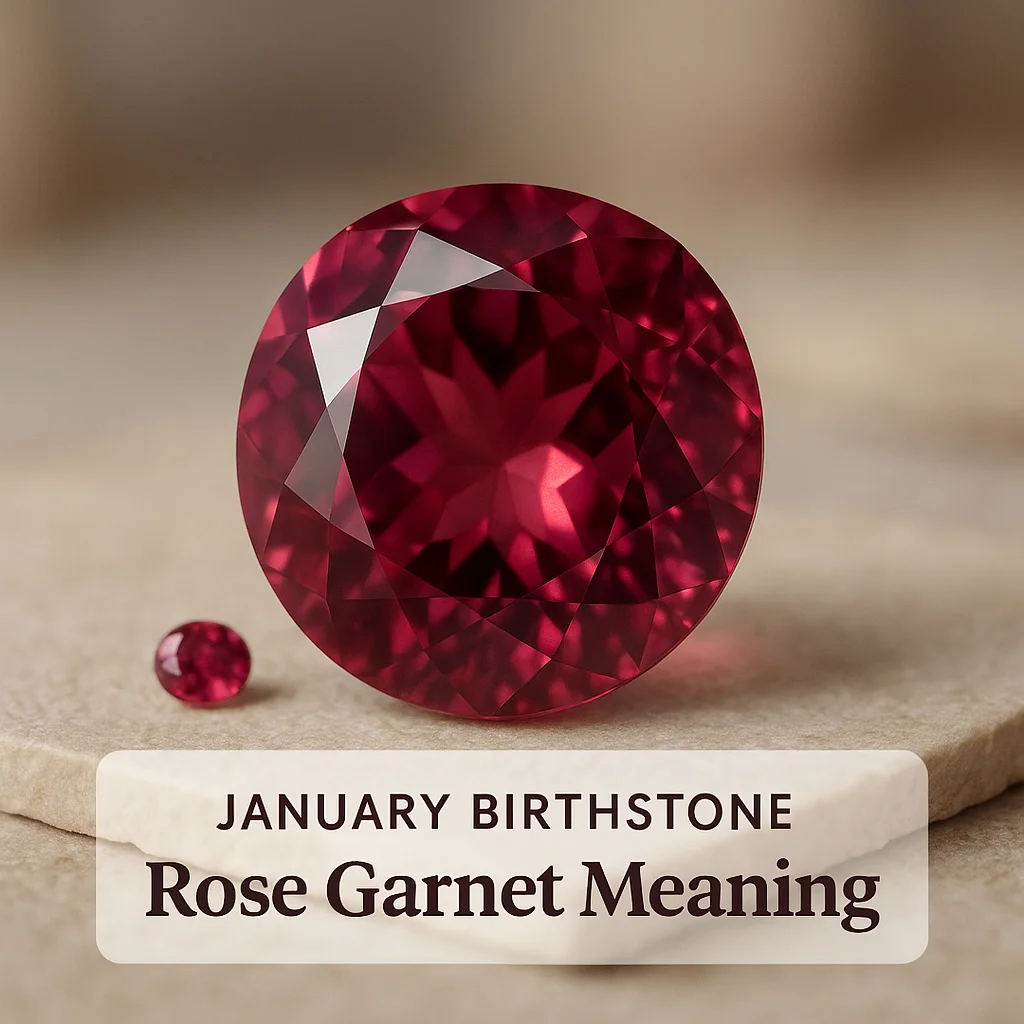
This stunning gemstone is especially popular among those who celebrate their birthdays in January, as it is traditionally associated with this month. The gemstone is also appreciated for its versatility and ability to complement various jewelry designs, from rings and necklaces to earrings and pendants.
In this article, we will explore the fascinating world of Rose Garnet, covering its origin, formation, properties, cultural significance, care, and buying tips. Whether you're a beginner or an experienced gemstone lover, you'll discover the key aspects of this beautiful stone.
🌍 Where It Comes From
Rose Garnet is primarily found in metamorphic rock formations, where intense heat and pressure allow it to crystallize. It can also occasionally be found in igneous rocks, where it forms in response to specific geological conditions. These geological processes contribute to the unique characteristics of Rose Garnet.
Regions known for producing Rose Garnet include parts of India, Sri Lanka, and Africa. These areas provide some of the world's most admired specimens thanks to the unique geological conditions that enhance the stone's color and clarity. The origin of Rose Garnet can influence its market reputation, with stones from specific regions being particularly prized.
The locality can affect the color and clarity of Rose Garnet, which in turn influences its value and desirability in the gemstone market. Collectors and jewelry enthusiasts may seek stones from particular regions due to these distinct characteristics, though beautiful specimens can be found worldwide.
🔬 How It Forms
Rose Garnet forms under high-pressure conditions deep within the Earth. Its formation involves the alteration of pre-existing minerals through metamorphism, a process driven by intense heat and pressure over millions of years. This transforms the original minerals into the garnet mineral family, which includes Rose Garnet.
The rich color of Rose Garnet can be attributed to trace elements such as manganese, which impart their unique hues to the stone. These elements substitute into the mineral's crystal lattice, influencing the appearance without significantly altering its structural integrity.
Rose Garnet crystals typically appear as dodecahedrons or trapezohedrons, lending them a unique geometric beauty. This crystal habit, combined with the gemstone's hues, makes Rose Garnet an appealing choice for collectors and jewelry designers alike.
🎨 Color and Look
Rose Garnet is celebrated for its beautiful pink to rose-red coloration, varying from light, soft shades to deeper, richer tones. The variations in color depend on the concentration of manganese and other trace elements present during formation.
The stone's appearance is enhanced through precise cutting and polishing, which helps to maximize its natural luster and brilliance. A well-cut Rose Garnet exhibits excellent light reflection, making its color more captivating under various lighting conditions.
While Rose Garnet is usually untreated, some stones may undergo gentle heating or other processes to enhance clarity or color. Such treatments, when applied, should always be disclosed at the point of sale, as they can impact the stone's value and care requirements.
🧪 Properties That Matter
Rose Garnet rates between 6.5 to 7.5 on the Mohs scale of hardness, indicating it is moderately scratch-resistant. This makes it suitable for a variety of jewelry applications, including rings and everyday wear items. However, care should still be taken to prevent scratches from harder substances.
Its toughness, or resistance to chipping and breaking, is also considered good, allowing it to withstand daily exposure with appropriate care. Despite this toughness, garnets typically lack cleavage, meaning they do not split along any particular planes, enhancing their overall durability in jewelry.
Rose Garnet possesses a vitreous luster, creating a glossy appearance that appeals to many jewelry wearers. Its transparency ranges from transparent to nearly opaque, depending on the level of inclusions, which are internal features within the stone.
✨ Meanings, Birthstones, and Culture
In cultural traditions, Rose Garnet is known as the birthstone for January, connected to themes of protection, healing, and love. While these associations are embraced in folklore and modern interpretations, they are not scientifically validated.
The stone is often included in jewelry collections for special occasions or gifts, symbolizing commitment and affection. These traditions have contributed to its ongoing popularity as a gem that represents passion and beauty.
For those interested in astrology, Rose Garnet is associated with the zodiac sign Capricorn. Many enthusiasts believe it can enhance positive attributes and bring balance, but such claims should be considered as part of cultural symbolism rather than science.
🧼 Care and Cleaning
To care for Rose Garnet, it is recommended to clean the gemstone with warm, soapy water and a soft cloth. Avoid using harsh chemicals or ultrasonic cleaners, which can damage the stone. Rinsing well and drying thoroughly helps prevent water spots and maintains its luster.
This gem should not be exposed to extreme temperatures or sudden temperature changes, as these can induce cracking. It is advisable to remove Rose Garnet jewelry before engaging in high-impact activities to prevent chipping or damage.
When storing Rose Garnet, keep it separate from other gemstones and items that could cause abrasions. A soft pouch or lined jewelry box compartment is ideal for preventing scratches and preserving its beauty.
🛒 Buying Tips and What to Check
When buying Rose Garnet, pay attention to the “four Cs”: color, clarity, cut, and carat weight. A vibrant pink hue with good transparency and a precise cut usually indicates a higher quality stone. Larger stones are rarer and may command higher prices.
Ask about any treatments the stone may have undergone and request a certificate from a reputable gemological laboratory for high-value purchases. Such a report offers insights into the stone's characteristics but is not a guarantee of value.
For online purchases, ensure the seller has clear photos, a reliable return policy, and positive customer feedback to ensure a satisfactory buying experience. Disclosure of the stone's origins and any treatments should be openly listed.
⚠️ Real vs Fake and Common Look-Alikes
Natural Rose Garnet can be distinguished from synthetic (lab-grown) counterparts through professional testing. Laboratory-grown stones mimic natural properties but form under controlled conditions, a distinction that can be important to collectors.
Imitations, often made from glass or composite materials, try to replicate the stone's color and look but lack the mineral's inherent qualities. Doublets and triplets combine slices of precious stone with less expensive backing or caps to enhance appearance but reduce value.
Common look-alikes include other varieties of pink stones, such as pink tourmaline and rhodolite garnet, which may be easily confused with Rose Garnet due to similar appearances. Professional identification is essential to establish authenticity.
❓ Common Questions and Misconceptions
Is it a mineral or a rock? Rose Garnet is a mineral belonging to the garnet group.
Is it a birthstone? Yes, it is the birthstone for January.
Will it scratch easily? It is moderately hard, so it won't scratch easily, but caution is still advised.
Can it go in water? Yes, but avoid long soaking and dry thoroughly after cleaning.
Does color fade in sunlight? Rose Garnet is generally stable under light but prolonged exposure can sometimes cause minimal fading.
What treatments are common? Treatments are rare; stones are typically untreated but may be heated to improve color.
Is lab-grown "fake"? Lab-grown stones are real garnets but not naturally formed.
How do I store it safely? Store in a soft pouch or lined compartment to avoid scratches.
Do inclusions always lower value? Not always; some inclusions are acceptable, depending on their visibility and impact on appearance.
How do I pick a good one for jewelry? Look for even color, good transparency, and a fine cut.
📌 Summary
- Rose Garnet is a mineral and variety of garnet.
- Typical colors range from pink to deep rose.
- Forms through metamorphic processes over time.
- Hardness makes it suitable for most jewelry types.
- Some stones are heat-treated for enhanced color.
- Clean with soapy water, avoid harsh conditions.
- Excellent for rings, pendants, and earrings.
- Common look-alikes include pink tourmaline.
- Authenticity confirmed by lab testing.
- Check color, clarity, and cut when buying.
- Associated with January and Capricorn traditions.
- Memorable for its unique pink hue and beauty.