💎 March Birthstone Bloodstone Meaning and History
🪨 What It Is
Bloodstone, known scientifically as heliotrope, is a variety of chalcedony, which is a type of quartz. It is an intricately patterned gem with a unique appearance that sets it apart from other stones. As one of the birthstones for March, bloodstone is a popular choice for jewelry, appreciated for its distinctive look and the traditional meanings associated with it.
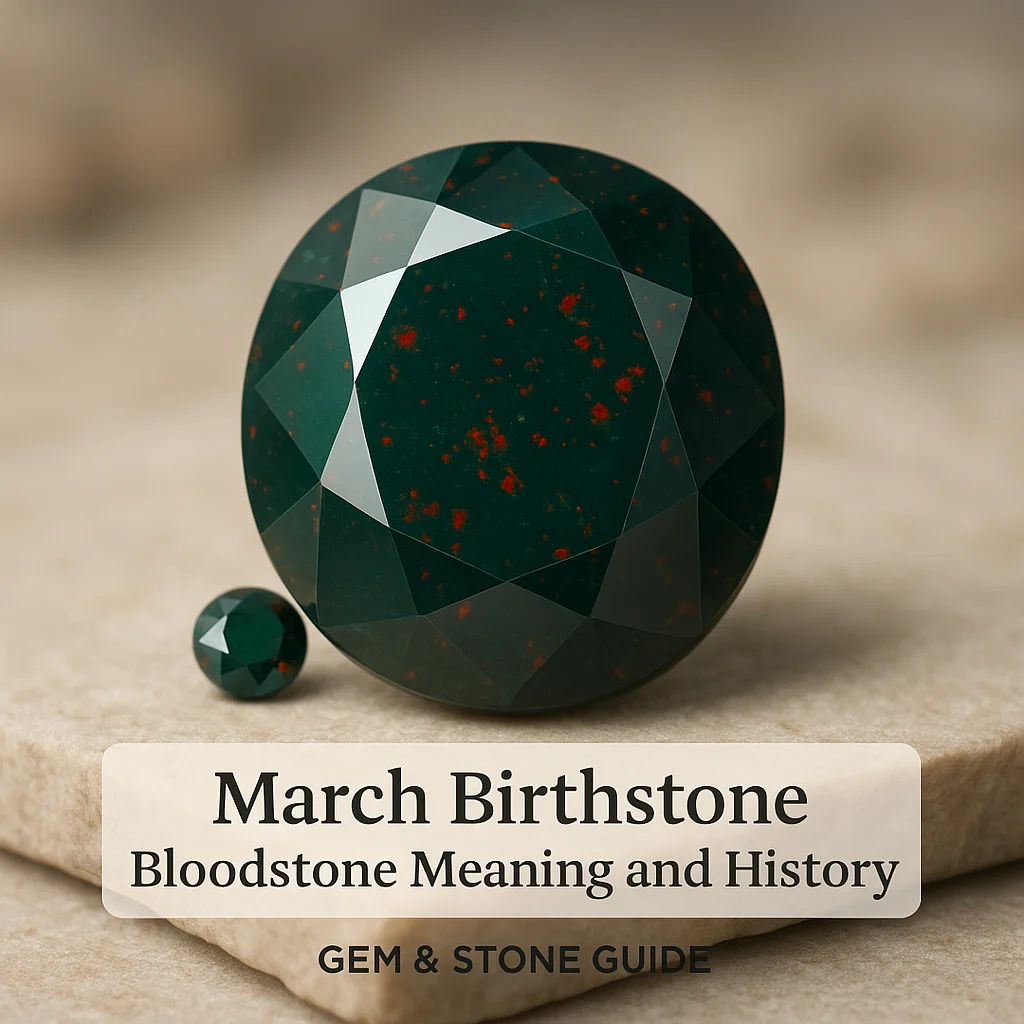
The appearance of bloodstone is primarily dark green, speckled with distinctive red spots that resemble drops of blood, giving it a unique aesthetic appeal. Historically, these characteristics have made bloodstone a prized material, often used in ornamental carvings and jewelry.
Readers will learn about the properties that make bloodstone special, including its appearance, where it comes from, its geological formation, how to care for it, and what to consider when buying. Understanding these aspects can enhance appreciation for this striking gemstone, whether you possess it as jewelry or a collector’s piece.
🌍 Where It Comes From
Bloodstone occurs in nature primarily within sedimentary and volcanic environments. These geological settings allow the formation of its unique color and structure, as mineral-rich waters deposit silica, resulting in the creation of chalcedony, the host mineral for bloodstone. The iconic red specks are often due to iron oxide, adding to its allure and rarity.
This gemstone is found in various parts of the world, with notable sources being India, Brazil, and Australia. India's bloodstone is particularly renowned, often distinguished by its vibrant color contrast, which is highly sought after in the gemstone market. While location can influence a stone’s appearance, it's important to remember that individual stone characteristics, such as pattern and color intensity, also play critical roles.
The origin of a bloodstone can impact its market reputation and value. Stones from regions with historic reputations for quality, such as India, often command higher prices. However, the desirability of a particular piece ultimately rests on personal taste and the stone's individual characteristics.
🔬 How It Forms
The formation of bloodstone is a fascinating process that involves a combination of heat, pressure, and time. As part of the larger chalcedony family, bloodstone forms from silica-rich fluids that fill volcanic or sedimentary rock cavities. Over time, these solutions crystallize to form chalcedony, which subsequently develops into heliotrope or bloodstone.
The green hue characteristic of bloodstone is typically caused by additional minerals like chlorite within the chalcedony, while the red spots are the result of small iron oxide inclusions. These inclusions are not only the defining feature but also are what give bloodstone its distinctive and appealing appearance.
In terms of crystal structure, bloodstone does not form large crystals but is typically found as nodules and is often cut into cabochons for jewelry. This cutting style enhances the stone's natural colors and patterns, making it more appealing for settings.
🎨 Color and Look
Bloodstone is known for its deep green color, accented by vivid red speckles, resembling blood droplets. The stone's visual appeal greatly depends on the intensity and distribution of these colors. A well-balanced combination usually increases the gemstone's value and desirability.
The stone may exhibit varying looks depending on the cut and polish. Cabochon cutting is commonly used, accentuating its natural patterns. Lighting conditions also impact its appearance, with natural sunlight highlighting the contrast between the green base and red flecks more than artificial light conditions.
While bloodstone is typically untreated, some stones might be enhanced with dyes or other methods to improve appearance. However, these treatments are not as common as with other gemstones. It's always advisable to consult with a professional gemologist to verify the nature of a treated stone.
🧪 Properties That Matter
Bloodstone has a Mohs hardness of about 6 to 7, making it resistant to scratches but more susceptible than harder stones like diamonds or sapphires. This hardness makes bloodstone suitable for various types of jewelry, but it requires mindful handling, especially when set in rings prone to daily wear.
The stone is relatively tough, which provides resistance to chipping and makes it more durable than many other stones of similar hardness. However, care should be taken since bloodstone can still fracture if subjected to a strong blow. It is a favorite choice for pendants and earrings, which are less exposed to harsh elements.
Without visible cleavage, bloodstone generally has a concoidal fracture akin to other silicates. Its vitreous luster when polished adds a glossy finish, enhancing its natural beauty and desirability in jewelry.
✨ Meanings, Birthstones, and Culture
Bloodstone is traditionally associated with the month of March as a birthstone alongside aquamarine. Many cultures have admired bloodstone, with historical interpretations linking it to life and vitality due to its emblematic color resembling blood droplets.
Different cultures and societies have credited bloodstone with various symbolic meanings, such as courage, protection, and healing. While these attributes are tied to cultural beliefs rather than scientifically proven, they continue to add to the stone's allure and significance in modern jewelry traditions.
As with other birthstones, bloodstone has both contemporary and historical relevance. It is thought to bring strength and boost creativity, though these interpretations remain speculative and vary between different cultural traditions.
🧼 Care and Cleaning
Caring for bloodstone involves gentle, straightforward methods. It's best cleaned with mild soap and warm water, using a soft cloth to dry it. Avoid using harsh chemicals or ultrasonic cleaners, as these could damage the stone or any settings.
Bloodstone should be kept away from extreme heat and sudden temperature changes, as these conditions might compromise its structure. Similarly, long periods of soaking should be avoided to prevent any potential damage or discoloration.
For storage, ensure that bloodstone is placed separately from other harder gemstones to prevent scratches, ideally in a soft pouch or lined jewelry box compartment.
🛒 Buying Tips and What to Check
When purchasing bloodstone, several factors influence its price and quality, such as color intensity, pattern distinctiveness, size, and origin reputation. High-quality stones showcase a balanced distribution of green and red without overshadowing inclusions.
Potential buyers should inquire about any treatments the stone may have undergone, as natural stones without enhancements are often more valuable. Obtaining a certification or lab report for higher-value bloodstones is advisable to confirm authenticity and treatment disclosures.
For online purchases, ensure you verify the seller's reputation, request detailed images, review return policies, and consider any provided guarantees to make an informed decision.
⚠️ Real vs Fake and Common Look-Alikes
Bloodstone can sometimes be confused with similar-looking stones or imitations. Natural bloodstone is distinct due to its unaltered red inclusions, which vary greatly from artificial or dyed stones.
Synthetic or lab-grown stone often mimics natural stones but is not necessarily 'fake.' It merely means it's produced in controlled conditions and should be clearly labeled.
Common look-alikes might include jasper or materials like glass, which can imitate bloodstone's appearance but lack its natural properties. Professional testing is always recommended for authenticity confirmation.
❓ Common Questions and Misconceptions
Is it a mineral or a rock? Bloodstone is a type of chalcedony, which is a mineral.
Is it a birthstone? Yes, bloodstone is one of the birthstones for March, alongside aquamarine.
Will it scratch easily? With a Mohs hardness of 6 to 7, it is relatively scratch-resistant but softer than diamonds or sapphires.
Can it go in water? Yes, but avoid long soaking that could risk damage.
Does color fade in sunlight? Prolonged exposure to sunlight could potentially impact its appearance over time.
What treatments are common? Bloodstone is generally untreated, but dyeing may occur in some instances.
Is lab-grown 'fake'? Lab-grown stones are real in composition but not naturally formed; they should not be considered 'fake.'
How do I store it safely? Store separately to prevent scratches in a soft-lined box.
Do inclusions always lower value? Not always; unique inclusions can enhance desirability if they add charm or are well incorporated.
How do I pick a good one for jewelry? Look for distinct red spots, good color contrast, and uniformity in pattern.
📌 Summary
- Bloodstone is a type of chalcedony with red inclusions.
- It typically has green with red speckles resembling blood droplets.
- Forms in sedimentary and volcanic rock environments from silica-rich fluids.
- Has a Mohs hardness of 6 to 7, making it moderately durable.
- Usually untreated; inquire about treatments if in doubt.
- Best cleaned with mild soap and water; avoid harsh chemicals.
- Excellent for pendants and rings; less so for high-impact wear.
- Look-alikes include jasper and glass; confirmation requires professional testing.
- A lab report can verify authenticity and any treatments.
- Verify seller reputation and return policy when buying online.
- Traditionally associated with March as a birthstone and carries cultural significance.
- Known for vivid coloration and historically admired for symbolic meanings.