💎 May Birthstone Emerald
🪨 What It Is
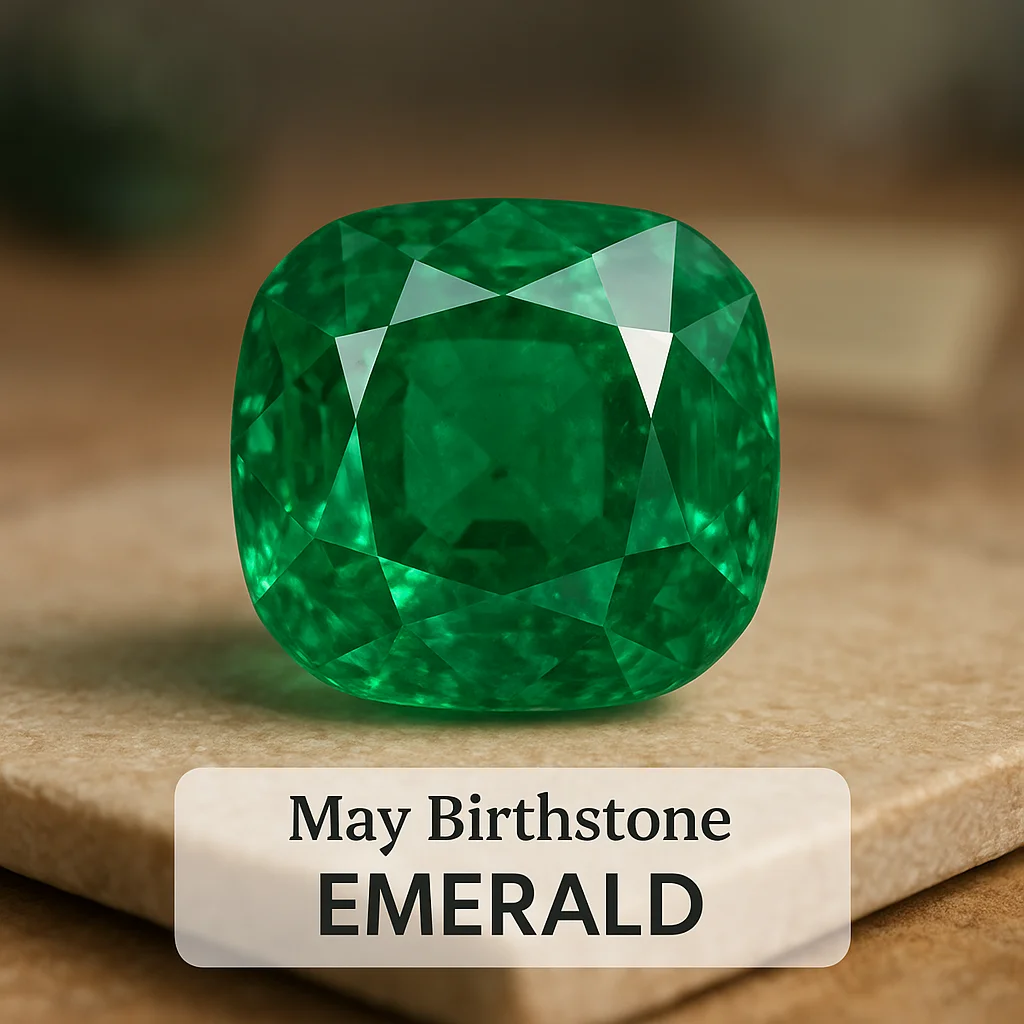
Emerald is a captivating green gemstone belonging to the mineral species beryl. It is cherished for its vibrant color and has been esteemed as a symbol of renewal and prosperity throughout history. As the birthstone for May, emerald holds a unique place in the hearts of those born in this month.
In this article, you will learn about emerald's appearance, properties, origins, and various factors influencing its value. Additionally, we will cover practical tips on care, buying, and distinguishing real emeralds from their look-alikes.
While emeralds can be a prominent choice for jewelry, especially in rings, pendants, and earrings, understanding the qualities and treatments of this gemstone is crucial to making informed decisions.
🌍 Where It Comes From
Emeralds form under specific geological conditions, typically found in metamorphic rocks such as schist and gneiss. These rocks transform under substantial pressure and heat, providing an ideal environment for emerald formation.
Notable sources of emeralds include Colombia, Brazil, Zambia, and Zimbabwe. Each region's emeralds may exhibit slightly different hues and clarity levels, contributing to their unique market reputation. Colombian emeralds, for example, are highly valued for their deep green color and exceptional clarity.
The origin of an emerald can significantly affect its desirability and market value. Emeralds from well-known regions may command higher prices due to their established reputation for quality.
🔬 How It Forms
Emeralds form when beryl, a mineral composed primarily of beryllium, aluminum, and silicon, incorporates chromium or vanadium. These trace elements give emeralds their distinctive green color.
The formation process involves intense heat and pressure over millions of years, allowing the crystals to develop within the host rock. Emeralds often form as hexagonal prisms, a hallmark of their crystalline structure.
The unique combination of chemical elements and geological conditions results in a gemstone with a mesmerizing hue, setting emeralds apart from others in the beryl family, such as aquamarine and morganite.
🎨 Color and Look
Emeralds are prized for their striking green color, which ranges from a light green to a deep, rich shade. The most sought-after emeralds display a vivid green hue with a slight bluish tint, characteristic of top-quality stones.
Factors such as natural inclusions, known as "jardin" or garden, can affect the appearance of an emerald. These inclusions are often accepted as part of the stone's unique character, although extreme cloudiness can detract from its beauty.
Common treatments to enhance emeralds include oiling, a process where oil is introduced to fill surface-reaching fractures, improving clarity and appearance. This treatment is widely accepted but should be disclosed by sellers.
🧪 Properties That Matter
Emeralds rank 7.5 to 8 on the Mohs hardness scale, indicating good scratch resistance. However, they typically have moderate toughness due to inherent internal fractures.
This gemstone's cleavage is poor, meaning it doesn't split easily along defined planes, but it can fracture if subject to hard knocks or pressure. It has a vitreous luster, contributing to its brilliant appearance in jewelry.
For everyday wear, emeralds are suitable but require caution. Rings and bracelets are more vulnerable to impacts, whereas earrings and pendants offer safer options for showcasing this lush gemstone.
✨ Meanings, Birthstones, and Culture
Emerald is traditionally associated with rebirth, renewal, and fertility. As May's birthstone, it symbolizes love and prosperity, offering protection to those born in this month.
In various cultures, emeralds have been associated with foresight and vision, believed to enhance intuition and insight. These attributes, however, are historical and cultural beliefs rather than proven facts.
While modern jewelry practices celebrate emeralds for their beauty and symbolic connections, it's important to regard these associations as part of the cultural narrative rather than scientific proofs.
🧼 Care and Cleaning
The gentle approach is best for cleaning emeralds: mild soap and lukewarm water are recommended. Use a soft cloth to wipe the stone and avoid harsh chemicals or ultrasonic cleaners.
Emeralds are sensitive to temperature changes and prolonged soaking, as these actions can exacerbate any existing fractures and affect the stability of treatments like oiling.
Store emeralds separately from other harder gemstones to prevent scratching. Wrap them in a soft cloth or use a fabric-lined jewelry box for added protection.
🛒 Buying Tips and What to Check
When purchasing an emerald, consider factors like color, clarity, cut, and carat weight. The stone's origin can also influence its value, with certain regions yielding particularly prized stones.
Always inquire about any treatments the emerald has undergone and request a lab report for high-value purchases. This report provides crucial information about the stone's characteristics and any enhancements.
When buying emeralds online, verify the seller's reputation, check return policies, and review detailed photographs of the stone. Proper disclosure of treatments and origins is essential for informed purchasing.
⚠️ Real vs Fake and Common Look-Alikes
Natural emeralds are distinct from synthetic emeralds, which are lab-grown but possess the same chemical properties. These synthetic stones are not "fake" but are less valuable than natural ones.
Imitations, such as glass or plastic, aim to mimic emeralds' appearance but lack the mineral composition and durability. Doublets and triplets combine thin layers of genuine emerald with other materials to simulate a full stone.
Identifying emerald authenticity is challenging and requires professional testing. Avoid home tests or online misinformation, which can lead to incorrect conclusions.
❓ Common Questions and Misconceptions
Is it a mineral or a rock? Emerald is a mineral, specifically a variety of beryl.
Is it a birthstone? Yes, emerald is the birthstone for May.
Will it scratch easily? Emeralds have a good hardness rating but can chip due to internal fractures.
Can it go in water? Brief exposure is fine, but avoid prolonged soaking due to potential damage to treatments.
Does color fade in sunlight? Emeralds are stable in sunlight, but intense exposure should be avoided.
What treatments are common? Oiling is a common treatment to enhance clarity.
Is lab-grown 'fake'? Lab-grown emeralds are genuine emeralds but not natural; they are less valued.
How do I store it safely? Store in a soft cloth away from harder gemstones.
Do inclusions always lower value? Not always; light inclusions add character, but heavy inclusions can decrease value.
How do I pick a good one for jewelry? Favor vibrant color, good clarity, and full disclosure of treatments.
📌 Summary
- Emerald is a green gemstone and a May birthstone.
- Displays a range of green hues, often with inclusions.
- Forms in metamorphic rocks with chromium/vanadium.
- Has a hardness of 7.5-8, suitable for various jewelry.
- Oiling is a common clarity-enhancing treatment.
- Clean gently with soap and water; avoid strong chemicals.
- Ideal for earrings and pendants due to softness.
- Common look-alikes: synthetic, glass, doublets.
- Professional testing is key for authenticity.
- Buying tips: color, clarity, cut, carat, origin, treatments.
- Traditionally symbolizes renewal, love, prosperity.
- Emerald offers a timeless appeal with proper care.