💎 November Birthstone Topaz
🪨 What It Is
Topaz is a silicate mineral that has attracted attention as a beautiful gemstone, particularly favored for November birthdays. This gemstone is valued for its stunning range of colors, transparent clarity, and significant hardness. When set into jewelry, topaz's appeal and versatility make it a popular choice among gem enthusiasts.
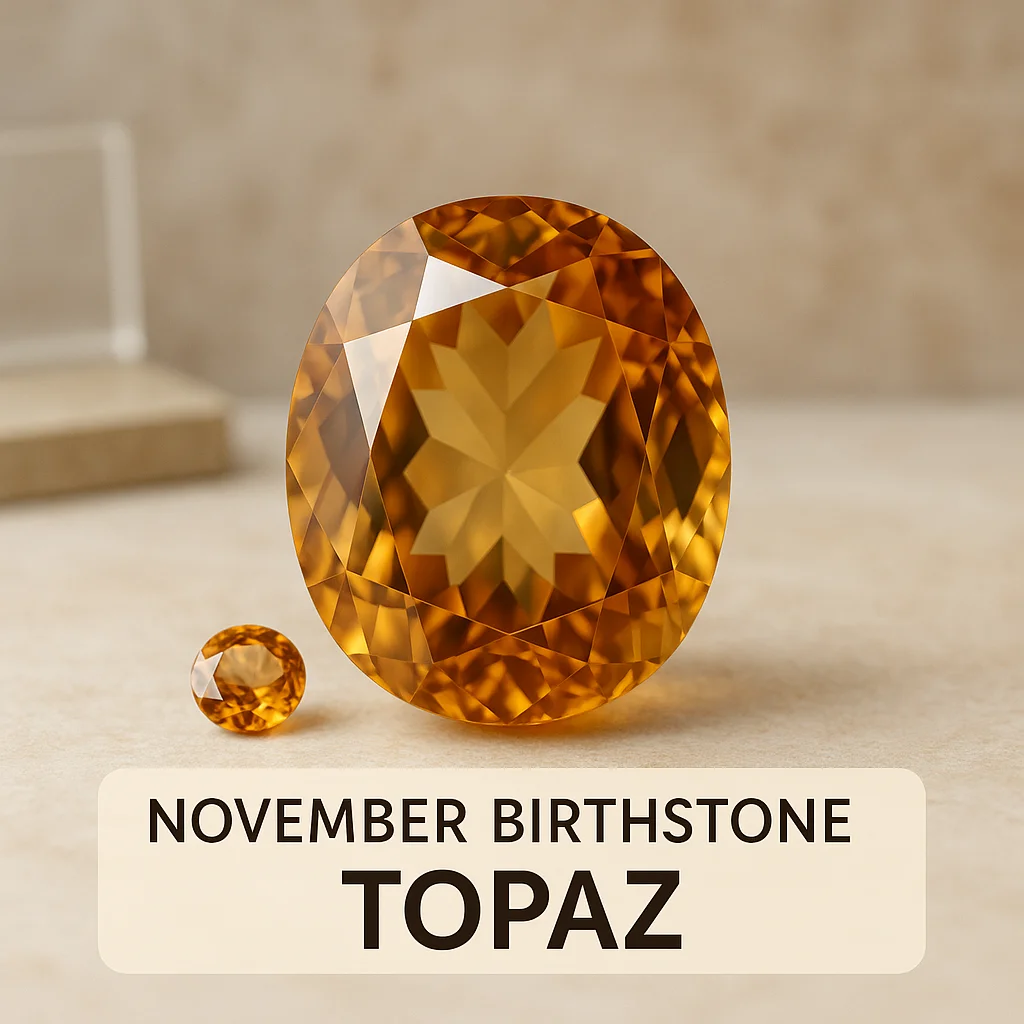
The topaz mineral is primarily known for its brilliance and fire, owed to its high refractive index. During this exploration of topaz, you will learn about its appearance, geological formation, global origins, and how to care for it, ensuring both an appreciation of its aesthetic value and practical considerations in terms of jewelry use.
This article will also cover cultural traditions surrounding topaz, notably its symbolic role as a November birthstone. With a deeper understanding of topaz, selecting and maintaining this gem for personal use or as a thoughtful gift becomes more informed and rewarding.
🌍 Where It Comes From
Topaz is found in a variety of geological settings, often forming in the cavities of igneous rocks. It may also occur as part of pegmatite deposits and sometimes in alluvial deposits as water-worn pebbles carried downstream from its original source. Its presence in these environments highlights its durability and the diverse conditions under which it can form.
Key producers of topaz include Brazil, which is renowned for supplying highly coveted imperial topaz, and regions in Russia, Pakistan, and Nigeria. Each of these locales contributes distinct colors and qualities to the market, emphasizing the geological diversity of this gemstone.
The origin of a topaz stone can influence both its quality and market value. For example, topaz from specific areas may hold particular reputations or command premium prices due to its unique color or proven quality.
🔬 How It Forms
Topaz crystals form over millions of years through the interaction of geological processes involving heat and pressure. They commonly develop in igneous rock environments rich in fluorine, an element that plays a crucial role in the creation of topaz. Hydrothermal processes, where mineral-rich fluids pass through rock formations, further facilitate topaz crystal growth.
Color variations in topaz largely result from the presence of trace elements and natural radiation. For example, pure topaz is colorless, but impurities can lead to colors ranging from blue, which is often enhanced through treatment, to the naturally occurring golden tones seen in imperial topaz.
The prismatic and often columnar crystal habit of topaz is distinctive, and its well-formed crystals are highly prized among collectors and gemologists for their aesthetic and scientific value.
🎨 Color and Look
Topaz is celebrated for its broad spectrum of colors. While naturally colorless, commonly seen hues include blue, pink, and warm shades such as yellow and peach. The rare and highly sought-after "imperial topaz" exhibits vibrant orange and pinky-red tones.
The final appearance of topaz in jewelry often depends on the quality of its cut, which can enhance its natural brilliance and the way it captures and refracts light. Polishing further accentuates its glass-like luster, helping the color to shine clearly.
Various treatments, such as heat treatment and irradiation, are frequently used to modify or enhance the color of topaz. These practices are accepted within the gem community but should be disclosed to potential buyers for transparency.
🧪 Properties That Matter
With a Mohs hardness of 8, topaz is a durable gemstone ideal for various types of jewelry, including rings and bracelets. While it is quite hard, its crystalline structure presents distinct cleavage planes where the stone can split if subjected to sharp impact.
Topaz displays a vitreous luster that gives it significant sparkle and brilliance. Its clarity ranges from transparent to translucent, contributing to its visual appeal and value in jewelry applications.
The resilience of topaz makes it suitable for everyday wear, provided it is treated with care to avoid knocks and scratches that could exploit its cleavage weakness. Its toughness means it can resist chipping, an advantage over softer stones.
✨ Meanings, Birthstones, and Culture
The tradition of associating gemstones with specific months dates back centuries, and topaz holds the honor as one of the recognized birthstones for November. In various cultures, topaz has been seen as a symbol of love and affection, often given as gifts to signify fidelity and friendship.
Culturally, topaz has been associated with a range of beliefs, such as protection and power. These associations vary across cultures and time, with each attributing different symbolic meanings aligned with their cultural narratives.
Despite its cultural significance, these associations remain cultural traditions, not scientific facts. For those celebrating a November birthday, topaz's diverse colors and vibrant energy make it an excellent choice for personalized jewelry.
🧼 Care and Cleaning
To maintain the luster and beauty of topaz, it's best cleaned with mild soap and lukewarm water. Avoid harsh cleaners or ultrasonic jewelry cleaners, as these can damage the stone, particularly if it has internal fractures or inclusions.
Gently brushing with a soft cloth or toothbrush can help remove any dirt or oils that accumulate from regular wear. Rinsing thoroughly and drying is essential to prevent water spots or residue buildup.
When storing topaz jewelry, keep it separate from other pieces to prevent scratches. A fabric-lined jewelry box or a soft pouch provides adequate protection, helping to ensure the gem's longevity and continued shine.
🛒 Buying Tips and What to Check
Several factors influence the price and quality of topaz, including its color, clarity, cut, and carat weight. Rarer colors like imperial topaz naturally carry a premium. Ensure any treatments are disclosed by the seller, as this can impact both the value and care requirements of the gemstone.
For valuable topaz stones, consider requesting an independent laboratory report that verifies authenticity and details any treatments. These reports, although not guaranteeing value, provide essential transparency.
When purchasing online, verify the seller’s reputation and read reviews. Ensure there is a clear return policy and that the listings provide high-quality images from multiple angles to accurately represent the stone’s characteristics.
⚠️ Real vs Fake and Common Look-Alikes
Topaz can be found in both natural and synthetic forms, with lab-grown stones offering an alternative for those interested in ethically sourced gems. Synthetic topaz, identical in composition to natural stones, is genuine but distinguished by its origin.
Imitation stones, such as colored glass or quartz, might resemble topaz but lack its desirable properties. Assembled stones like doublets or triplets might have a thin layer of topaz atop other materials.
To differentiate between real and imitation stones, professional gemological testing is advised. This testing can accurately assess a stone’s authenticity, risk-free and with precise identification of distinguishing factors.
❓ Common Questions and Misconceptions
Is it a mineral or a rock? Topaz is a mineral, not a rock.
Is it a birthstone? Yes, topaz is the birthstone for November.
Will it scratch easily? While relatively hard with a Mohs hardness of 8, topaz requires careful handling to prevent scratches due to its cleavage.
Can it go in water? Brief water exposure is safe, but avoid soaking or extreme conditions.
Does color fade in sunlight? Topaz can fade with prolonged sunlight exposure, particularly treated blue hues.
What treatments are common? Heat and irradiation treatments are common to enhance color.
Is lab-grown 'fake'? Lab-grown topaz is real but manufactured, not naturally formed.
How do I store it safely? Store separately in a soft pouch or lined box to avoid scratches.
Do inclusions always lower value? Not always; some inclusions are accepted, but they may affect clarity grading.
How do I pick a good one for jewelry? Focus on color, clarity, and reputable seller practices for quality assurance.
📌 Summary
- Topaz is a silicate mineral popular as a jewelry stone and November birthstone.
- Common topaz colors range from blue and colorless to yellow and rare imperial oranges.
- Forms in igneous environments through interaction with fluorine-rich fluids.
- Mohs hardness of 8 makes it durable yet needs protection from impacts.
- Usual treatments include heat and radiation for enhanced coloration.
- Prefer gentle soap and water for cleaning; store with care to maintain luster.
- Suitable for various jewelry types—rings, pendants, and more.
- Common look-alikes include glass, quartz, and composite stones.
- Authenticity confirmed through gemological testing.
- Buying tips: consider color, clarity, cut, and seller transparency.
- Recognized for its cultural significance as a November birthstone.
- Takewoay: Topaz offers beauty and resilience, a classic choice for jewelry.