💎 7 Signs Your Gemstone Is Dyed (And What to Do Next)
🧭 The 60-Second Take
Picture this: You’re browsing online, enchanted by the vibrant hues of a gemstone that seems too good to resist. The seller promises authenticity, but how can you be sure? Lighting tricks and creatively worded “certificates” can make it challenging to distinguish genuine from dyed gemstones.
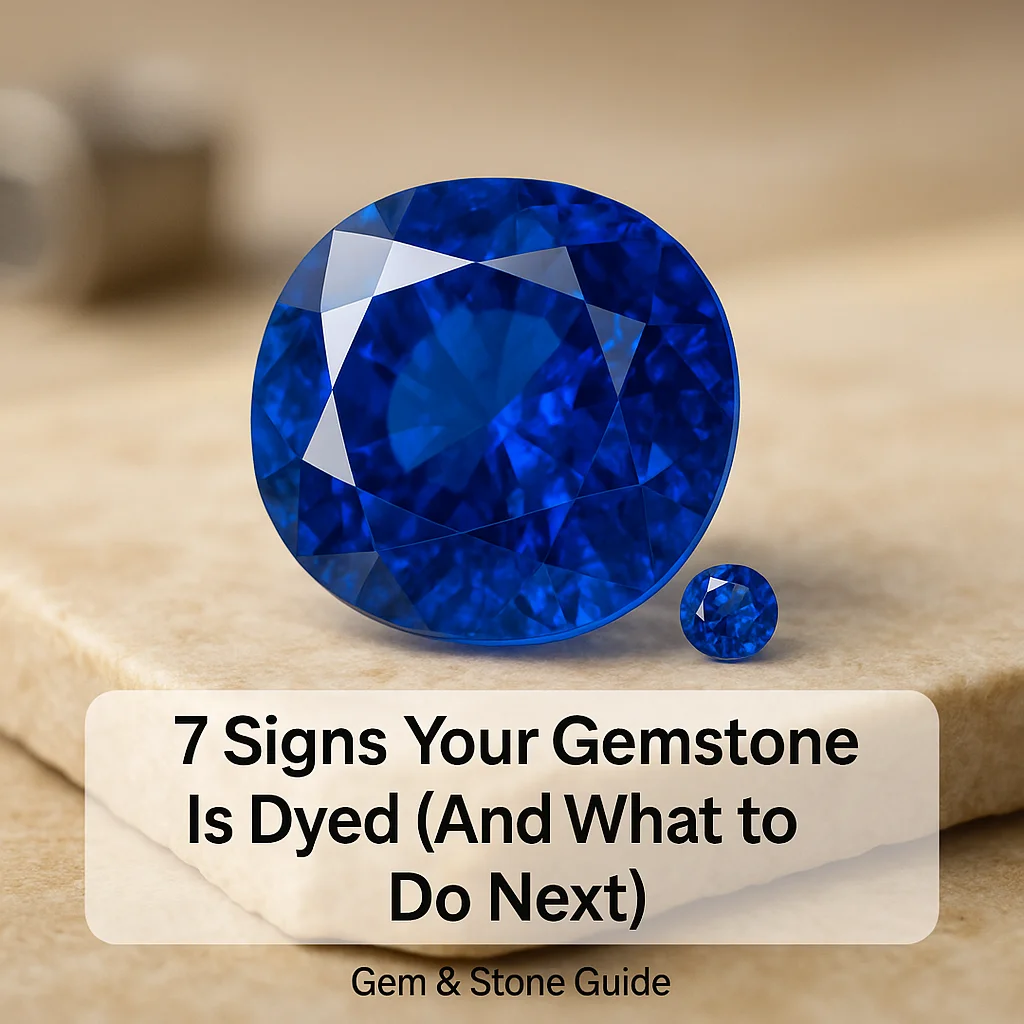
You don’t need to feel overwhelmed. Start by examining online photos critically, questioning vibrancy versus the stone's natural state. Remember, even photos can be misleading—color intensity is often exaggerated under professional lighting. Certificates can help, but they aren't infallible.
Here are some quick actions you can take today:
- Ask the seller about treatment explicitly.
- Look for uneven color distribution, a red flag for dye.
- Consider the stone’s price—if it seems a bargain, be cautious.
- Use a jeweler's loupe to spot surface irregularities or dye concentrations.
- Check for strong color patches, against natural stone patterns.
- Get a reputable lab test for high-value purchases.
- Trust your gut; if something feels off, it probably is.
- Review return policies before purchasing.
🧪 What Actually Makes It “Real”
The line between natural, lab-grown, imitation, and assembled stones can be confusing. Natural gemstones are mined from the earth, while lab-grown stones share the same chemical properties but are created in controlled environments. Imitations, on the other hand, might look similar but hold different compositions. Assembled stones, like doublets or triplets, consist of multiple elements combined to mimic a natural gem’s appearance.
Simply relying on photos or price points for identification is unreliable. Good paperwork should indicate any treatments the stone has undergone, but beware of exaggerated claims. It depends on the reputation of the certifying body and the details provided. Always be ready to ask clarifying questions before making a decision.
🔍 My Buyer Checklist (Step by Step)
- Start by researching the typical characteristics of the gemstone variety you are interested in.
- If the stone is affordable, consider its price skeptically.
- Inspect photos for uniform color and brightness—natural stones often have subtler hues.
- Request more detailed images from the seller, especially close-ups showing the surface.
- Inquire directly if the stone is treated and ask for written confirmation.
- Examine the stone under different lighting to check color consistency.
- If possible, test the gem with a reputable jeweler’s loupe looking for dye concentrations.
- If any doubts persist, reach out to a gemologist for an assessment.
- Consult a professional before significant investments.
- If the seller refuses to provide further information, consider it a warning sign.
- Track reviews or feedback about the seller for credibility assurance.
- Stay informed about the specific gemstone market trends and common treatments.
By using this checklist, you aim to gather enough information to make an informed decision without spiraling into distrust. These steps help balance skepticism with excitement – and that's key in gemstone purchasing.
⚠️ Mistakes People Make (And the Fix)
- Falling for perfect photo presentations—always request natural light images.
- Ignoring return policies—always check them before buying.
- Overvaluing non-reputable certificates—trust only well-known labs.
- Not comparing listings—shop around to understand market norms.
- Trusting prices alone as authenticity indicators—conduct broader inquiries.
- Failing to ask about specific treatments—be direct in your questions.
- Neglecting physical inspections when possible—opt for in-person checks.
- Forgetting about color balance in photos—it can mislead interpretations.
- Thinking “too perfect” doesn't exist—flawless stones are rare.
- Compromising due diligence due to seller pressure—stay firm in your checks.
🎨 Look & Red Flags That Matter
Gemstones undergo various treatments, meaning their appearance can differ significantly in real life. Light and environment dramatically impact gemstone color, and dyed stones may stand out due to unnaturally vivid hues. High polish enhances dye visibility if uniformity isn’t natural.
Common treatments, like surface coatings or heating, can alter gemstones' appearance. If you notice an unusually perfect surface or brightness under limited light variations, these can be red flags suggestive of dye treatments. Always trust your observations and validate them with professional advice when investments are considerable.
🧼 Care & Storage (Safe Defaults)
- Do wash gemstones gently using mild soap and lukewarm water.
- Don't use ultrasonic cleaners unless sure about the stone's treatment resistance.
- Do store gemstones individually to prevent scratching.
- Avoid harsh chemicals or extreme temperatures—especially concerning for treated stones.
- Do use soft cloths for drying to maintain surface integrity.
- Store away from direct sunlight to retain color vibrancy.
- Do reserve regular gentle cleaning for gemstones in jewelry.
- Be cautious with steam cleaning; natural porosity can trap water, harming the stone.
- Keep track of peculiarities; some treatments need unique storage conditions.
- Always consult professional advice for valuable or strange-stone handling.
🧾 What Certificates Can (and Can’t) Prove
Certificates from reputable labs can provide details about a gemstone’s origins and treatments, but they have limits. Labs typically report on the stone's essential characteristics and any detectable treatments. However, not all labs maintain the same rigor; some sellers may enhance the perceived value with suspicious documentation.
It’s crucial to assess the certifying body’s reputation. A lab’s report is often worthwhile in high-stakes buys, offering peace of mind about what you invest in. Still, be aware of what this documentation doesn’t guarantee; it outlines observed facts but can't always capture nuances.
Ask yourself: is the report from a trusted source? And what does it reveal about the stone that aligns with your knowledge and other resources? Recognize that certification should form part of your broader evaluative process, not replace it.
❓ Quick Questions Buyers Ask
Q: How do I recognize a dyed gemstone?
A: Look for uneven color distribution, unnaturally vivid hues, and strong color patches.
Q: Is it common to dye gemstones?
A: Yes, especially for stones with desirable colors but lacking natural vibrancy.
Q: Does dyeing affect a gemstone’s price?
A: Typically, dyed stones are less valuable than untreated ones.
Q: Can certificates detect all treatments?
A: Not always. Detection depends on the lab's capabilities and the dye’s properties.
Q: Should I trust sellers’ claims?
A: Approach claims with caution, requesting proof and third-party verification.
Q: Can I remove dye from a gemstone?
A: It's risky and may damage the stone. Seek professional advice.
Q: Do dyes fade over time?
A: Yes, especially with exposure to sunlight or chemicals.
Q: What should a good certificate include?
A: Origin, treatments, and details about mineral composition.
Q: Are there gemstones too valuable to buy untreated?
A: It depends. Some enhancements, like heating sapphires, are industry-standard and acceptable.
📌 If You Only Remember 5 Things
- Always confirm treatment status before purchasing; assume nothing.
- Beware of prices too good to believe—investigate thoroughly.
- Trust reputable labs for certification, not just any paperwork.
- Inquire about return policies and make them part of your buying criteria.
- Observe gemstones under multiple lighting conditions for true color assessment.
- Use visual anomalies as a basis for further investigation, not conclusion.
- Stay informed about market practices and treatment types for your desired stone.