💎 Gemstone Heat Treatment: When It’s Fine and When It’s a Dealbreaker
🧭 The 60-Second Take
You're browsing a jewelry website, enchanted by gleaming gemstones that promise to dazzle, when you notice the small print: "heat-treated." A pang of doubt hits you. Is this gem real? It's a common scenario, particularly with online purchases where photos can mislead and certificates seem vague or overly technical.
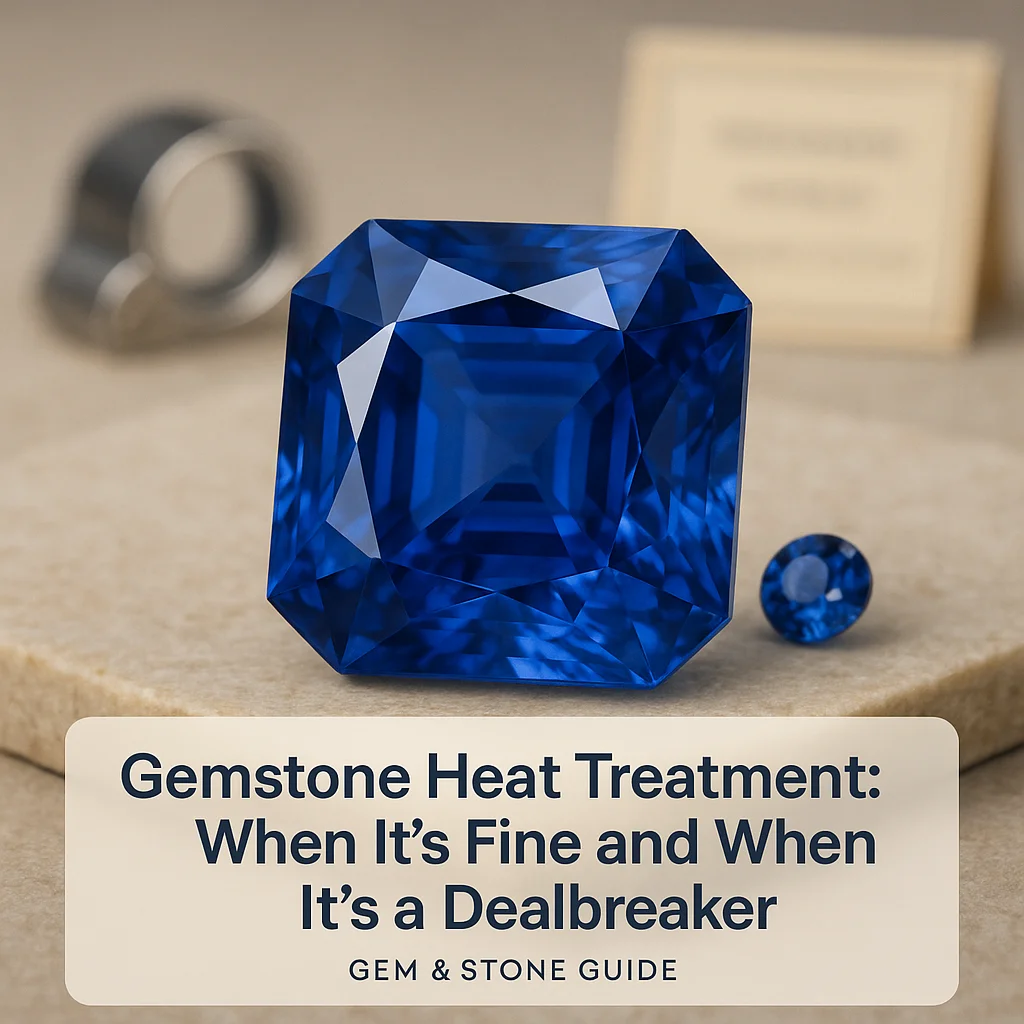
In the world of gemstones, heat treatment can enhance a gem's natural beauty, or sometimes it can mask flaws that devalue the stone. It’s crucial to understand when it matters and when it doesn’t.
Here’s a checklist to guide your gemstone buying decision:
- Understand the type of gemstone and if heat treatment is typical for it.
- Look for transparency in the seller’s descriptions.
- Check for reputable certifications.
- Compare prices to gauge market norms—extreme bargains can raise flags.
- Request detailed images or videos under various lighting.
- Confirm a solid return policy is in place.
- Research about care implications post-treatment.
- Consult a trusted gemologist for high-value transactions.
🧪 What Actually Makes It “Real”
For starters, a “real” gemstone could be natural, lab-grown, or even imitation. Natural stones come from the earth, while lab-grown stones share the same chemical properties without the geological history. Imitations may look alike but have different compositions.
Photos can only tell you so much. A natural gemstone captured with careful lighting might look no different from a well-made imitation. Price and accompanying paperwork are clues, but not certainties. It's essential to read the gemological reports carefully and seek expert feedback when in doubt.
🔍 My Buyer Checklist (Step by Step)
- Know your stone: Research typical treatments for the stone in question.
- Read listings carefully: Look for descriptions of treatments and ask if unclear.
- Inspect photographs: Request high-resolution images if none are provided.
- Analyze prices: Extremely low prices may indicate heavy treatment or imitation.
- Seek certification: A reputable gemological lab can provide assurance.
- Clarify return policies: Ensure you can return the gem if it doesn't meet expectations.
- Consider weight and size: Discrepancies can indicate enhancement techniques.
- Consult professionals: For significant purchases, get a second opinion.
- Understand market norms: Common treatments might be accepted practice.
- Check seller reviews: Reliable sellers usually have a traceable sales history.
- Use independent verification: Some online platforms offer this for buyer safety.
Remember, this checklist aims to guide, not alarm. If a step raises concerns, it’s worth investigating but not panicking. Balance findings with context and expert advice.
⚠️ Mistakes People Make (And the Fix)
- Assuming certificates equal natural stones: Verify origin separately.
- Ignoring lighting impacts: Examine under natural light when possible.
- Believing “too perfect” gems: Natural stones have unique inclusions.
- Forgetting return policies: Always clarify before purchasing.
- Overlooking seller reviews: Investigate seller reputations thoroughly.
- Confusing enhancements with faults: Research typical treatments.
- Neglecting professional appraisals: Expert assessments are invaluable.
- Disregarding size discrepancies: Verify weight and dimensions carefully.
- Assuming all treatments devalue: Understand why treatment was done.
🎨 Look & Red Flags That Matter
The appearance of gemstones can be profoundly affected by lighting, cuts, and treatments. Heat treatment is common in gems like sapphires and rubies, often accepted in the market to improve color.
Be aware of coatings and dyes that may create surface brilliance but can also wear easily. A heavily treated gem may shine unnaturally or lack traditional inclusions typical of its natural counterparts.
It is crucial to consider how light dispersion affects apparent color and clarity. Look for uniformity which might signal treatment or imitation.
🧼 Care & Storage (Safe Defaults)
- Do clean with mild soap, water, and a soft cloth regularly.
- Do store gems individually wrapped to prevent scratches.
- Don't expose heat-treated stones to sudden temperature changes.
- Don't use ultrasonic cleaners on delicate or heavily-treated gems.
- Do keep treated stones away from chemicals, including perfumes.
- Don't soak porous or treated stones like opals for prolonged periods.
- Do regularly check settings to ensure stones remain secure.
- Don't expose gems to prolonged direct sunlight exposure.
- Do use padded jewelry boxes or cloth bags for transport.
- Don't attempt to clean with abrasive materials.
🧾 What Certificates Can (and Can’t) Prove
Certificates from reputable labs generally indicate a gemstone’s type, whether it’s natural, and any detected treatments. However, they do not always verify the presence of all possible treatments or the future stability of those treatments.
Sellers can sometimes exaggerate a certification's significance to market lesser stones as high-value items. It’s crucial to discern the certifying body’s trustworthiness and scrutinize the report details carefully.
A report is worth obtaining for high-value purchases where assurance on authenticity and condition is essential. It helps ensure transparency and verify claims made during the sale.
❓ Quick Questions Buyers Ask
Q: Is a heat-treated gem still natural?
A: Yes, heat-treated gems are natural but enhanced to improve their appearance.
Q: Do all gemstones undergo treatment?
A: Not all, but many common ones like sapphires and rubies often do.
Q: Will treatment reduce a gem’s value?
A: It depends; treatments may reduce value in some markets but are accepted in others.
Q: How can I be sure a certificate is valid?
A: Verify through reputable labs and check their websites for more information.
Q: Should I buy uncertified gems?
A: It’s riskier, especially for high-value items; certification adds assurance.
Q: How does heat treatment affect care?
A: Requires cautious handling to avoid damage from heat or chemicals.
Q: Can I assume color uniformity is a sign of treatment?
A: Often, yes, since natural stones usually have some color variation.
Q: Is returning a bad idea if I feel uncertain?
A: Not at all; a return policy is your safety net if doubts arise.
📌 If You Only Remember 5 Things
- Heat treatment is common and not always negative.
- Always verify certificates with trusted gemological laboratories.
- Lighting and presentation can mislead, inspect carefully.
- Understand your gemstone’s typical market treatments.
- Never rush; a thorough review saves future regret.
- Don’t hesitate to use return policies if you have doubts.
- Consult professionals for high-ticket purchases.