💎 How to Spot Glass Imitations: The “Too Perfect” Warning
🧭 The 60-Second Take
You've come across a breathtaking gemstone online. Perfectly clear and gleaming under the bright lights, it looks too good to be true. Perhaps it even comes with a “certificate of authenticity”. With prices soaring and listings often misleading, how do you ensure your dream purchase won't turn into a disappointing tale?
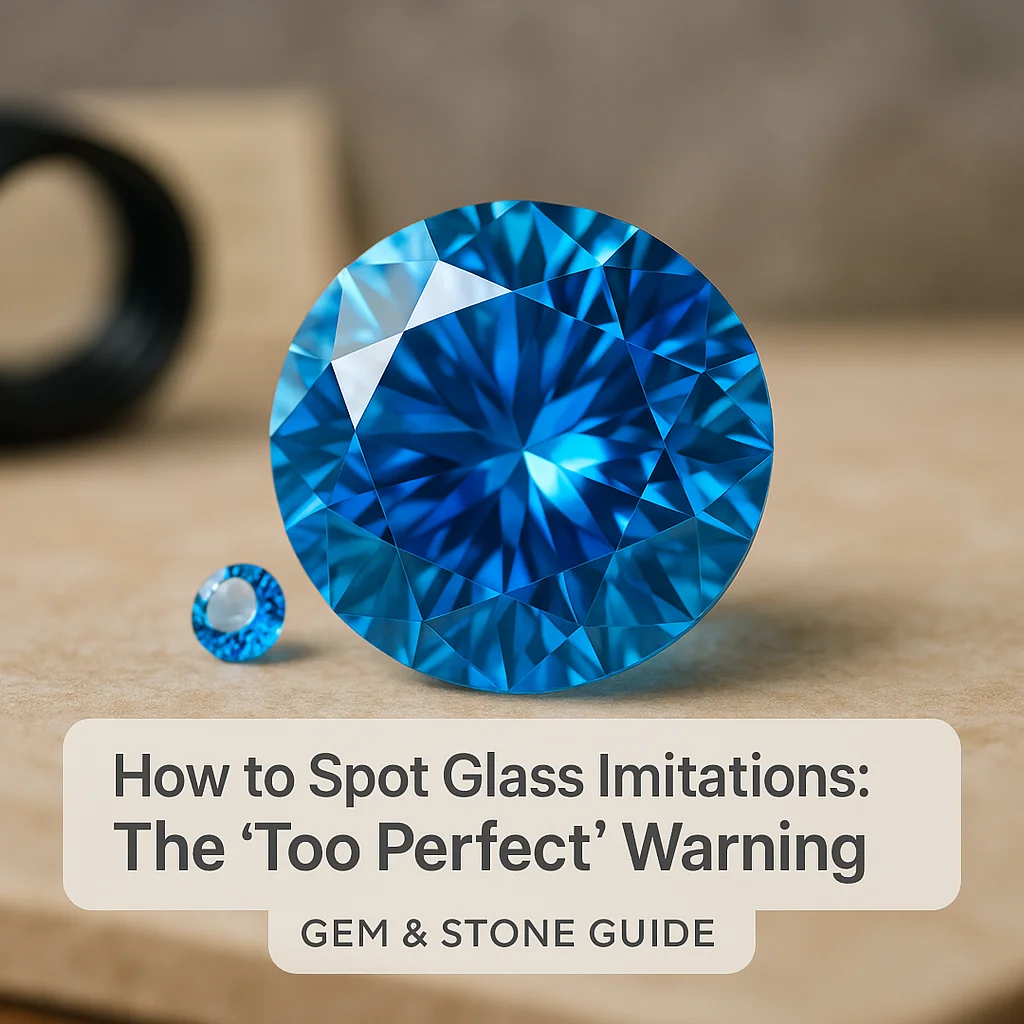
In the digital era, glass imitations can appear incredibly convincing in photographs. They are crafted to mimic perfection, preying on eager buyers who might not know what signs to watch out for. Before making a purchase, it’s crucial to pause and evaluate.
Here’s what you can do today to protect your investment:
- Request multiple photos from different angles.
- Check the return policy thoroughly.
- Search for seller reviews specifically mentioning glass imitations.
- Ask about any treatments the stone may have undergone.
- Compare the price with other sellers to gauge fairness.
- Use a magnifying glass to inspect for bubbles or scratches.
- If unsure, ask a professional jeweler for an impartial opinion.
- Remember: genuine imperfections often indicate authenticity.
🧪 What Actually Makes It “Real”
The term “real” can be slippery when it comes to gemstones. Is it natural, lab-grown, or imitation? Let’s simplify. A natural stone is mined from the earth, holding intrinsic authenticity. Lab-grown stones share identical properties but are cultivated in controlled environments.
Imitations, meanwhile, are crafted to resemble genuine stones but lack their properties. Consider doublets or triplets—assembled stones composed of multiple layers to imitate a single gem. Whether you’re looking at a natural gem or its lab-grown counterpart, documentation usually can’t reveal everything from a photo alone.
Be wary of prices that are too good to be true and certificates that don’t come from reputable laboratories. A stone’s authenticity often depends on more than just its appearance or paperwork.
🔍 My Buyer Checklist (Step by Step)
- Examine the stone for surface blemishes. If it's too perfect, probe deeper.
- Verify the seller's credibility through reviews and reputation.
- Check for natural inclusions. No flaws may hint at a man-made product.
- Ask for gemological reports from reputable labs like GIA or AGS.
- Assess the stone in natural light, avoiding misleading indoor lighting.
- Compare prices: Dramatic differences could signal issues.
- If it's an online purchase, confirm the return policy details.
- Consider independent appraisals for high-end purchases.
- Watch for signs of surface wear if it’s purportedly a vintage piece.
- Avoid impulse buying. Take your time.
Using this checklist, focus on maintaining a balance. It’s about being cautious, rather than overly skeptical. Sometimes, authentically perfect stones do exist.
⚠️ Mistakes People Make (And the Fix)
- Relying only on seller descriptions. Cross-check details independently.
- Ignoring lighting and photography tricks. Always validate in natural light.
- Swayed by too-good-to-be-true prices. Understand typical market ranges.
- Assuming an online certificate guarantees authenticity. Verify lab credibility.
- Overlooking return policies. Ensure they are favorable before purchase.
- Neglecting to inquire about treatments. Always ask for full disclosure.
- Expecting perfection leads to risks of buying glass. Embrace imperfections.
- Jumping to conclusions with just photographs. Request videos or more images.
- Confusing clarity with authenticity. Natural stones have unique inclusions.
- Failing to consult a professional. It’s wise when in doubt.
🎨 Look & Red Flags That Matter
The appearance of a gemstone can be significantly influenced by external factors. Lighting plays a pivotal role, with some stones looking vastly different under artificial lights compared to natural settings. Always view a stone in multiple lighting conditions.
Consider the cut and polish. While a flawless finish might be alluring, it could also mask the true nature of the gem. Look out for inclusions; not all are detrimental and can serve as proof of authenticity.
Watch for surface coatings and dyes, often used to enhance visual appeal but compromise the stone's integrity. The market is replete with treated stones, and their identification can sometimes come down to expertise.
🧼 Care & Storage (Safe Defaults)
- Clean with mild soap and water. Avoid harsh chemicals.
- Use a soft cloth for drying. Abrasives can damage surfaces.
- Store gemstones separately to prevent scratches.
- Avoid prolonged exposure to sunlight. It may fade colors.
- Check for special care instructions if the stone is treated.
- Keep away from extreme heat to prevent structural changes.
- For soft stones, like opals or pearls, handle with extra care.
- Avoid ultrasonic cleaners, especially for fracture-filled stones.
- Regular inspections can help catch early signs of damage.
- Consider professional cleaning for routine maintenance.
🧾 What Certificates Can (and Can’t) Prove
Certificates can provide assurance but understanding their scope is vital. Reputable labs will report on characteristics like carat weight, color, and treatments. However, the finer points of a gemstone, such as its provenance or natural status, may not be fully covered.
Sellers might emphasize certificates to boost buyer confidence, yet it's important to critically assess these claims. Certificates prove certain facts, but not all gems are certified. When faced with high-value purchases, consider a certificate as merely one layer of assurance.
An independent verification, in combination with a certificate, can provide a more comprehensive picture of a gem’s true nature, especially when significant sums are involved.
❓ Quick Questions Buyers Ask
Q: Can I trust the photos online?
A: Not entirely. Photos can be edited. Request additional images or videos.
Q: Why does a stone look different at home?
A: Lighting variations can affect appearance. Always check under different lights.
Q: What should I do if I suspect an imitation?
A: Consult a jeweler or get it tested by a gemological lab.
Q: Do certificates guarantee a stone's value?
A: They clarify characteristics. Value is influenced by market demand and rarity.
Q: Should I worry about imperfect stones?
A: Natural flaws often imply authenticity. Don’t dismiss them entirely.
Q: Are treated stones less valuable?
A: It depends on the treatment. Some reduce value, others are standard.
Q: How crucial is the return policy?
A: Very. A favorable policy offers protection if expectations aren’t met.
Q: Is a higher price always better?
A: Not necessarily. Compare across similar items to gauge fairness.
📌 If You Only Remember 5 Things
- Perfect clarity often hints at imitation. Seek natural imperfections.
- Verify authenticity through trusted lab certifications.
- Examine gems under different lighting to confirm colors.
- A generous return policy is your safeguard.
- Consult professionals to alleviate doubts.
- Cautious cleaning preserves your gemstones longer.
- In gemstone buying, patience is your strongest ally.