💎 Lapis Lazili Buying Guide: Color, Pyrite, and the Fakes
🧭 The 60-Second Take
You're browsing online for lapis lazuli jewelry. The photos seem perfect—maybe too perfect. The certificate looks convincing, but can you really trust it? Lighting tricks might be playing games with how these stones appear.
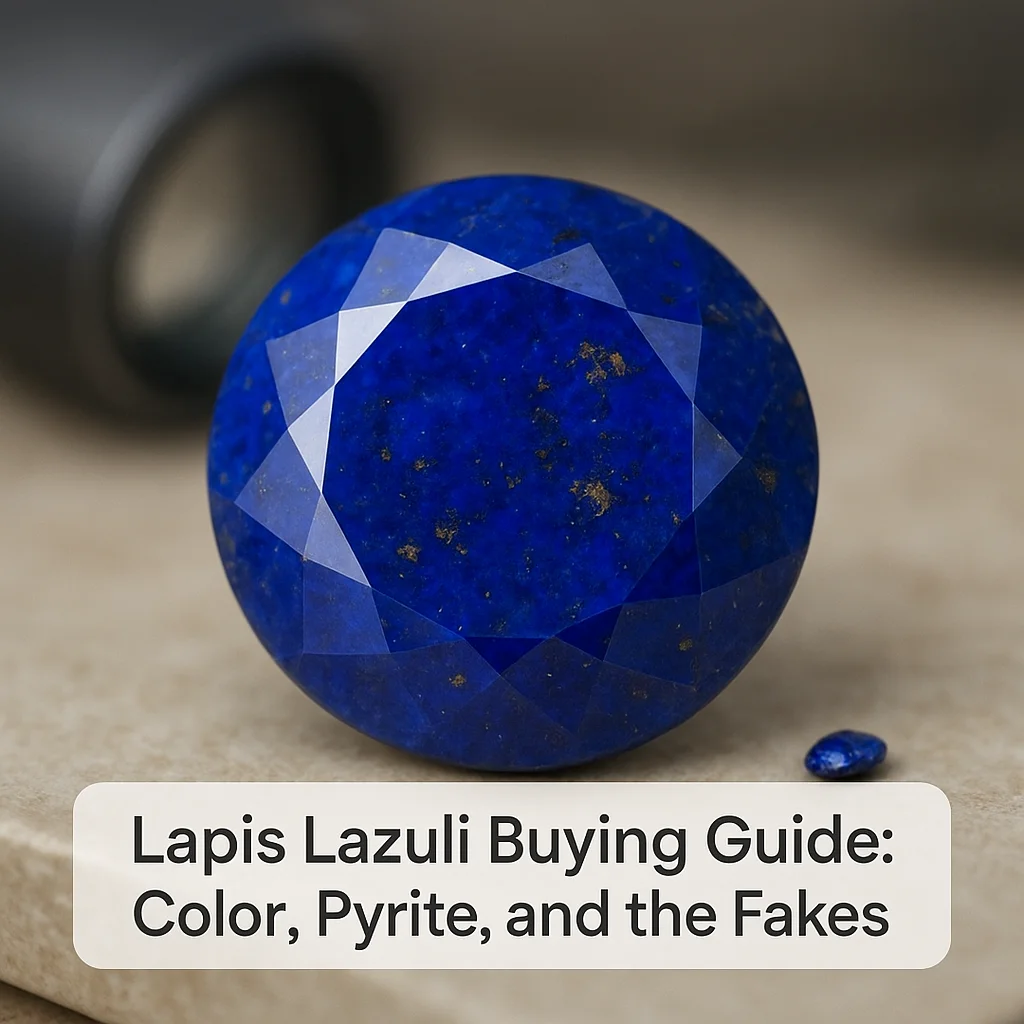
It's easy to feel overwhelmed by the variety of options and prices. Many buyers set out with a budget and a basic idea of what they want, but end up confused and uncertain about their purchase.
Here's a quick list of actions that can help you navigate the market:
- Research typical prices for lapis lazuli, to set reasonable expectations.
- Always inquire about return policies before purchase.
- Use consistent lighting to evaluate color accurately.
- Ask for close-up images to assess quality and look for inconsistencies.
- Be skeptical of "perfect" color in suspiciously low-cost items.
- Consider getting a lab certificate for high-value purchases.
- Trust your gut; if it feels off, it probably is.
- Talk to a reputable gemologist if you're uncertain.
🧪 What Actually Makes It “Real”
Lapis lazuli can be natural, lab-grown, imitation, or assembled into doublets or triplets. Natural lapis lazuli is sourced directly from the earth, generally prized for its deep blue color and speckled pyrite inclusions.
Lab-grown stones mimic the real thing visually and chemically. Imitations are lookalikes but might not share any chemical similarities. Assembled stones are composites made to enhance appearance or lower cost.
Remember, while photos can guide your first impressions, they don't tell the whole story. Price tags and certificates can be misleading, so approach them with a critical eye.
🔍 My Buyer Checklist (Step by Step)
- If the stone is unusually cheap, investigate further.
- Examine images for pyrite inclusions; authentic stones often have these.
- Check for uniformity in color. Natural stones usually have variations.
- If possible, view the gemstone under natural light to evaluate its true color.
- Ask the seller about treatments or color enhancements.
- Review the vendor's return policy carefully before purchasing.
- If it seems too perfect and flawless, reassess its authenticity.
- Consider a certificate from a reputable lab, especially for costlier items.
- Use a loupe to inspect for dye or surface coating on the stone.
- If you're unsure, consult a professional gemologist.
This checklist serves as a guide to navigating the market without overreacting. It's a tool, not a guarantee, so keep your expectations balanced.
⚠️ Mistakes People Make (And the Fix)
- Relying on photos alone — Always ask for detailed descriptions and additional images.
- Ignoring lighting differences — Evaluate the stone under various lighting conditions.
- Buying without a return policy — Only purchase from sellers with a flexible return policy.
- Falling for "perfect" stones — Understand that most genuine stones have natural variances.
- Not checking for pyrite — Look for the characteristic gold flecks of natural lapis lazuli.
- Overlooking the role of cut and polish — These can greatly affect the stone's luster.
- Assuming certificates provide all answers — They might not convey all nuances of treatment.
- Skipping professional advice — A gemologist's input is invaluable when uncertain.
- Dismissing price anomalies — Investigate lower-than-average prices thoroughly.
- Neglecting to ask about treatments — Inquire about any enhancements to the gemstone.
🎨 Look & Red Flags That Matter
Different cuts and polishes can impact how the stone catches light, sometimes enhancing its beauty and other times obscuring flaws. High polish shines but may also hide treatments like coatings or dyes.
Lapis lazuli's iconic deep blue can vary with lighting. A reputable seller should be willing to provide images under varied conditions.
Common treatments such as dyeing are often used to intensify color or mask surface imperfections. If deeply skeptical, request information on any enhancements the stone may have undergone.
Inclusions of pyrite are a key indicator of authenticity, lending a natural glitter that can't easily be replicated in imitations.
🧼 Care & Storage (Safe Defaults)
- Do use mild soap, water, and a soft cloth for cleaning.
- Do store separately from harder gemstones to prevent scratches.
- Do keep away from solvents, acids, and harsh substances.
- Do protect from high temperatures and direct sunlight.
- Don’t use ultrasonic cleaners, which might damage the stone.
- Don’t expose to hairspray or perfumes, which can mar the surface.
- Don’t leave in damp environments, as lapis lazuli is porous.
- Don’t test for authenticity at home with harsh methods.
- Do consider professional care for high-value pieces.
- Do be gentle with treated stones; they may require extra care.
🧾 What Certificates Can (and Can’t) Prove
Laboratory certificates usually report the stone's mineral composition and any treatments it has experienced. A trusted lab's report can verify authenticity but can't always assure quality if it's not testing for treatments or enhancements.
Sellers may exaggerate the importance or meaning of a certificate, especially if it's from a less reputable entity. Always verify the credentials of the lab issuing the certificate.
Consider obtaining a certificate for high-value purchases, as it could provide peace of mind and potential resale benefits. However, understand what it covers and what it might omit.
❓ Quick Questions Buyers Ask
Q: Is lapis lazuli a valuable gemstone?
A: It varies. While some high-quality stones are expensive, others are more affordable.
Q: How do I know if my lapis lazuli is real?
A: Look for pyrite inclusions and consult a gemologist if in doubt.
Q: Can lapis lazuli be treated?
A: Yes, common treatments include dyeing to enhance color.
Q: Is there a difference between natural and lab-grown lapis lazuli?
A: Yes, natural stones occur naturally, while lab-grown stones are artificially created.
Q: Does the presence of pyrite affect the value?
A: Pyrite inclusions are generally valued positively, as they're a marker of authenticity.
Q: Should I always ask for a certificate?
A: For high-value purchases, a certificate is advisable but not always necessary.
Q: What if the stone looks different in natural light?
A: This is common; natural light reveals the truest color.
Q: Are cheaper stones necessarily fake?
A: Not necessarily, but it's worth investigating further.
📌 If You Only Remember 5 Things
- Price alone doesn't determine value; quality varies.
- Real lapis lazuli often includes pyrite specks.
- Always check the seller's return policy.
- Lighting affects color perception; use natural light when possible.
- Certificates can inform but not guarantee untreated stones.
- Consult professionals when in doubt about authenticity.
- Handle your stones carefully to preserve their natural beauty.