💎 Real vs Fake Turquoise: The Quick Eye-Test + Smell-Test Debate
🧭 The 60-Second Take
You're browsing an online marketplace and spot what seems like a stunning turquoise piece at an even more stunning price. The photos are nice, the seller offers a "certificate," and it's easy to click that buy button. But something holds you back.
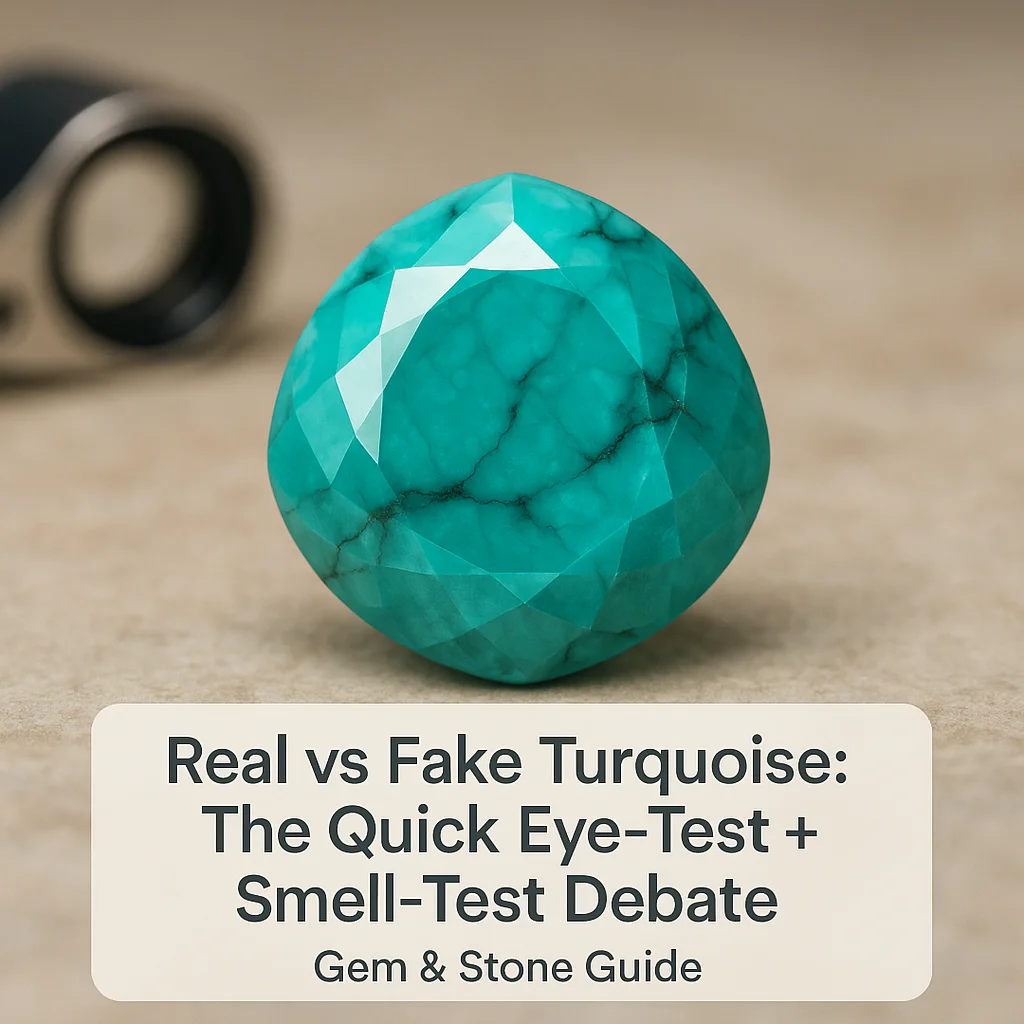
Lighting tricks and photo angles can play a huge part in how gemstones appear online. That vivid turquoise might look very different in person, or worse, not be genuine turquoise at all. Here's how to make a smarter decision:
- Check the lighting used in the photos. Daylight hues are preferable.
- Examine the “certificate.” Real versus vague assurances.
- Check seller feedback for authenticity mentions.
- Analyze the price — is it surprisingly low for the size and quality?
- Look for consistent coloration; inconsistent veining can be a giveaway.
- Ask the seller direct questions about treatment or enhancement.
- Consider return policies carefully.
- Research the seller's reputation beyond their store front.
🧪 What Actually Makes It “Real”
Understanding what makes turquoise real involves knowing the difference between natural, lab-grown, and imitation options. Natural turquoise forms naturally and is cut and polished for use, while lab-grown stones are chemically identical but created in a controlled environment.
Imitation stones, often dyed howlite or magnesite, mimic the appearance but aren't chemically the same. Doublets or triplets are assembled layers, sometimes used to create the illusion of thicker material. These distinctions matter, especially when you're basing decisions on photos or listings.
Photos alone can be misleading; they don’t often show treatment evidence or the stone’s true depth of color. Paperwork can mislead if it's not from a reputable source. Remember, an unusually low price for turquoise is a red flag that deserves closer scrutiny.
🔍 My Buyer Checklist (Step by Step)
- If the price is unusually low, ask detailed questions.
- If the stone looks uniformly colored, inquire about dying or stabilization.
- Inspect photos for matrix patterns; fake ones often look too perfect.
- If the seller provides a certificate, confirm the issuing lab’s reputation.
- Test descriptions for "dyed" or "treated" mentions.
- If the stone appears excessively shiny, consider an artificial coating possibility.
- Check return policy; a generous one may indicate seller confidence.
- If the stone seems perfect, that's suspicious; natural stones have quirks.
- Read independent reviews about the seller.
- Consider professional evaluation before purchasing high-value items.
- If in doubt, consult with a reputable jeweler for an independent opinion.
Use this checklist to remain methodical but not overly paranoid. The goal is due diligence, not decision paralysis. Spotting potential issues early can save money and disappointment.
⚠️ Mistakes People Make (And the Fix)
- Buying based on price alone — Verify authenticity through other channels.
- Ignoring seller feedback history — Always check buyer reviews.
- Overlooking return policy — Ensure there's a fair return option.
- Trusting perfect uniform color — Question potential artificial treatments.
- Accepting all certificates as equal — Verify the certifying authority.
- Forgetting lighting impacts — Seek photos in natural daylight.
- Assuming no warranty means low risk — That could be costly later.
- Not questioning too-shiny stones — Artificial coatings might be present.
- Failing to research the company's reputation — Go beyond their platform.
- Ignoring seller communication clues — Attend to vague or evasive responses.
🎨 Look & Red Flags That Matter
The appearance of turquoise is influenced by lighting, cut, polish, and other treatments. A common issue is lighting; under fluorescent or artificial light, colors can appear vastly different. Natural sunlight offers a true indication.
The surface of genuine turquoise may have a waxy luster, and some stone stabilization methods fill pores with resin or plastic, altering its appearance. Observe the matrix; it's usually random and natural, where fakes can have an overtly consistent pattern.
Be cautious with stones that seem overly vibrant; enhanced or dyed stones might elevate appearance artificially. Similarly, beware of stones with too much gleam, as they might be artificially polished or coated.
🧼 Care & Storage (Safe Defaults)
- Do clean with mild soap, water, and a soft cloth.
- Don't expose to harsh chemicals or ultrasonic cleaners.
- Do store separately to avoid scratches.
- Don't wear during rigorous activities.
- Do keep away from direct sunlight and heat sources.
- Don't allow prolonged exposure to oils and lotions.
- Do check regularly for any signs of damage or change.
- Don't use hard brushes or abrasive materials to clean.
- Do ensure jewelry settings are checked and maintained.
- Don't soak in water or let moisture accumulate.
- Do use storage cases lined with fabric to reduce humidity.
- Don't place under heavy items that may crush the stone.
- Do handle with clean, dry hands to minimize oils transfer.
- Don't forget to evaluate wear over time for necessary repairs.
🧾 What Certificates Can (and Can’t) Prove
Certificates for gemstones can offer useful verification but aren't the entire story. Labs usually report details about authenticity, treatment types, and occasionally origin. However, the authority of the certifying lab is key.
Sellers sometimes exaggerate what certificates imply; for example, certified stones might still undergo treatments not fully disclosed. It's important to scrutinize what the paperwork actually covers and who issued it.
A certificate can be worth it, especially for high-value purchases, as it offers some assurance of what you're buying. However, couple that with independent verification when possible to ensure peace of mind.
❓ Quick Questions Buyers Ask
Q: Can I tell real turquoise from photos?
A: Not entirely, as lighting and angles can be deceiving. Use photos as a guide and confirm details with the seller.
Q: Are all certifications trustworthy?
A: It depends on the issuing lab. Research their reputation.
Q: How important is price in determining real vs fake?
A: Very. Prices too good to be true usually are.
Q: Can turquoise be naturally very shiny?
A: Generally, very shiny stones may have coatings or treatments.
Q: Is turquoise care complicated?
A: Not if you follow basic guidelines. Avoid harsh chemicals and excessive moisture.
Q: Should I always seek professional evaluation for expensive pieces?
A: Yes, especially for validation of authenticity.
Q: Do return policies affect authenticity concerns?
A: They might. A lenient policy can suggest seller confidence.
Q: What is a doublet or triplet?
A: Assembled materials layered to give the appearance of solidness.
📌 If You Only Remember 5 Things
- Always verify the source and reputation of certificates.
- Use photos cautiously as part of your evaluation.
- Engage sellers with pointed questions about treatments.
- Ensure there's a clear and fair return policy.
- Trust your instincts if something feels off; investigate further.
- Remember, good deals require good diligence.
- Being informed will always be your best defense against fraud.