💎 The Most Common Gemstone Scams (2026 Edition Checklist)
🧭 The 60-Second Take
You're browsing online, captivated by a glittering gemstone that seems too good to be true. The photo is stunning, the description promises "perfection," and there's a certificate that looks legitimate. But how can you be sure?
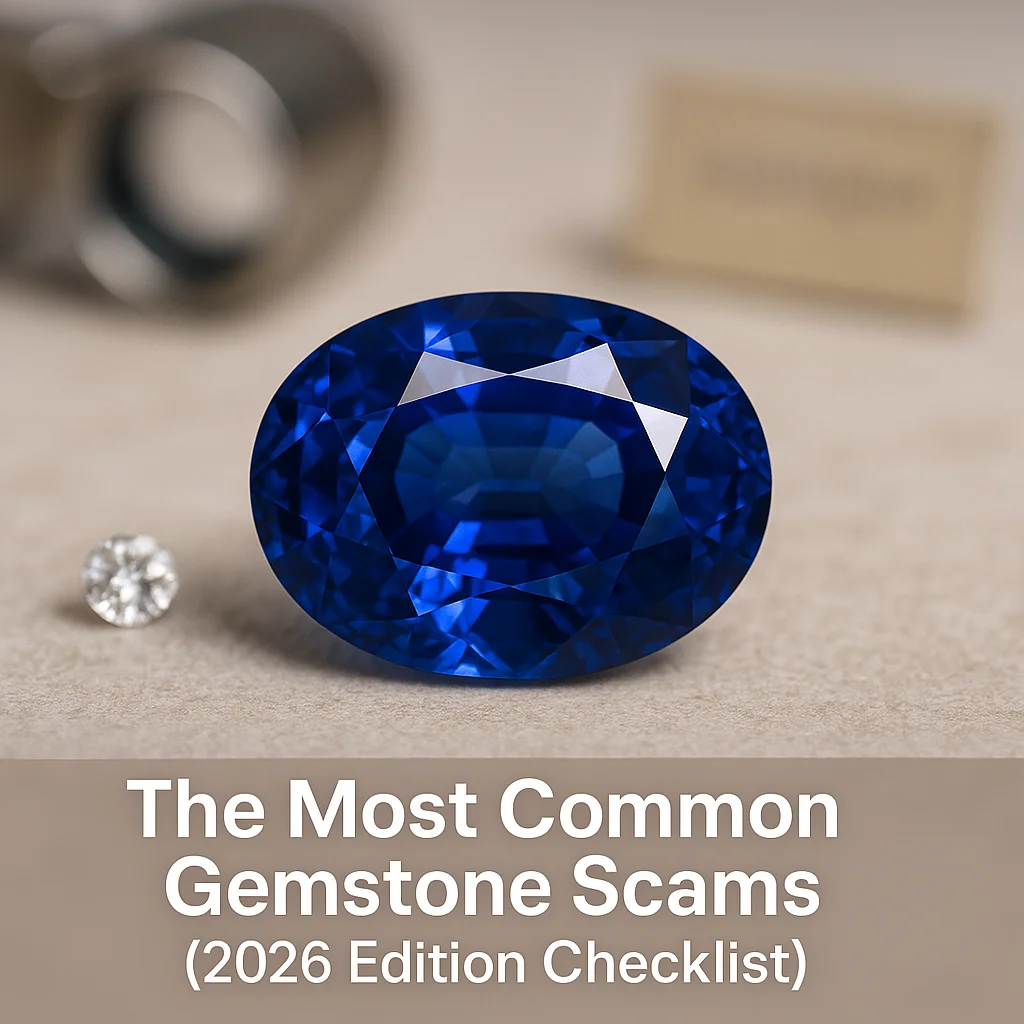
In today's marketplace, gemstone scams are all too common. Slick photography and too-good-to-be-true prices can easily mislead even cautious buyers. Fortunately, there are practical steps you can take to protect yourself.
- Always examine gemstone photos critically. Zoom in and look for inconsistencies.
- Research the seller's reputation through reviews and ratings.
- Understand the key differences between natural and lab-grown stones.
- Verify any certificates with the issuing lab, if possible.
- Be cautious of predominantly blue-tinted or overly bright images.
- Check the return policy before buying.
- Ask the seller directly about treatments and enhancements.
🧪 What Actually Makes It “Real”
The world of gemstones can be complex, with natural, lab-grown, imitation, and assembled stones all presenting options. Natural gemstones are formed in the earth, whereas lab-grown are synthetics made in controlled conditions that mimic natural processes. Imitations, such as cubic zirconia for diamonds, resemble real gems but are made from entirely different materials.
Photos alone often can't reveal whether a gemstone is genuine, as lighting and angles can be manipulated. Price can be an indicator, but isn't foolproof, as both overpriced fakes and underpriced genuine finds exist. "Paperwork," or certificates, can also be misleading if not from trusted labs.
🔍 My Buyer Checklist (Step by Step)
- Check seller reviews. If mostly positive, proceed with caution. If negative, reconsider.
- Examine if photos show all angles. If yes, analyze them. If no, request more images.
- Compare prices across multiple platforms. If consistently low, question authenticity.
- Ask the seller about any known treatments. If transparent, it's a positive sign. If evasive, be wary.
- Review return policies thoroughly. If flexible, proceed; if strict, be cautious.
- Inspect the certificate’s issuing lab. If reputable, it's usually a good indicator. If unknown, verify.
- Understand the stone’s typical inclusions. If too perfect, question authenticity.
- Look at shipping details. If vague, confirm before purchase.
- Consider the source country. If known for quality, it's a plus. If not, research more.
- Trust your instincts. If unsure, seek expert advice before purchasing.
This checklist aims to empower buyers without causing unnecessary anxiety. Used wisely, it enhances decision-making without overreaction.
⚠️ Mistakes People Make (And the Fix)
- Buying on impulse. Always do your research first.
- Trusting images over reality. Request additional photos or videos.
- Ignoring the return policy. Ensure it's reasonable before committing.
- Being swayed by "perfect" stones. Natural gems usually have inclusions.
- Underestimating lighting effects. Ask for neutral, unedited images.
- Neglecting to verify certificates. Contact the issuing lab if in doubt.
- Assuming higher price means better quality. Research comparable stones.
- Overlooking too-good-to-be-true deals. They often are just that.
- Forgetting to question the seller. A good seller is open to queries.
- Overreacting to minor flaws. Authentic stones aren't flawless.
🎨 Look & Red Flags That Matter
The appearance of a gemstone is crucial, but it's essential to understand the factors affecting its look. Lighting plays a crucial role; stones viewed under different lights can appear vastly different. A well-cut gem will exhibit more brilliance, whereas poor cuts may dull its beauty.
Common gemstone treatments like heat treatment or radiation can enhance a stone's color, but these should always be disclosed. Surface coatings and dyes can also change appearance, often used for gems like turquoise and pearls.
Inclusions or natural imperfections may at first seem undesirable, but they can confirm a gem's authenticity. However, excessive inclusions could affect durability and value.
🧼 Care & Storage (Safe Defaults)
- Do use mild soap, water, and a soft cloth for cleaning.
- Don’t use ultrasonic cleaners on delicate gems like pearls or opals.
- Do store gems separately to avoid scratches.
- Don’t expose treated or fragile gems to strong sunlight for prolonged periods.
- Do seek professional cleaning for valuable or complex jewelry.
- Don’t wear gemstones during heavy lifting or strenuous activities.
- Do ensure any set gemstones are regularly checked for security.
- Don’t leave gemstones in high humidity areas like bathrooms.
- Do handle amber, emerald, opal, and turquoise with extra care due to their porosity.
- Don’t apply perfumes or hair sprays when wearing gemstones.
🧾 What Certificates Can (and Can’t) Prove
Certificates, when sourced from reliable labs, provide valuable insights into a gemstone's characteristics, such as carat weight, clarity, and any known treatments. However, a lab report does not always guarantee the quality or beauty of the stone.
Sellers might exaggerate a gemstone's rarity or prestige, so it's essential to read certificates critically and confirm details with the issuing body. Investing in a certificate is beneficial for high-value purchases or when selling a gemstone later.
While certificates offer peace of mind regarding the stone's properties, they don't replace hands-on appraisals and personal inspection.
❓ Quick Questions Buyers Ask
Q: How can I verify a seller's reputation?
A: Check customer reviews, ratings, and professional accreditations.
Q: Are online gemstone purchases safe?
A: Yes, if you buy from reputable sources and verify all claims.
Q: What if the stone doesn't match the description?
A: Ensure there's a good return policy to address such issues.
Q: Are lab-grown stones worth buying?
A: They can be a cost-effective alternative to natural stones with similar beauty.
Q: How do I spot an imitation stone?
A: Look for inconsistencies in color and clarity, and verify with a professional.
Q: Do all genuine stones come with certificates?
A: Not always. Certificates are more common with higher-value purchases.
Q: Can surface scratches affect a gemstone's value?
A: Yes, especially if they reduce the stone's brilliance.
Q: Is insurance necessary for gemstones?
A: It depends on the stone's value and your personal preference for peace of mind.
📌 If You Only Remember 5 Things
- Always research before purchasing.
- Be wary of perfect-looking stones; inclusions are normal.
- Verify certificates with the issuing lab.
- Consider the reputation of both the seller and the gemstone’s origin.
- Handle your gemstones with care to preserve their beauty.
- Ask questions to ensure transparency.
- Trust your intuition—if uncertain, wait or consult a gemologist.