💎 The One Test I Use Before Trusting Any “Certificate”
🧭 The 60-Second Take
You find yourself enchanted by a gemstone online. The photos are dazzling, the price seems fair, and there's even a certificate. But can you really trust it? This scenario is all too common for gemstone buyers navigating the enticing yet murky waters of online shopping.
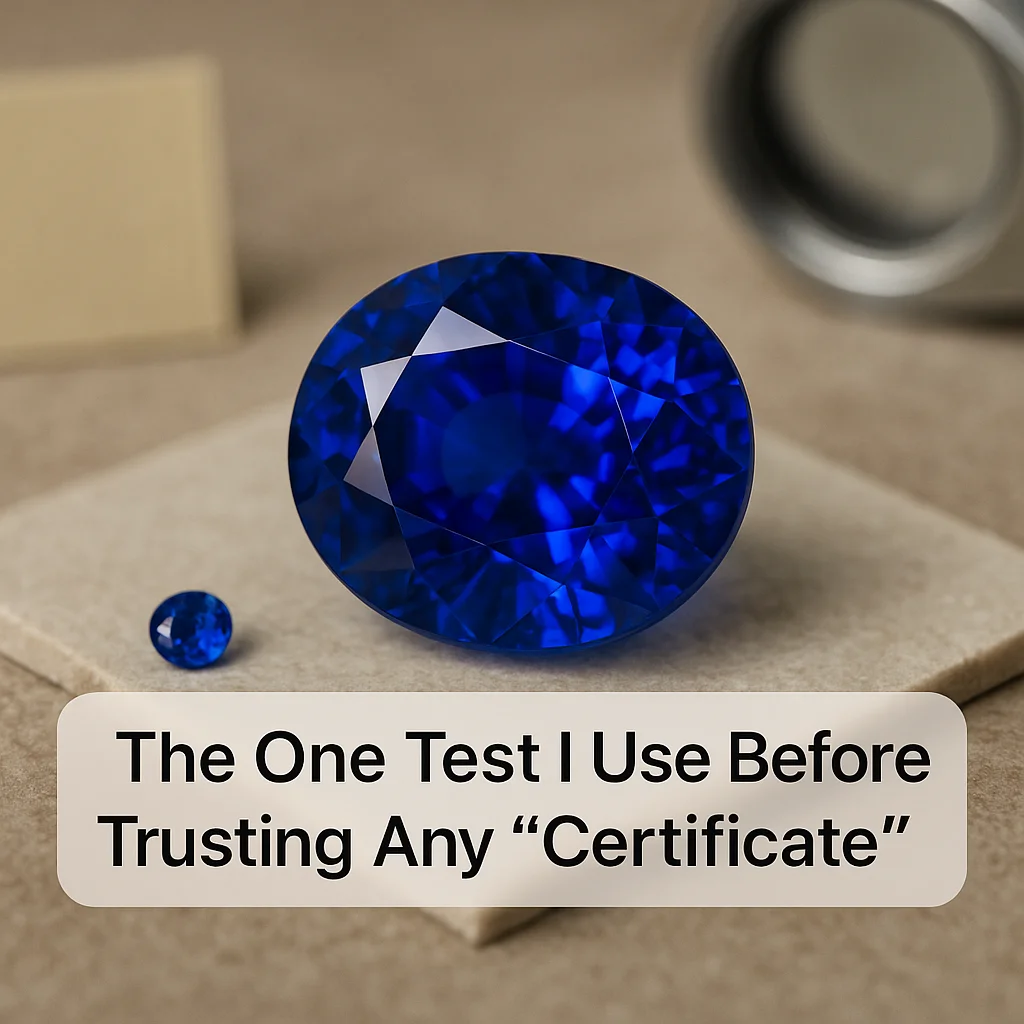
Certificates can offer assurance, yet lighting tricks or carefully chosen angles in photos may mask key attributes. Before diving into any purchase, understanding how to interpret and validate these certificates is paramount.
Here's a quick list of actions to help guide your decision today:
- Check the certificate issuer. Only trust well-known laboratories.
- Research the seller's return policy. It should be clear and reasonable.
- Compare the gemstone price to market standards. Too low may be a red flag.
- Avoid assuming a certificate equals authenticity. Verify the lab independently.
- Seek expert advice if uncertain about lab reports.
- Plan for in-person viewing whenever feasible.
- Make use of jeweler's reputable verification services.
- Stay informed about lighting's impact on gemstone appearance.
🧪 What Actually Makes It “Real”
The authenticity of a gemstone often confuses buyers. Natural gems are mined from the earth, while lab-grown stones share the same chemical structure but are created in a controlled environment. Imitation stones merely look like the real thing, and assembled stones, such as doublets or triplets, combine multiple layers.
Photos can mislead, often exaggerating color and brilliance due to lighting. Price is another clue but can deceive. A certificate sheds light on some truths but by itself is not proof of authenticity. Thus, understanding these distinctions and what they signify will inform wiser purchases.
🔍 My Buyer Checklist (Step by Step)
- If the certificate is from a recognized lab, proceed to compare details.
- Examine fine print for gemstone treatments; if notable, research its implications.
- If the gemstone price is too good to be true, investigate further.
- If unsure of the gem's origin, consult an expert for authentication.
- When in doubt, utilize a jeweler's loupe to check for visible flaws.
- Check the certificate number with the lab for verification.
- If lighting discrepancies exist in photos, request more images.
- Ask the seller direct questions about gemstone sourcing.
- If plausible, inspect the gemstone personally under natural light.
- If return policies are unclear, consider other buying options.
- Rethink if documentation lacks specific gemstone details.
- When relevant, verify gemstone weight and dimensions match the report.
Using this checklist helps mitigate unnecessary stress. While thorough, it ensures a balanced approach to confirming gemstone credibility without undue alarm.
⚠️ Mistakes People Make (And the Fix)
- Assuming all certificates are equal; check issuer credibility.
- Relying on seller photos alone; request additional images under varied lighting.
- Ignoring white balance adjustments in photos; compare across different listings.
- Thinking a “perfect” gem at a low price is real; investigate thoroughly.
- Forgetting to seek expert advice for high-value purchases; always consult.
- Overlooking return policies; ensure they are favorable before purchase.
- Confusing lab-grown with natural; verify gem origins clearly.
- Misjudging the importance of inclusions; ask for a detailed analysis.
- Underestimating gemstone treatments; fully understand their effects.
- Overreacting to minor inclusions; understand their role in stone character.
🎨 Look & Red Flags That Matter
The appearance of a gemstone can change dramatically based on lighting. A stone that glows in store lights may look dimmer in natural settings. Cuts and polish are vital for reflecting light and enhancing a gem's allure.
Inclusions tell stories of formation and authenticity. Yet, excessive inclusions can affect durability. Surface coatings and dyes can enhance or deceive. Understanding these characteristics helps distinguish between natural charm and artificial enhancements.
Watch for common treatments like heat or irradiation, often seen in the market. Always question the effects and permanence of these treatments when evaluating gems, especially if documented in a certificate.
🧼 Care & Storage (Safe Defaults)
- Do clean gently using mild soap and water.
- Don’t use harsh chemicals or ultrasonic cleaners on soft gems.
- Do store separately to prevent scratching.
- Don’t expose to extreme temperatures or direct sunlight for long periods.
- Do dry thoroughly with a soft cloth before storage.
- Don’t assume all stones are robust; check specific care needs.
- Do use padded storage, especially for delicate gems.
- Don’t forget to check jewelry settings periodically for security.
- Do be cautious with porous and treated stones like opals and emeralds.
- Don’t clean in a hurry; take the time for proper care.
- Do appraise regularly to ensure insurance covers accurate value. >
🧾 What Certificates Can (and Can’t) Prove
Certificates typically confirm a gemstone's type, weight, dimensions, and treatments. Renowned labs also identify whether a stone is natural or lab-grown. However, not all labs are equal. Some sellers might exaggerate or misrepresent these reports to inflate value or authenticity claims.
When is a certificate truly valuable? It's crucial when dealing with high-value purchases, rare stones, or significant treatments affecting value. Always verify through cross-checking with the issuing lab and consulting trusted gemologists for an added layer of safety.
Yet, remember that while certificates are informative, they aren’t the sole truth bearer. Pair them with visual inspections and professional guidance for purchase confidence.
❓ Quick Questions Buyers Ask
Q: Can photos alone verify gemstone authenticity?
A: No, they can be misleading due to lighting and angles.
Q: Do all gemstones need certificates?
A: Not always, but it's wise for higher value or rare stones.
Q: Are all labs equally reliable?
A: No, some are more reputable. Always verify lab accreditation.
Q: Can a lab report guarantee a stone is untreated?
A: It depends on the tests conducted; some treatments are hard to detect.
Q: Is a natural stone more valuable than lab-grown?
A: Often yes, but quality, rarity, and size are also key factors.
Q: Should inclusions worry me?
A: Not always; small inclusions in gems like diamonds are common.
Q: How can I verify a certificate?
A: Contact the issuer directly, providing the certificate number.
Q: Are treated stones less durable?
A: It can depend on treatment type; some weaken structure.
📌 If You Only Remember 5 Things
- Always verify the certificate with the issuing lab.
- Natural light often reveals true gem color and clarity.
- Beware of prices far below market value; investigate.
- Reputable labs establish the stone's fundamental traits.
- Consult professionals for significant or unsure purchases.
- Understand common treatments within the gemstone market.
- Confident purchases stem from information and cautious validation.