💎 Coated Gemstones Warning Signs
🪨 What It Is
Coated gemstones are natural or synthetic stones treated with a layer or film of material to enhance their appearance. This treatment is often used to improve color, clarity, or luster. The coating technique is commonly used on gemstones like quartz, topaz, and diamonds.
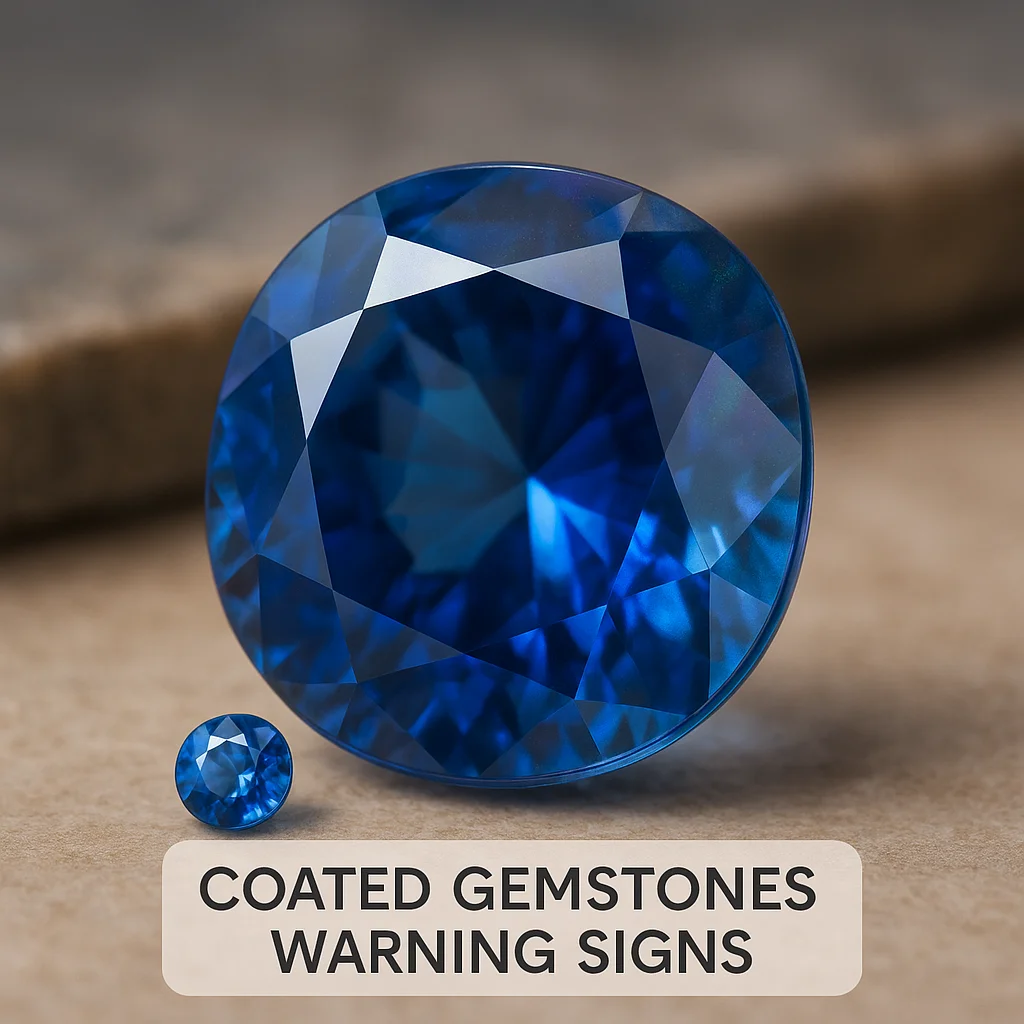
These stones can be appealing due to their enhanced bright colors and shine. However, buyers should be cautious as the coating may not be durable and can wear off over time, affecting the stone's appearance and value.
In this article, you'll learn about the characteristics of coated gemstones, their origin, how to care for them, and the signs that a gemstone might be coated. Understanding these factors will help you make informed decisions when purchasing gemstones.
🌍 Where It Comes From
Coated gemstones can be found worldwide, as they result from a treatment process applied to stones sourced from various regions. The natural gemstones used for coating might originate from well-known gem-producing areas such as Brazil, parts of Africa, and Asia.
The process of coating can transform otherwise less desirable stones into vibrant pieces, making them more appealing in the retail market. Certain locations are known for specific types of gemstones, which may affect the stone's value and market reputation.
The origin of the base gemstone can significantly impact its natural qualities, such as color and clarity. Purchasing from reputable sources with clear disclosure practices is crucial, as this can provide insight into the treatment history and overall quality of the gemstone.
🔬 How It Forms
The coating process involves applying a thin layer of material on the gemstone's surface, usually through methods like chemical vapor deposition or sputtering. These processes can create a durable film that enhances the stone's visual properties.
While the gemstone underneath forms naturally, often requiring heat, pressure, and time, the coating is a result of human intervention aimed at improving or altering its appearance. Factors such as the presence of trace elements and defects within the base stone can also affect how the coating is applied and its final look.
Coated gemstones do not form naturally, but the process enhances the stone's aesthetic qualities which can increase demand, despite the potential drawbacks in terms of durability.
🎨 Color and Look
Coated gemstones are often prized for their enhanced aesthetic appeal. The coating can produce colors that are more vivid compared to the untreated stone. This can include deep blues, vibrant reds, and even rare hues like rainbow iridescence.
The application of coatings can also create optical effects such as iridescence or a metallic shine, depending on the materials used. This visual enhancement plays a significant role in the stone's desirability.
Common treatments used to enhance or alter a gem's appearance include heat, dyeing, and irradiation. With coated gemstones, the uniformity and adherence of the coating are essential for maintaining its look over time.
🧪 Properties That Matter
Understanding the properties of gemstones, including those that are coated, is crucial when considering their use in jewelry. The Mohs hardness of a gemstone indicates its resistance to scratching. For instance, quartz, a common coated stone, has a hardness of 7, making it resistant to moderate wear.
Toughness reflects the stone's ability to withstand chipping or breaking, while cleavage refers to how a stone naturally splits along certain planes. Coated stones often have properties similar to their untreated counterparts, but the coating may have different durability.
Luster is the stone's surface shine and can be enhanced by a coating, making it more eye-catching. In terms of design, stones with high luster and hardness are often preferred for rings or everyday wear, while softer stones might be used in pendants or earrings.
✨ Meanings, Birthstones, and Culture
Gemstones hold cultural significance and are often associated with specific months or traditions. While coated gemstones themselves are not traditional birthstones, they may serve as affordable alternatives to enhance or mimic the appearance of precious birthstones.
The coatings may allow for the creation of vibrant colors corresponding to birthstones such as sapphire for September or emerald for May. However, it's important to remember that these associations are cultural and not scientifically proven.
Traditionally, stones like sapphire and diamond carry meanings of wisdom and purity, respectively. Coated stones can emulate these as desired, offering aesthetic substitutes in jewelry.
🧼 Care and Cleaning
Coated gemstones require careful maintenance to preserve their enhanced appearance. Gentle cleaning with mild soap and water is usually safe. To dry, it's best to use a soft cloth, avoiding harsh chemicals or abrasive materials that could erode the coating.
Sudden temperature changes or prolonged soaking should be avoided as they could compromise the coating's integrity. For porous or soft stones, extra caution is advised to prevent damage.
Proper storage is essential; keeping coated gemstones separate from harder objects can prevent surface scratches. Using a soft pouch or jewelry box with padding helps maintain their polished finish over time.
🛒 Buying Tips and What to Check
When purchasing coated gemstones, several factors can influence price and quality, such as color uniformity, coating presence, and overall finish. Inquiring about any treatments and requesting a gemological report are advisable, especially for high-value pieces.
Lab reports can offer valuable insights into a gemstone's authenticity, noting any treatments or enhancements. However, they cannot guarantee the future durability of a coated surface.
For online purchases, evaluating clear photos, considering seller reputation, and understanding return policies are key. A beginner's checklist might include questions about the coating process, especially for large or investment-grade stones.
⚠️ Real vs Fake and Common Look-Alikes
Distinguishing between natural and synthetic gemstones, as well as recognizing imitation or assembled stones, is essential. Natural stones are formed in nature, while synthetics are lab-grown with similar chemical compositions but without the time-related imperfections.
Imitation stones, such as glass or plastic, mimic the look of real gems but lack the same properties. Assembled stones like doublets or triplets combine multiple layers to resemble high-quality gems, with coatings sometimes serving similar purposes.
Consulting a professional gemologist for testing is advised to accurately identify stones, rather than relying on home tests which could cause damage or provide unreliable results.
❓ Common Questions and Misconceptions
Is it a mineral or a rock? Coated gemstones are minerals treated post-extraction.
Is it a birthstone? Coated stones can mimic birthstones but are not traditional choices.
Will it scratch easily? Scratch resistance depends on the base gemstone, not the coating.
Can it go in water? Brief contact is fine, but avoid prolonged exposure to maintain the coating.
Does color fade in sunlight? The coating could degrade with prolonged UV exposure.
What treatments are common? Coatings, dyeing, irradiation, and heat treatments are frequent.
Is lab-grown 'fake'? Lab-grown stones have real properties but aren't naturally formed.
How do I store it safely? Store separately in pouches to avoid scratches.
Do inclusions always lower value? Not always, but severe inclusions can impact durability and appearance.
How do I pick a good one for jewelry? Consider color, clarity, and the reputation of the seller.
📌 Summary
- Coated gemstones are treated to enhance appearance.
- They exhibit vibrant colors and improved luster.
- Formation involves natural stones enhanced with films.
- Considerations include hardness and luster for wearability.
- Common treatments include coatings and dyeing.
- Care involves gentle cleaning and cautious storage.
- Best suited for pendants, earrings, and non-daily wear.
- Look-alikes include synthetics and assembled stones.
- Authenticity confirmed through professional testing.
- Buying tips: inquire about treatments, check seller policies.
- Traditionally, linked to cultural meanings and aesthetics.
- Key takeaway: Coated stones offer beauty but require care in maintenance.