💎 Color Grading Basics for Beginners
🪨 What It Is
The art and science of color grading gemstones involve assessing the color quality of a gem, a vital step in valuing and appreciating different types of stones. Gemologists focus on aspects like hue, tone, and saturation to determine the stone's character and market value.
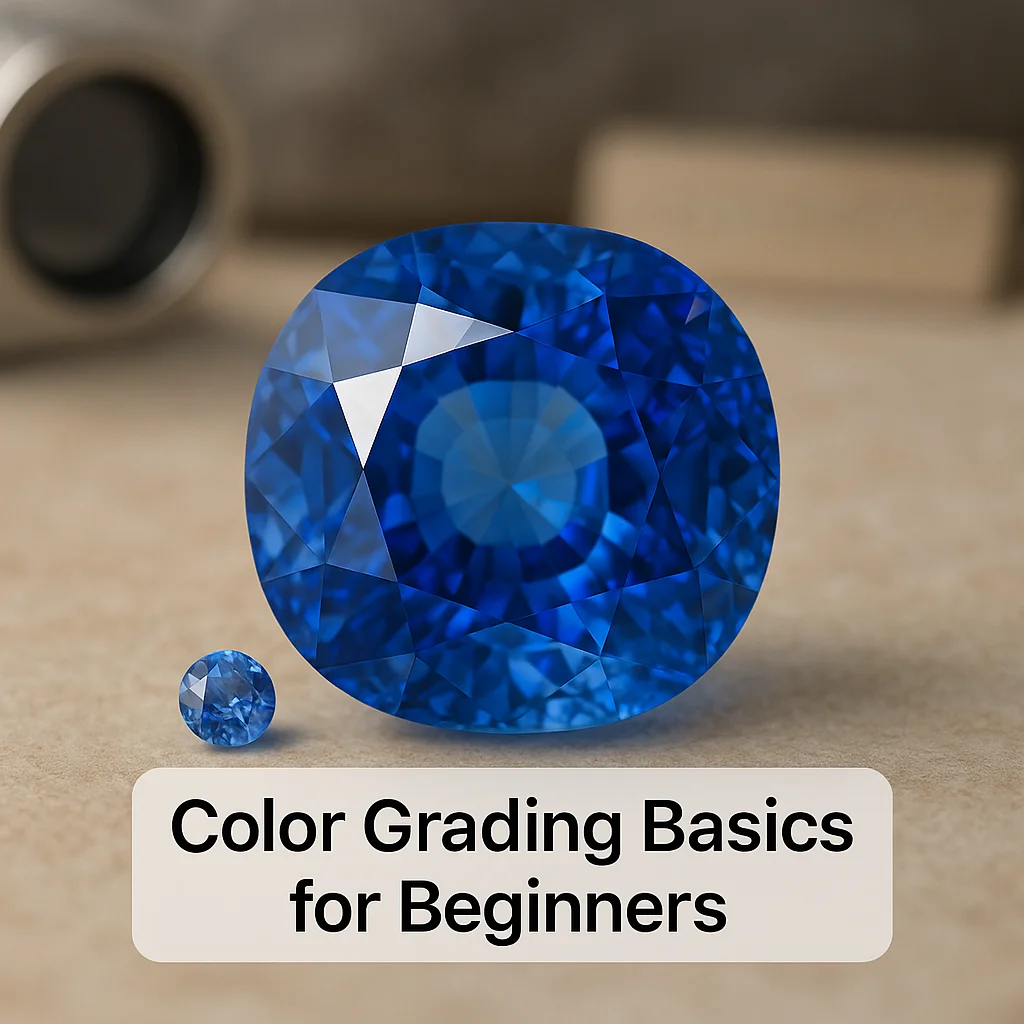
Color grading is essential for both common gemstones such as sapphires, rubies, and emeralds, as well as for unique or rare varieties. It's a crucial skill for buyers and enthusiasts to comprehend to make informed purchasing decisions.
This guide introduces the fundamental aspects of color grading, explaining how gemstone color affects appearance, perceived quality, and value. You'll learn about the properties influencing color, the geological origins impacting appearance, and insightful tips for buying and caring for gemstones.
🌍 Where It Comes From
Gemstones form in diverse geologic settings, ranging from deep within the Earth's mantle to hydrothermal veins closer to the surface. Igneous environments, where magma cools slowly, can lead to the formation of stones like diamonds and chromatic varieties of corundum. In metamorphic rocks, gemstones like garnet and sapphire can develop under heat and pressure.
Gemstones are sourced globally, with notable production regions influencing quality. For example, rubies from Myanmar and sapphires from Kashmir are highly prized for their unique color characteristics. Although a stone's origin can enhance its market value, other factors can be equally important.
The origin of a gemstone can sometimes dictate its color and clarity. For instance, emeralds from Colombia are renowned for their deep green hue, which often commands higher prices. However, while origin impacts a gem's reputation, scientific evaluation through color grading is crucial for a complete understanding of its value.
🔬 How It Forms
Most gemstones form through a combination of heat, pressure, and time. For instance, diamonds form under extreme pressure deep beneath the Earth's surface, over billions of years. Similarly, sapphires and rubies form in feldspar-rich pegmatites or metamorphosed limestones, where mineral-rich fluids are crucial.
The color of gemstones often results from trace elements or color centers in the crystal structure. For example, iron and titanium can cause the blue in sapphires, while chromium gives rubies their intense red color. Understanding these factors helps in both grading and appreciating the gems.
Gemstones usually manifest in various crystal habits, such as hexagonal crystals in quartz or cubic forms in diamonds. These structures can impact their ultimate aesthetics and how they are cut or polished to best display their color properties.
🎨 Color and Look
Gemstones display a wide array of colors, from the deep blues of sapphires to the fiery reds of rubies. These colors depend on the gemstone's chemical makeup and internal structure, which can create striking optical effects like chatoyancy in tiger's eye or play-of-color in opals.
The cut and polish of a gemstone significantly affect its appearance. A well-cut gemstone can enhance its color by maximizing light reflection within the stone. Similarly, clarity impacts how color appears, with inclusions potentially affecting hue or brilliance.
Common treatments, such as heat treatment to improve or alter color, must be disclosed when selling gems. These treatments can affect both the durability and value of gemstones. Being aware of such enhancements is important for buyers and collectors alike.
🧪 Properties That Matter
When evaluating gemstones for jewelry, properties like Mohs hardness, toughness, and luster are paramount. Mohs hardness ranges from 1 (talc) to 10 (diamond) and signifies scratch resistance. For instance, sapphires (hardness of 9) are suitable for engagement rings due to their durability.
Toughness, or the ability to resist chipping, varies across gemstone types. Diamonds, despite their hardness, can be brittle and chip easily. Cleavage, the tendency to break along defined planes, and fracture, how stones break otherwise, are critical for assessing wearability.
Luster, or the reflection of light from a gem's surface, combined with transparency, affects a gemstone's visual appeal. These properties guide decisions on which gemstones match specific jewelry uses, from daily-wear rings to occasional pendants.
✨ Meanings, Birthstones, and Culture
Throughout history, gemstones have held cultural significance, with each possessing unique symbolism. For example, sapphires historically symbolize wisdom and nobility, while rubies are associated with passion and vitality. It's important to approach these associations as cultural traditions rather than scientific facts.
Gemstones are also linked to specific months as birthstones, a tradition that dates back centuries. For instance, garnet is the traditional birthstone for January, often associated with protection and confidence. Birthstones are a popular aspect of modern jewelry gifting, rather than scientific correlations.
🧼 Care and Cleaning
Proper care is crucial to maintain the luster and longevity of gemstones. Generally, gentle soap and water, along with a soft cloth for drying, are recommended for cleaning. Harsh chemicals should be avoided as they may damage the stone's surface or internal clarity.
Specific care guidelines apply to porous or treated stones. For example, opals and turquoise should not be soaked and must be kept away from extreme temperature changes to prevent cracking. Pearls, being organic, require careful storage to avoid scratches.
Storing gemstones properly is vital to prevent damage. Individual storage in soft, lined jewelry boxes or pouches is ideal to avoid abrasion from other items.
🛒 Buying Tips and What to Check
When purchasing gemstones, consider factors such as color, clarity, cut, and carat weight. Origin and rarity can also influence price. It's wise to inquire about any treatments and seek a professional gemological report, especially for high-value stones.
Understanding laboratory reports is important, as they can verify aspects like natural vs. synthetic origin, yet cannot fully guarantee value. These reports serve as guides rather than definitive proof of quality.
For online purchases, verify thorough photographs, a solid return policy, and the seller's reputation. Full disclosure of treatments or synthetic origins is essential for an educated purchase decision.
⚠️ Real vs Fake and Common Look-Alikes
A clear understanding of natural vs. synthetic gemstones is key. Lab-grown stones have identical properties to natural gems but differ in origin. Imitations like glass or plastic mimic gemstone appearance but lack the authentic structure and properties.
Assembled stones, such as doublets or triplets, may combine materials, often deceiving entry-level buyers. Reliable identification requires professional gemologists and equipment, as home tests are often inaccurate and risky.
❓ Common Questions and Misconceptions
"Is it a mineral or a rock?" Many gemstones are minerals, like sapphire, which is a mineral, while others, like lapis lazuli, are classified as rocks due to their composite nature.
"Is it a birthstone?" Each gemstone isn't linked to a birthstone; check traditional lists to confirm if it's associated with a birth month.
"Will it scratch easily?" Scratch resistance is determined by Mohs hardness; diamonds are hardest, while opals or pearls are softer.
"Can it go in water?" Avoid soaking certain gems like opals; mild water cleaning is usually safe unless the stone is porous or treated.
"Does color fade in sunlight?" Some stones, like amethyst, may fade in prolonged sunlight exposure; storing them away from direct light is recommended.
"What treatments are common?" Heat treatment is common for many stones; ask about enhancements when buying.
"Is lab-grown 'fake'?" Lab-grown gemstones possess the same structure as natural ones, differing only in origin.
"How do I store it safely?" Store gems individually in soft pouches or cases to prevent scratches.
"Do inclusions always lower value?" Not necessarily, but prominent inclusions can affect clarity and value.
"How do I pick a good one for jewelry?" Evaluate based on color, clarity, cut, and specific use, such as daily wear versus special occasions.
📌 Summary
- Color grading involves hue, tone, and saturation assessment.
- Typical gemstone colors range widely with unique worldwide origins.
- Formation depends on environmental conditions over time.
- Mohs hardness and toughness are essential for durability decisions.
- Treatments may enhance or stabilize color and clarity.
- Cleaning should be gentle; storage precautions are key.
- Sapphires and diamonds are suitable for frequent wear.
- Common look-alikes include synthetics and imitations.
- Professional certification confirms authenticity.
- Check for disclosures, returns, and seller credibility online.
- Historical cultural links to birthstones matter for gifted jewelry.
- Understanding formation and grading empowers informed choices.