💎 Cut Quality What It Changes in Appearance
🪨 What It Is
Gemstones are natural treasures that captivate with their beauty and elegance. The cut of a gemstone is one of the most important aspects that impacts its appearance. In the realm of gemology, cut quality refers to how well a gemstone has been fashioned from its rough state into the polished gem we admire.
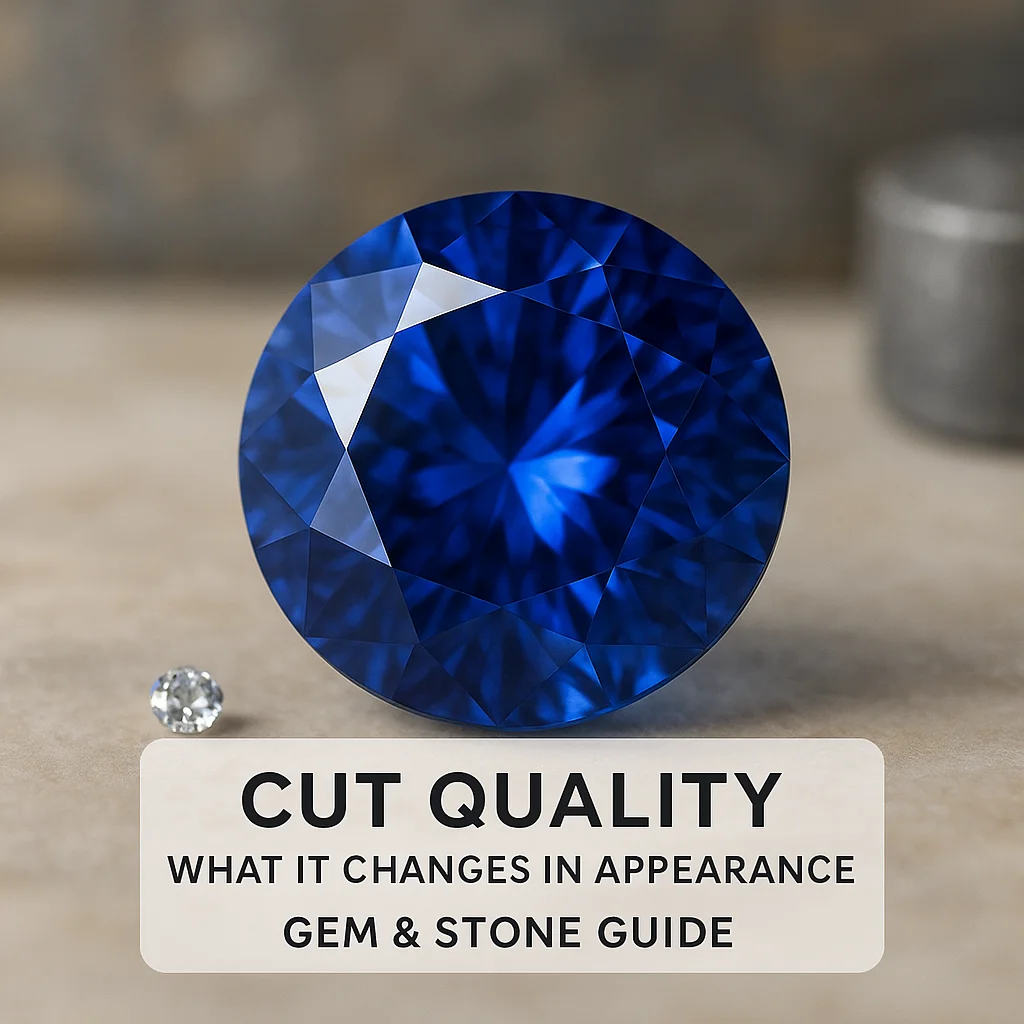
Cut quality affects the brilliance, sparkle, and overall visual appeal of a gemstone. When a gemstone is well-cut, it reflects light beautifully, enhancing its natural color and clarity. This is particularly significant for popular jewelry stones such as diamonds, sapphires, and rubies.
In this article, we'll delve into how the cut quality of a gemstone influences its look. We'll explore its appearance, properties, origins, value, care, and tips for buying, helping you make informed decisions whether you are a gem enthusiast or a jewelry buyer.
🌍 Where It Comes From
Gemstones occur naturally in various geological settings, each contributing to their unique properties. They are found in igneous, metamorphic, and sedimentary rocks, with their formation often involving intense heat, pressure, and chemical processes.
The origin of a gemstone can greatly affect its characteristics such as color, clarity, and even its market reputation. For instance, certain regions are renowned for producing gems with particularly desirable qualities. Rubies from Myanmar, for example, are known for their vibrant red hues.
Many gemstones are mined in parts of Africa, Asia, and South America, while others may have their origins under the sea or in marine sediments, such as pearls and certain types of opal. The source material and conditions of formation contribute to each gemstone's unique allure.
🔬 How It Forms
The formation of gemstones is a fascinating process that occurs over millions of years. Most gemstones form in the earth's crust under specific conditions of heat and pressure, where minerals crystallize into beautiful structures.
Trace elements like iron, chromium, or manganese can influence the color of gemstones. For example, the presence of chromium in corundum crystals creates rubies, while the same mineral that lacks chromium forms sapphire.
Commonly, gemstones are found in crystal forms, but they can also occur in nodules or as part of a geode, depending on their specific mineral compositions and formation processes.
🎨 Color and Look
Color is one of the most defining characteristics of a gemstone. Natural gemstones exhibit a wide range of colors, and their appearance can be further enhanced by the cut. The way a stone is cut can affect how light interacts with it, which in turn highlights its color and clarity.
Different optical effects are often sought after in gemstones, such as chatoyancy in cat's-eye chrysoberyl or the star-shaped asterism seen in some sapphires. These effects are influenced by the stone's internal structure and the orientation of inclusions.
Common treatments like heat treatment or irradiation can alter a gemstone's color, and while these are widely accepted practices, they should be disclosed to buyers to ensure transparency.
🧪 Properties That Matter
Understanding the physical properties of a gemstone can inform how it will wear and maintain its look over time. The Mohs hardness scale measures a gemstone's resistance to scratching, with diamonds sitting at the top with a hardness of 10.
Toughness refers to the ability to resist chipping or breaking. While a gemstone like diamond is hard, it can still be chipped if struck at a certain angle. Cleavage describes how a stone breaks along certain planes, which can be significant for those using gemstones in jewelry.
A gemstone's luster, which is the quality of light reflected from its surface, also plays a key role in visual appeal. Stones can range from vitreous and glass-like to dull, with many variations in between.
✨ Meanings, Birthstones, and Culture
Throughout history, gemstones have been treasured not just for their physical beauty but also for their symbolic meanings. Many cultures imbue gemstones with spiritual or healing properties, even though these are not scientifically proven.
Certain gemstones are assigned as birthstones or associated with astrological signs. For instance, garnet is the birthstone for January, symbolizing protection and prosperity. However, it's important to remember these associations are cultural traditions rather than factual claims.
In modern jewelry, birthstones continue to be popular for personalizing jewelry gifts and celebrating birthdays, with each month having one or more gemstones ascribed to it.
🧼 Care and Cleaning
Proper care is essential for maintaining the beauty and integrity of any gemstone. The safest cleaning method for most gemstones is using warm soapy water and a soft cloth. Avoid harsh chemicals or ultrasonic cleaners, especially for stones that may have been treated.
Heat, sudden temperature changes, and long soaking should be avoided as they can damage certain gems, such as opals and pearls, which are more porous and sensitive to environmental changes.
Storing gemstones properly can prevent scratch damage. Keep each piece in a separate soft pouch or compartment to avoid contact with other stones or hard surfaces.
🛒 Buying Tips and What to Check
Several factors influence the price and quality of a gemstone, including color, clarity, cut quality, and carat size. The gem's origin can also affect its market value, as some regions have a reputation for producing superior specimens.
It's wise to ask about any treatments a gemstone may have undergone and to request a gemological report for high-value stones. This report provides detailed information about the stone's characteristics and any enhancements.
When buying online, check for clear photos, a reliable return policy, and the seller's reputation. Transparency about stone treatments and accurate descriptions are crucial for making a safe purchase.
⚠️ Real vs Fake and Common Look-Alikes
Distinguishing between natural and synthetic (lab-grown) gemstones can be challenging. While synthetic gems share the same chemical makeup as natural ones, they are created in controlled environments which influence their formation.
Imitations, such as glass or plastic, lack the inherent properties of real gemstones but are crafted to mimic their appearance. Doublets and triplets, which are assembled from multiple pieces, can also be mistaken for solid stones.
Professional testing can reliably determine a gemstone's authenticity and distinguish it from its look-alikes. However, home tests are not recommended due to the risk of damaging the gem or obtaining inaccurate results.
❓ Common Questions and Misconceptions
Is it a mineral or a rock? Gemstones are typically minerals, each with a specific chemical composition and crystal structure. Some, like amber and pearl, are organic gems derived from biological processes.
Is it a birthstone? Many gemstones are designated as birthstones for specific months, providing a personal connection for jewelry gift-giving.
Will it scratch easily? Scratch resistance is determined by a gemstone’s hardness on the Mohs scale. Softer gems like opals are more prone to scratches than harder stones like sapphires.
Can it go in water? Some gemstones can be damaged by prolonged water exposure, especially those that are porous or have been treated with dyes or oils.
Does color fade in sunlight? Some gemstones, particularly those treated or naturally sensitive to light, may fade with prolonged exposure to sunlight.
What treatments are common? Common treatments include heating, dyeing, and irradiation—increasing color and clarity, but these should be disclosed.
Is lab-grown 'fake'? Lab-grown gems contain the same properties as natural ones, differing in origin rather than composition, and are considered just as real.
How do I store it safely? Store gemstones in soft pouches, away from hard surfaces, to prevent scratches and damage.
Do inclusions always lower value? Not always. Some inclusions can add uniqueness and beauty, but excessive or unattractive ones can reduce clarity and value.
How do I pick a good one for jewelry? Consider durability, color, clarity, and cut. Choose gems that balance personal appeal with practical wearability.
📌 Summary
- Gemstones are classified as minerals or organic gems with various natural colors and unique beauty.
- Typical colors include vibrant reds, calming blues, bright greens, and subtle pastels.
- They form under specific geological conditions involving heat, pressure, and chemical processes.
- Key properties affect wearability, including hardness, toughness, and luster.
- Treatments like heating or dyeing are common; transparency about these is crucial.
- Care and cleaning require gentle methods to avoid damage; store individually to prevent scratches.
- Best jewelry uses differ by stone; rings may need harder gems for daily wear.
- Common look-alikes include synthetics and imitations; professional testing is needed for distinction.
- Authenticity is confirmed via gemological reports which detail the stone's properties and treatments.
- Buying tips include checking transparency on treatments and seller reliability.
- Birthstones have cultural, not scientific, significance; traditionally used in jewelry.
- Remember, a well-cut gemstone dramatically enhances its natural beauty and brilliance, making the cut a critical consideration in selection.