💎 Doublet and Triplet Opal Explained
🪨 What It Is
Doublet and triplet opals are composite gemstones crafted from natural opal, designed to enhance the appearance of these stones while making them more affordable. Opal itself is a mineraloid, meaning it lacks a crystal structure, and is known for its mesmerizing play-of-color, a phenomenon where bright colors flash across the gem as it moves.
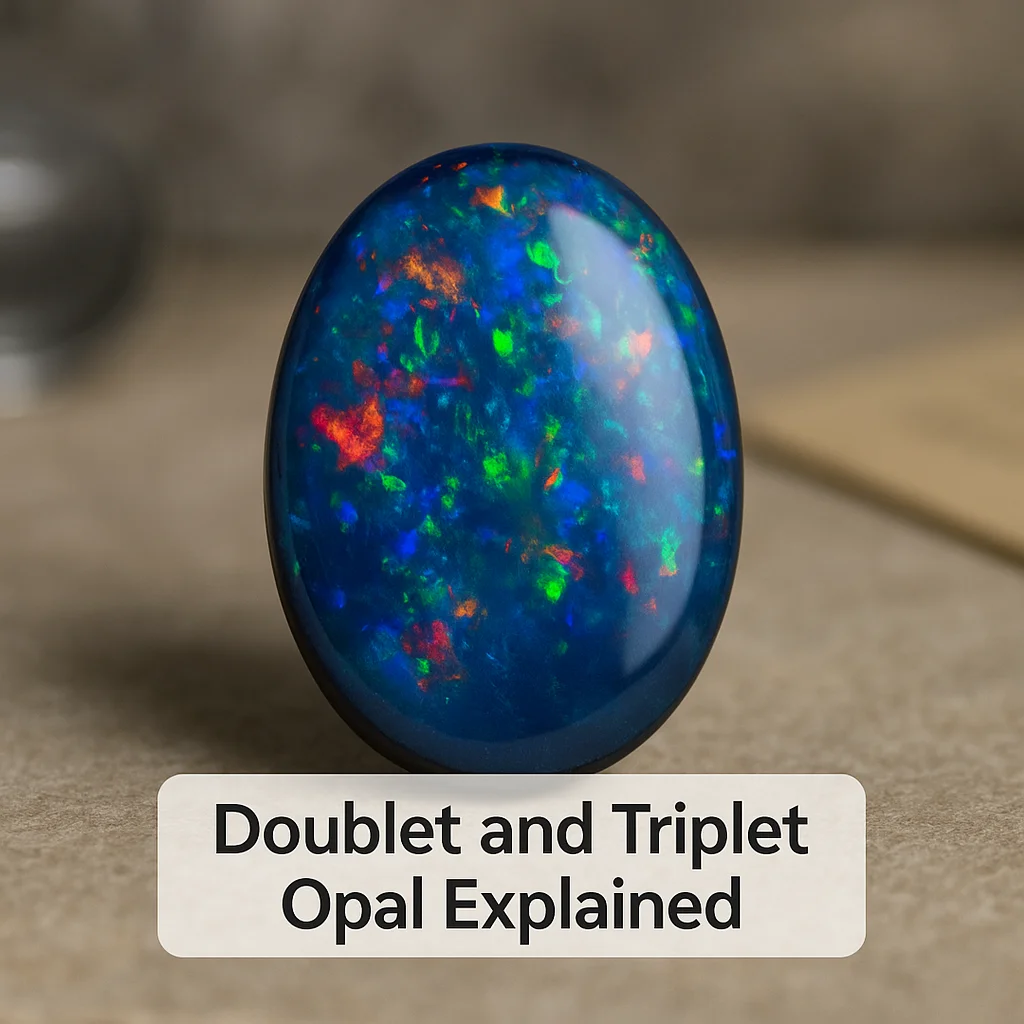
These opals are popular in jewelry owing to their captivating colors and relatively lower cost compared to solid opals. They are often set in rings, pendants, and earrings. This article will guide you through understanding what doublet and triplet opals are, their properties, how they compare to solid opals, and tips on selecting and caring for them.
By the end of this guide, you'll understand the origins, characteristics, and cultural significance of these beautiful gemstones, along with practical advice on purchasing and maintaining them.
🌍 Where It Comes From
Opal forms mainly in sedimentary environments, specifically from silica-rich solutions that fill the cavities within rocks. Over time, water percolating through the earth dissolves silica from sandstone, which then deposits as opal in the spaces it encounters. Commonly, you'll find opals in places with a history of volcanic activity.
The majority of the world's opal, including that used in doublets and triplets, is mined in Australia, specifically in regions like Lightning Ridge and Coober Pedy. However, opals are also found in Ethiopia, Mexico, and the United States. The origin of opal can influence its quality and appearance, such as the unique black opals from Lightning Ridge or the vibrant Ethiopian opals.
For buyers and collectors, the source of an opal can affect its value. Opals from renowned regions often command higher prices due to their esteemed reputation, exceptional color, and play-of-color characteristics.
🔬 How It Forms
Opals form when silica-rich water seeps into cracks and voids in the ground. Over time, as the water evaporates, the silica is left behind, gradually building up to create opal. This process can take millions of years and depends on the right conditions of temperature and pressure to produce the sought-after play-of-color.
The splendid colors in opal arise from the structure of the silica spheres within, which diffract light to create the spectrum seen in the gemstone. The specific color displayed depends on the size and arrangement of these spheres; smaller spheres tend to produce the blues and greens, while larger ones result in reds and oranges.
Doublet and triplet opals are created by combining layers. A doublet consists of a thin slice of opal glued to a backing material to simulate the look of a solid opal. Triplets add a third transparent layer on top, usually quartz or glass, for added protection and to enhance the opal's play-of-color.
🎨 Color and Look
Opals are treasured for their vivid play-of-color, which can showcase a rainbow of hues. The primary colors include blue, green, red, orange, yellow, and purple. Doublets and triplets are crafted to maximize this effect, using both the natural opal layer and its back or top layers to enhance the appearance.
The base color of a doublet or triplet can range from deep black to light gray, affecting the perception of the play-of-color. The complete color effect is contingent upon the lighting conditions and can vary dramatically between natural and artificial light.
While solid opals may undergo treatments like impregnation with colorless oils or resins, doublets and triplets are primarily treated during assembly by enhancing their thin natural opal slice with backing and a protective top layer.
🧪 Properties That Matter
The Mohs hardness of opal is typically around 5.5 to 6.5, which means they're softer than many other gemstones, making them susceptible to scratching. Doublets and triplets offer slightly improved durability due to their protective layers, making them better suited for casual jewelry.
Opals lack cleavage, meaning they do not split easily along specific lines, but they can fracture under pressure. Their toughness is generally fair, hence they should be worn with care, particularly in rings that are more prone to impacts.
Opals display a vitreous to pearly luster, with transparency ranging from opaque to translucent. In jewelry, lighter opals are often appreciated for their brightness, while darker opals are treasured for their intense colors.
✨ Meanings, Birthstones, and Culture
In tradition, opal is associated with creativity and imagination, often regarded as having the power to inspire brilliance and introspection. It is not just admired for its beauty but also for its connection to enhancing the wearer's creativity.
Opal is the birthstone for October, making it a popular choice for gifts for individuals born during this month. The lore surrounding opals includes beliefs in their protective qualities and the ability to bring good fortune, though these notions are based on cultural tradition rather than scientific evidence.
In modern times, opal jewelry remains a staple in collections and is often presented as a symbolic gift representing emotional depths and ever-changing moods.
🧼 Care and Cleaning
Caring for doublets and triplet opals involves using mild soap and lukewarm water for cleaning, always with a soft cloth to gently wipe the surface. Harsh chemicals and ultrasonic cleaners should be avoided as they can damage the opal.
Avoid exposing doublets and triplets to extreme temperatures or prolonged soaking, which can weaken the adhesive used to construct them. It's best to store them separately in soft pouches to prevent scratches.
The protective layer on triplets helps make them more resistant to daily wear, but even with this layer, avoiding impact and protecting them from scratches is crucial to maintain their beauty.
🛒 Buying Tips and What to Check
When purchasing doublet or triplet opals, examine color, play-of-color intensity, and cut quality as primary factors influencing price. The opal layer's thickness and the clarity and craftsmanship of the combined layers are also significant.
Ask about any treatments and consider obtaining a lab report for high-value pieces to confirm their authenticity and detect any enhancements. Reputable sellers should provide clear disclosures about the nature of the gemstones.
When buying online, ensure the site has clear photos, a good return policy, and positive seller reviews. Always ask for disclosure on whether the opal is a doublet, triplet, or solid opal.
⚠️ Real vs Fake and Common Look-Alikes
Natural opals are often imitated by synthetic or imitation stones. Synthetic opals are grown in laboratories and mimic natural opals closely in appearance, but they form faster and can appear more perfect.
Imitations may include glass or plastic materials dyed to imitate the vibrant colors of opal. Assembled stones like doublets and triplets serve as a practical alternative to solid opal, but should never be mistaken for a single natural stone.
Common look-alikes include glass-based opal simulants and man-made opals that, while beautiful, lack the historic and geological formation of natural opals. Verification via a trustworthy gemological laboratory is advised for significant purchases.
❓ Common Questions and Misconceptions
Is it a mineral or a rock? Opal is a mineraloid, not a true mineral, due to its lack of a crystal structure.
Is it a birthstone? Yes, opal is the birthstone for October.
Will it scratch easily? Opals are relatively soft, with a Mohs hardness of about 5.5 to 6.5, so they can scratch more easily than harder gemstones.
Can it go in water? Opals should not be soaked for long periods, especially doublets and triplets, as water can affect their construction.
Does color fade in sunlight? Opals may lose their moisture in prolonged sunlight exposure, potentially dulling their appearance over time.
What treatments are common? Treatments for doublet and triplet opals mainly involve their assembly using adhesives and protective layers.
Is lab-grown 'fake'? Synthetic opals are not "fake" but man-made, offering a similar look to natural opals with engineered perfection.
How do I store it safely? Store opals in a soft, padded environment, separate from harder gems to avoid scratches.
Do inclusions always lower value? Not necessarily, as inclusions can sometimes contribute to the play-of-color effects.
How do I pick a good one for jewelry? Look for intensity of color, craftsmanship in assembly, and overall durability suited to the type of jewelry piece desired.
📌 Summary
- Doublet and triplet opals are composite stones crafted from natural opal.
- Typical colors include a rainbow spectrum enhanced by backing or top layers.
- Formed from sedimentary silica deposits over millions of years.
- For jewelry, they are softer and require careful handling, suitable for pendants and occasional wear.
- Common enhancements involve assembling with backing and protective caps.
- Care involves gentle soap, soft cloth wiping, and protecting from extreme conditions.
- Best used in less-exposed settings like pendants, where wear is minimal.
- Lab-grown and imitation stones are common look-alikes, requiring verification.
- Certification from labs confirms authenticity and treatment disclosures.
- Checklists for buying include seller credibility and condition disclosures.
- Connected culturally as October’s birthstone and in traditional jewelry lore.
- The unique play-of-color remains the most memorable feature of these gems.