💎 Dyed Stones How to Identify Them
🪨 What It Is
Dyed stones are natural minerals or rocks that have undergone a color enhancement process using dyes. This type of treatment is common in the gemstone industry to improve or change the color of a stone that might otherwise be considered less attractive.
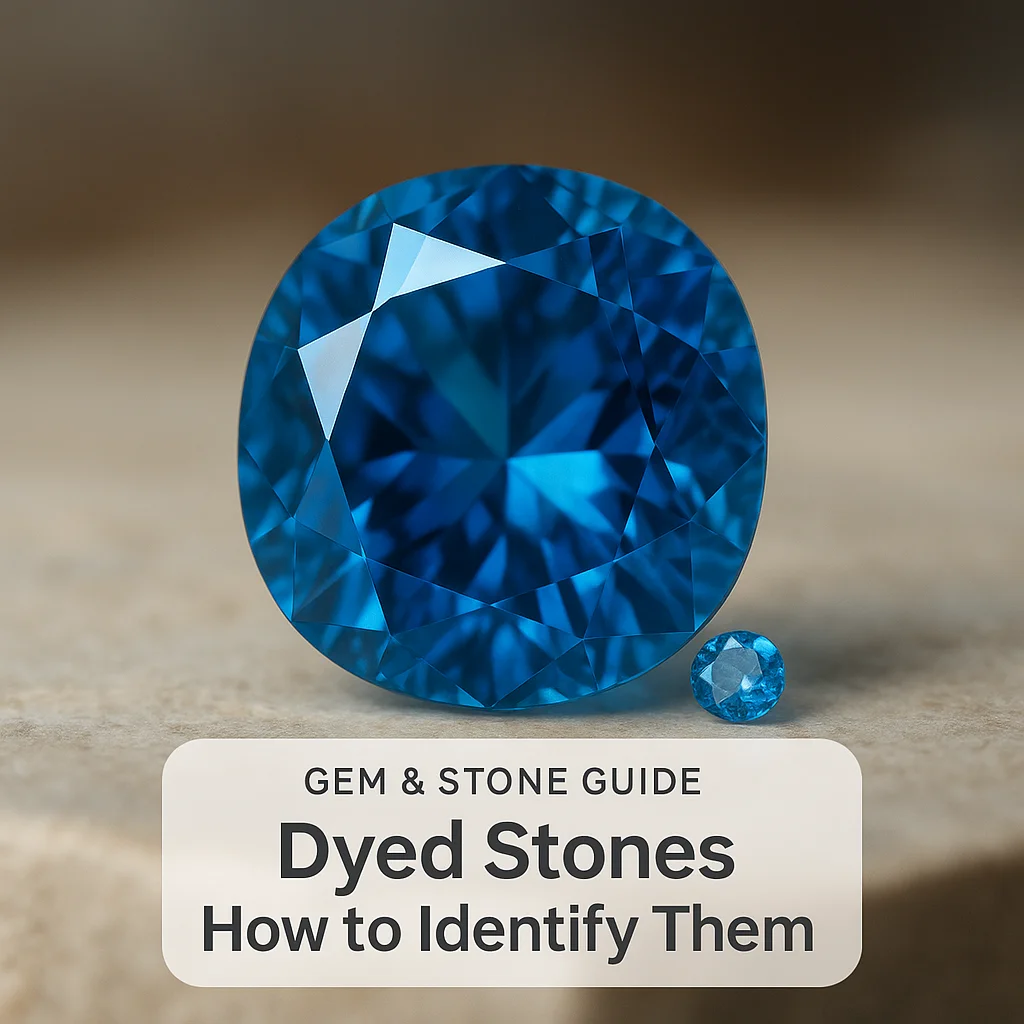
The result is often more vibrant stones that cater to market demands. Some of these dyed stones are used in jewelry, decorations, or as collector items. It's useful to know how to identify them to make informed purchasing and care decisions.
In this article, readers will learn about the appearance of dyed stones, their properties, typical origins, and care tips, as well as practical buying advice. Understanding these aspects can help in distinguishing between stones that are dyed and those that are naturally vibrant.
🌍 Where It Comes From
Many natural stones that are commonly dyed, such as agate, calcite, and quartz, are found in various geologic settings. These stones are often mined from sedimentary rock formations, where mineral deposits have settled over millions of years.
Produced regions of these stones include locations in Brazil, India, and parts of Africa. The conditions in these areas are favorable for the formation of diverse mineral compositions, allowing for a wide array of colors, even before dyeing.
The origin of a stone can contribute to its base characteristics, such as natural color and level of porosity, which impact how the dye interacts with the stone. However, the precise origin can sometimes be less critical than the quality of the dyeing process itself.
🔬 How It Forms
The stones that are commonly dyed form over long periods under varying environmental conditions. For instance, agates predominantly form within cavities of volcanic rocks through a process of crystallization from mineral-laden water.
In their natural states, these stones can present a wide range of colors due to the presence of trace elements or mineral defects that affect the crystal lattice. For example, quartz may acquire hues from elements like iron, which can appear more pronounced after dyeing.
Many dyed stones are cut into various shapes and polished to enhance their final appearance. Dying is often applied to stones during or after the tumbling process to maximize color saturation.
🎨 Color and Look
Dyed stones come in a variety of colors, often depending on the preferences of the market. Dyes are chosen to enhance the natural tones of the stone or to make them significantly different. Vibrant blues, greens, reds, and purples are among the popular choices.
The surface appearance of dyed stones may include patterns or banding, especially visible in stones like agate. The cut and polish greatly influence the stone’s luster—a key factor in bringing out the vibrance of the dyed color.
🧪 Properties That Matter
When considering dyed stones, important properties include Mohs hardness, toughness, and the type of luster. For example, many quartz-based dyed stones have a Mohs hardness of about 7, meaning they are fairly resistant to scratches, but they may still chip if not handled gently.
Toughness, or the ability to resist chipping, also varies but generally, dyed stones that are polished offer less resistance due to their crystalline structure. The luster of a polished dyed stone can range from vitreous (glass-like) to waxy, depending on the stone and the polish it receives.
These properties guide the suitability of dyed stones in various jewelry applications—rings subject to daily wear vs. pendants and earrings which might experience less friction and impact.
✨ Meanings, Birthstones, and Culture
While dyed stones themselves are not typically linked to specific birthstones or traditional associations, the base materials they come from might be. For example, quartz is associated with harmony and tranquility in various cultures, but such meanings do not explicitly apply to its dyed forms.
It’s crucial to separate lore from the scientific properties of dyed stones. Many cultures have used dyed stones in rituals and decorations, attributing different beliefs to them. However, these beliefs relate more to tradition than empirical fact.
🧼 Care and Cleaning
Routine care for dyed stones involves cleaning them gently with soapy water and a soft cloth. It is generally advisable to avoid harsh chemicals that can react with the dye or damage the stone’s luster.
Dyed stones should also be kept away from prolonged exposure to heat and sunlight, which might affect their color over time. Porous stones, such as dyed turquoise, require particular caution, as they can absorb chemicals or oils from creams and lotions.
For storage, place dyed stones in soft cloth pouches to prevent scratching or color transfer between stones, especially when mixed with other untreated gemstones.
🛒 Buying Tips and What to Check
When purchasing dyed stones, aspects such as color uniformity, clarity, size, and cut influence their value. Moreover, knowledge of the stone's origin and treatment can provide valuable context for its appearance and durability.
Consumers should inquire about any treatments the stone has undergone, including dyeing. Obtaining a laboratory report for high-value stones can confirm basic characteristics and the presence of dye, although it won't quantify color quality.
For online purchases, check photos for consistency with descriptions, review the seller’s return policy, and ensure they clearly disclose treatments. Trust reputable sellers to avoid misunderstandings about the nature of the stone.
⚠️ Real vs Fake and Common Look-Alikes
Distinguishing between natural and fake stones involves understanding terms like synthetic, imitation, and assembled stones. Synthetic stones are lab-grown but share the same basic properties as natural ones. Imitations may be plastics or glass meant to replicate the appearance without mimicking real stone features.
Examples of assembled stones include doublets and triplets that combine layers of different materials to form a gemstone look-alike. Professional testing can reliably identify these, but observe signs like color concentrations or unusual texture patterns for clues.
❓ Common Questions and Misconceptions
Is it a mineral or a rock? This depends on the dyed stone's base material. Agate, for example, is a mineral.
Is it a birthstone? Dyed stones themselves are not birthstones, but their source materials might be—like quartz in some traditions.
Will it scratch easily? Many dyed stones have moderate hardness, like quartz, but genuine gemstones are generally more durable.
Can it go in water? Yes, but prolonged exposure to water, especially hot water, should be avoided to protect the dye.
Does color fade in sunlight? Over time, dyed stones may fade if exposed to continuous sunlight.
What treatments are common? Dyeing is common for enhancing color; other treatments like heat and irradiation are less typical for dyed stones.
Is lab-grown "fake"? Lab-grown stones share the same properties as natural stones and are not fakes but scientifically identical counterparts.
How do I store it safely? Store dyed stones separately in soft cloths to prevent scratches and color bleed.
Do inclusions always lower value? Inclusions can affect value but may also add uniqueness to a stone.
How do I pick a good one for jewelry? Look for uniform color, well-polished surface, and clarity appropriate to the stone variety.
📌 Summary
- Dyed stones are color-enhanced minerals or rocks for aesthetics.
- Appear in vibrant colors with common patterns like banding.
- Form naturally over time, and enhanced by applying dyes.
- Properties include moderate hardness and various lusters.
- Dyeing affects color and sometimes value—disclosure is a must.
- Use mild soap and water for cleaning; avoid harsh chemicals.
- Best suited for decorative jewelry such as pendants and earrings.
- Common look-alikes include synthetics, imitations, and combined stones.
- Testing confirms authenticity—not reliable through DIY methods.
- Buying checklist involves photos, descriptions, and treatment disclosures.
- Are meaningful in certain traditions, but not as mainstream birthstones.
- Remember: Treat each dyed stone with specific attention and care.