💎 How to Read a Gem Report Simply
🪨 What It Is
Understanding a gem report can feel daunting to beginners, but it is an essential tool in ensuring you know what you're purchasing. A gem report provides detailed information about the stone you are interested in, encompassing its identity, characteristics, and sometimes its origins.
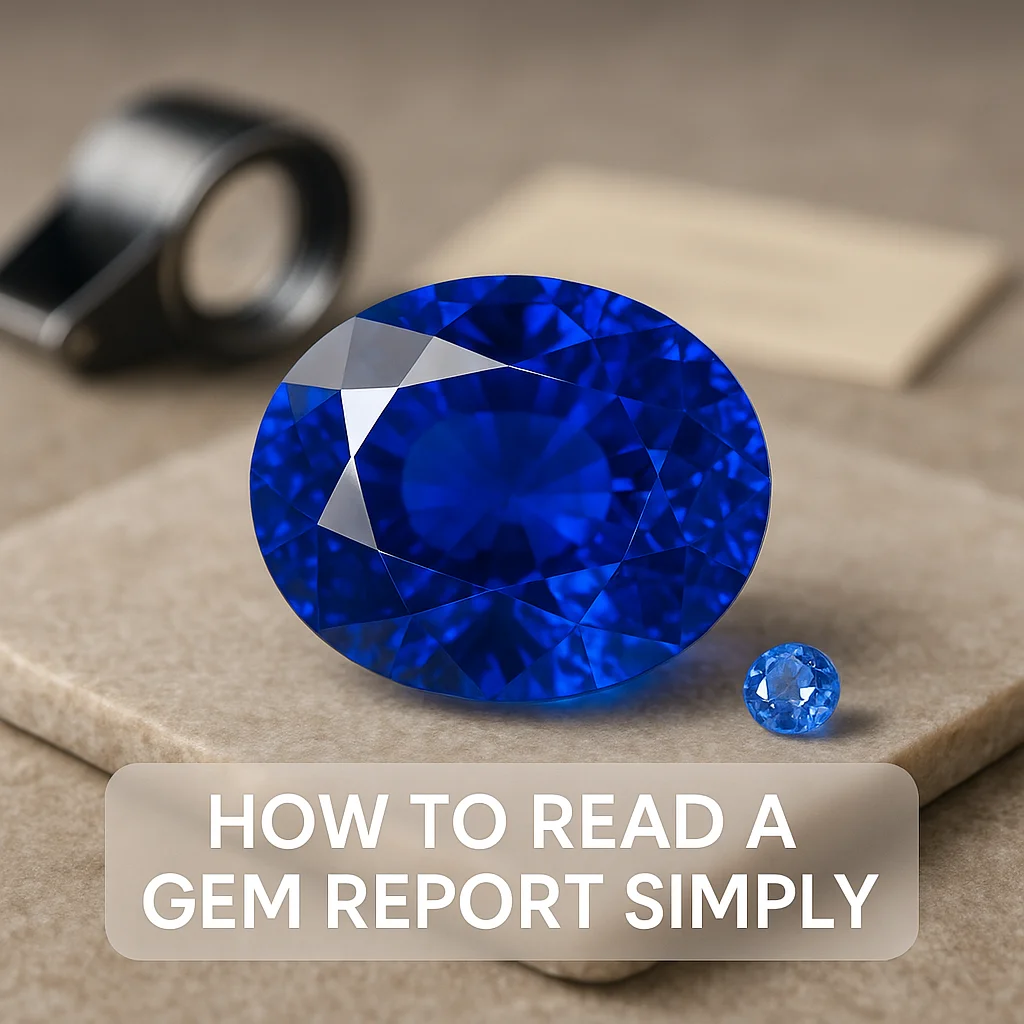
Gem reports describe whether your piece is a mineral, a variety of a mineral, an organic gem, or a rock. They often mention whether the gem is commonly used in jewelry. For instance, diamonds, sapphires, and emeralds are popular for their brilliance and durability.
By the end of this article, you will be equipped with basic knowledge about reading a gem report, including the appearance, properties, origin, value, care, and buying tips for gemstones.
🌍 Where It Comes From
Gemstones are formed in different geological settings, such as igneous, metamorphic, sedimentary, and hydrothermal environments. Each environment contributes to the unique makeup and properties of a gem.
For instance, diamonds form under high-pressure conditions deep within the earth, often brought to the surface by volcanic activities, whereas pearls are organic gems produced by mollusks in marine environments.
The origin of a gemstone can affect its color and clarity and contribute to its market reputation. For example, sapphires from Kashmir are prized for their rich color, while Colombian emeralds are renowned for their pure green hue.
🔬 How It Forms
The formation of gemstones involves a range of conditions over time. Factors like heat, pressure, and the presence of certain mineral-rich fluids contribute to gem creation. Diamonds require intense heat and pressure, while opal forms from silica-rich water.
Color variations in gemstones often result from trace elements. For example, the presence of chromium gives emeralds their green color, while iron and titanium give sapphires their blue hue.
Gemstones can appear in diverse forms, such as crystals, nodules, or geodes, depending on their growth environment and the conditions they were subjected to.
🎨 Color and Look
Color is one of the most appealing features of a gemstone. Gemstones come in a rainbow of colors, including the deep blue of sapphires, the fiery red of rubies, and the mesmerizing green of emeralds.
Various optical effects, like chatoyancy (cat's eye effect) or asterism (star effect), add to a gemstone's allure and are often highlighted on gem reports. These effects are usually due to inclusions or specific cuts.
Gem reports will also mention treatments used to enhance color and clarity, such as heat treatments in rubies and sapphires or oiling in emeralds. Understanding these treatments helps in assessing the gem's value.
🧪 Properties That Matter
Gemstone properties like Mohs hardness, toughness, and cleavage inform you how the stone will perform in jewelry. Mohs hardness measures scratch resistance, with diamonds rating highest at 10.
Toughness, which differs from hardness, refers to resistance to chipping or cracking. Cleavage describes the way a gem breaks; for example, diamonds have perfect cleavage, making them prone to splitting if struck.
Luster and transparency affect appearance and desirability. For everyday rings, harder gems like sapphires and diamonds are ideal, while softer stones might be better as pendants or earrings.
✨ Meanings, Birthstones, and Culture
Culturally, gemstones have long been associated with specific meanings and traditions. The concept of birthstones dates back centuries, assigning particular gems to each month for personal and symbolic resonance.
January's garnet is associated with protection, while April's diamond symbolizes strength. These associations are traditionally embraced and should be seen as cultural stories, not scientific facts.
Modern jewelry still embraces these traditions, often highlighting a stone's cultural significance to enhance its appeal and personal connection.
🧼 Care and Cleaning
Proper care and cleaning ensure the longevity of your gemstones. It's generally advisable to clean stones with mild soap and water and wipe them with a soft cloth. Avoid using harsh chemicals that can damage the surface.
Gemstone integrity is sensitive to heat and temperature changes, so exposing stones like opals and emeralds to extreme conditions should be avoided. Long soaking can also harm porous stones like turquoise.
Store gemstones separately to prevent scratching, wrapping them in soft pouches or fabric. This precaution helps maintain their shine and clarity over time.
🛒 Buying Tips and What to Check
When purchasing gemstones, several factors influence their price and desirability, including color, clarity, cut, and carat weight. Origin and rarity also play significant roles.
Always inquire about treatments, as they can affect value. A reputable gem report will specify these details, helping you make an informed decision.
For online purchases, verify the seller's reputation, return policies, and ensure clear photographs are available. A beginner-friendly checklist includes evaluating authenticity and understanding the disclosure of treatments.
⚠️ Real vs Fake and Common Look-Alikes
Understanding the difference between natural, synthetic, and imitation stones is crucial. Natural stones are mined from the earth, while synthetic ones are lab-grown with identical properties but usually cheaper.
Imitations like glass or plastic mimic the appearance but not the properties of genuine stones. Assembled stones, such as doublets and triplets, combine layers using adhesives.
Professional testing is essential for reliable identification, as visual assessment alone often leads to misidentification. Avoid risky home experiments for authenticity checks.
❓ Common Questions and Misconceptions
- "Is it a mineral or a rock?" - A gem report will indicate this for clarity.
- "Is it a birthstone?" - Check if your gem corresponds with any birth month traditions.
- "Will it scratch easily?" - Mohs hardness will tell you about scratch resistance.
- "Can it go in water?" - Some stones are safe in water, others, like opal, are not.
- "Does color fade in sunlight?" - Some gemstones can fade if exposed to too much sunlight.
- "What treatments are common?" - Heat, oiling, and irradiation are frequent in certain gems.
- "Is lab-grown 'fake'?" - Lab-grown stones are real but not natural.
- "How do I store it safely?" - Store each gem separately to avoid scratching.
- "Do inclusions always lower value?" - Not always, some inclusions are valued for their uniqueness.
- "How do I pick a good one for jewelry?" - Consider usage, durability, and personal preference in appearance.
📌 Summary
- Understand what the gemstone is from its report.
- Acknowledge typical colors and appearances.
- Learn the simple formation process of gems.
- Key properties: Mohs hardness and resilience in jewelry.
- Be aware of common treatments and their implications.
- Maintain your gemstones with optimal care and cleaning practices.
- Know the best uses for jewelry types—rings, pendants, earrings.
- Identify common look-alikes and their differences.
- Professional testing confirms authenticity; avoid home experiments.
- Consider key points when buying: color, clarity, cut, carat.
- Birthstones and cultural notes are meaningful traditions.
- Memorably, a gem's report is a trusted source for informed purchases.