💎 Origin Claims How to Verify
🪨 What It Is
Gemstones are naturally occurring materials that are cut and polished for use in jewelry and other decorative items. They vary in composition, ranging from minerals to organic materials like pearls. Understanding what a gemstone is can help in assessing its value and origins.
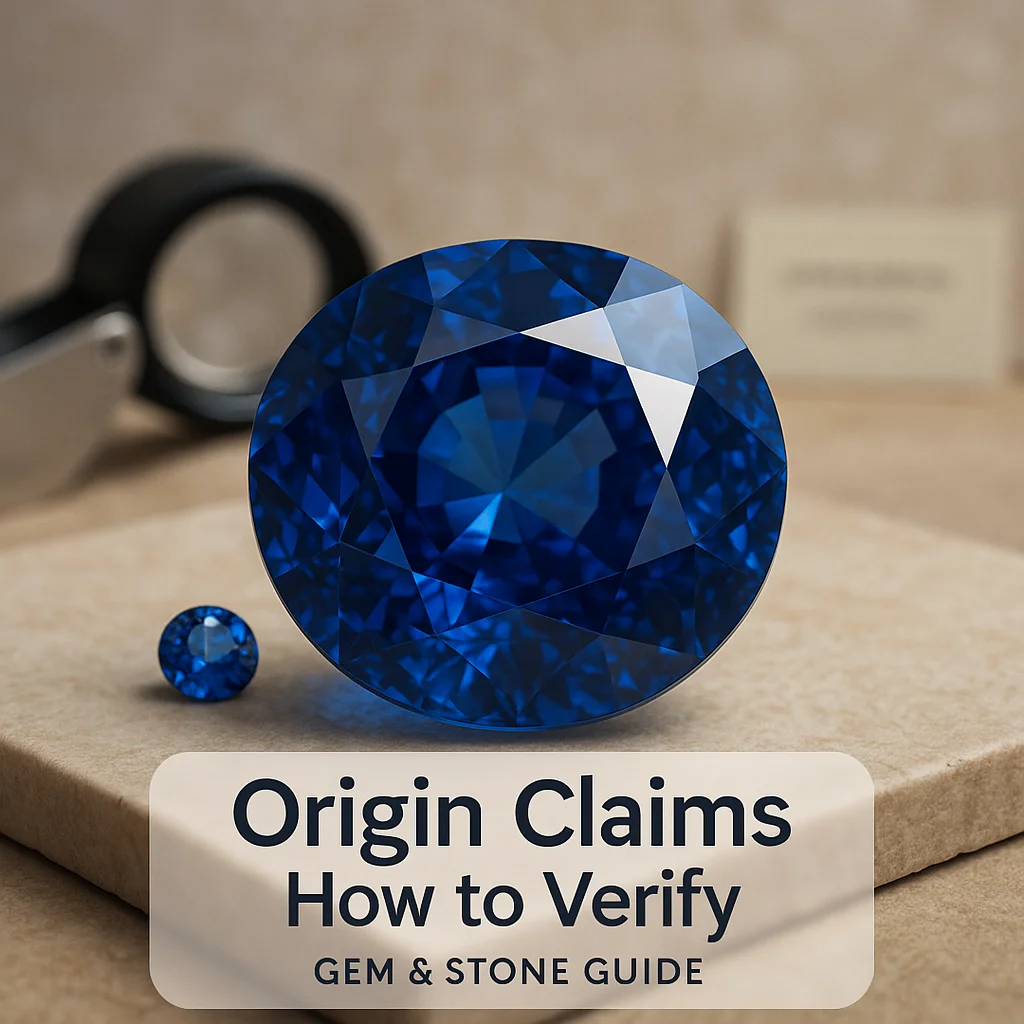
Many gemstones like sapphires, rubies, and emeralds are birthstones, meaning they are associated with particular months of the year. Understanding their significance can enrich your appreciation for these stones.
This article will focus on helping you verify origin claims, understand the formation and properties of gemstones, and offer guidelines on care, buying tips, and the differentiation between real and fake stones.
🌍 Where It Comes From
Gemstones occur in various natural settings. They can form in igneous rocks cooled from molten magma, or metamorphic rocks altered by heat and pressure. Hydrothermal processes, where minerals are deposited from hot fluids, also contribute to gem formation. Organic gemstones like pearls form in marine settings within mollusks.
Gem-producing regions vary, with famous sites including parts of Africa, Asia, and South America. The origin of a gemstone often influences its color and clarity. For example, sapphires from Kashmir are prized for their distinct blue hue. Market reputation can significantly impact a stone's value, sometimes more than the gemstone's physical properties.
Understanding where a gemstone comes from can help buyers and collectors assess its quality. Some origins are associated with higher-quality stones due to historical discovery patterns, stricter mining controls, or unique environmental conditions.
🔬 How It Forms
Gemstones form through various natural processes. In igneous environments, as magma cools, minerals crystallize to form gems. Heat and pressure can cause minerals in metamorphic rocks to rearrange, creating new gems in the process. In sedimentary environments, minerals can precipitate out of aqueous solutions to form stones.
The presence of trace elements can color minerals. For instance, chromium creates the red in rubies, while iron provides the blue in sapphires. These elements replace some atoms in the mineral's crystal structure, giving it a distinctive coloration.
Gems often occur as well-formed crystals, but can also be nodules or geodes. Crystal shape, known as crystal habit, can vary greatly and is often used to identify specific minerals.
🎨 Color and Look
Gemstones boast a range of colors and optical effects. Factors such as trace elements, inclusions, and crystal structure affect their appearance. For example, opals display play-of-color, a shifting spectrum caused by light interference within the stone.
Cut and polish enhance a gemstone’s natural beauty by optimizing light return, clarity, and color. Poorly cut stones may appear dull, regardless of their inherent quality. Treatments like heating or oiling can improve a gem’s color and clarity, but should always be disclosed to buyers.
Lighting also affects gemstone appearance. Incandescent light may enhance reds and darken blues, while daylight is a more neutral vantage for assessing true color.
🧪 Properties That Matter
The Mohs hardness scale rates a gemstone's scratch resistance. Diamonds, at a hardness of 10, are the hardest. Lower numbers indicate stones more susceptible to scratches. Toughness, or chipping resistance, can differ; diamonds, while hard, can cleave.
Cleavage describes how a mineral breaks along specific planes, impacting durability. Luster, or the light reflection from a stone's surface, adds to a gem's appeal. Understanding these characteristics is essential for selecting appropriate jewelry settings.
For daily wear, choose gems like sapphires and diamonds because of their hardness. Pearls and opals are better suited for pieces receiving gentler treatment, like pendants or earrings.
✨ Meanings, Birthstones, and Culture
Many gemstones carry cultural and historical meanings. Birthstones are gems associated with each month, like garnet for January, representing luck or protection. These associations, while rooted in tradition, enrich their appeal.
Folklore links various stones to health benefits or emotional qualities, but such claims lack scientific backing. Peridot, for example, is often called the "stone of compassion," but such symbolism is cultural, not empirically proven.
Modern jewelry traditions still embrace these meanings, often influencing gift selections or color choices for commemorative designs.
🧼 Care and Cleaning
For safe gemstone care, use mild soap and water with a soft cloth. Avoid harsh chemicals and abrupt temperature changes that could damage the stone. Long soaks can deteriorate porous stones like turquoise.
Some gems, like emeralds, often receive treatments such as oiling to enhance appearance. Be gentle with these treated stones, and store them separately to avoid scratches.
Prevent scratches by storing stones alone or wrapped in cloth. For opals and pearls, avoid prolonged exposure to heat, which can dry them out and lead to cracking or dullness.
🛒 Buying Tips and What to Check
When buying gemstones, consider the four Cs: color, clarity, cut, and carat weight. Origin and rarity also influence price. Matching pairs can command higher prices, as well.
Ask sellers about treatments and request a lab report for confirmation. Reports detail treatments and natural vs. synthetic status but can't always verify origin.
When purchasing online, check for clear photos, a fair return policy, and a reputable seller who discloses important information about the stone's characteristics and history.
⚠️ Real vs Fake and Common Look-Alikes
Understanding the difference between natural, synthetic, and imitation stones is crucial. Natural gems form in the earth, while synthetic ones are created in labs with similar properties.
Imitations might be glass or plastic and lack the definitive characteristics of real stones. Assembled stones like doublets or triplets combine layers of different materials to mimic finer gems.
Common look-alikes include cubic zirconia for diamonds and synthetic sapphires. Identifying these requires professional testing rather than at-home experiments.
❓ Common Questions and Misconceptions
Is it a mineral or a rock? Minerals are single compounds with specific compositions, while rocks comprise multiple minerals.
Is it a birthstone? Yes, many gemstones are associated with specific months as birthstones.
Will it scratch easily? Hardness varies per gemstone; diamonds are less prone to scratches than pearls.
Can it go in water? While many stones are water-safe, porous or treated stones should avoid soaking.
Does color fade in sunlight? Some stones can fade or alter; storing away from direct sunlight is advisable.
What treatments are common? Heat and oil treatments are frequent to enhance color and clarity.
Is lab-grown 'fake'? Lab-grown gemstones are real but not naturally formed; they share similar properties with natural gems.
How do I store it safely? Wrap gems individually to prevent scratches and store them in a dry, cool place.
Do inclusions always lower value? Not always; some inclusions can add character, while extensive ones might reduce clarity.
How do I pick a good one for jewelry? Consider usage, hardness, and whether it suits the chosen setting.
📌 Summary
- Gemstones are natural or organic materials prized for beauty and rarity.
- They come in varied colors, influenced by trace elements and structure.
- Formed under various natural conditions: igneous, hydrothermal, marine.
- Mohs hardness and toughness are key wear indicators.
- Common treatments enhance appearance but must be disclosed.
- Use gentle soap, soft cloths for cleaning; avoid harsh conditions.
- Best used in rings, pendants, or earrings, depending on hardness.
- Look-alikes include synthetics and imitations like glass or assemblages.
- Lab reports provide treatment but limited origin verification.
- Buying checklist: focus on color, clarity, carat weight, and seller reputation.
- Birthstones have cultural, traditional significance, not inherent power.
- Rely on professional evaluations to confirm authenticity.