💎 Return Policy Checklist for Gem Shopping
🪨 What It Is
When you embark on the journey of gem shopping, it's essential to understand what you're buying. Gems can be minerals, rock, or organic materials that are prized for their beauty and rarity. When shaped and polished, these gems transform into stunning pieces of jewelry.
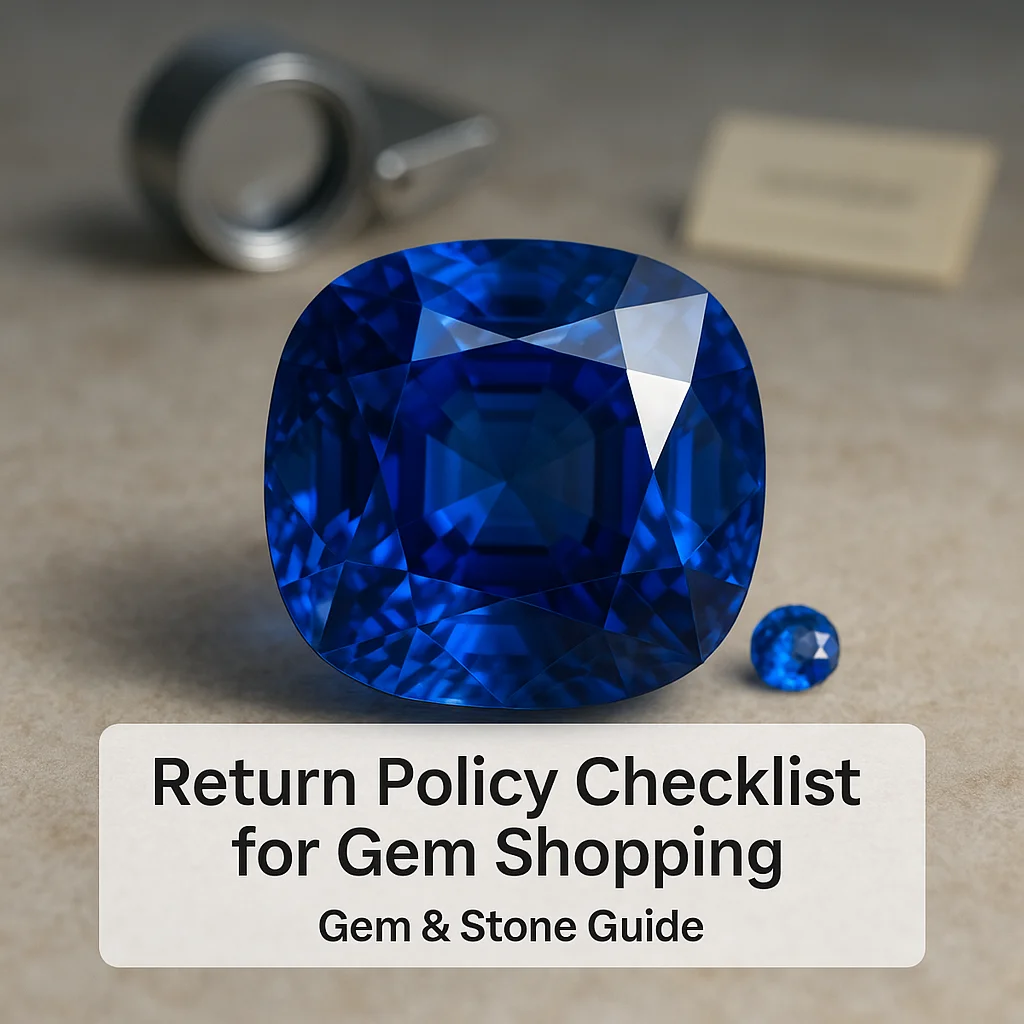
Some gemstones like diamonds, emeralds, and sapphires are well-known and frequently used in jewelry. Each has its unique set of properties, which influence its beauty and functionality. Gems might also be birthstones, with particular stones assigned to each month of the year.
In this article, you will discover various aspects of gemstones, such as their appearance and properties. We'll explore how origin plays a significant role in their value, how they are formed, and how to care for them properly. The ultimate goal is to help you make informed decisions when shopping for gems.
🌍 Where It Comes From
Gems are formed in different geological settings, each contributing to the gem's unique features. Many minerals are born in igneous environments, formed from the cooling of molten rock. Others may emerge in metamorphic rocks, which have undergone transformation through intense heat and pressure.
Some gemstones, like pearls and amber, have organic origins, coming from aquatic organisms and tree resin, respectively. Regions such as Africa, Asia, and South America are well-known for producing a variety of gems, contributing to their well-established market reputation.
The place where a gem is mined can affect its color, clarity, and value. It’s widely recognized that certain regions produce higher-quality stones—for instance, Burmese rubies are renowned for their exceptional color and clarity. Although origin is only one factor, it can significantly influence the gemstone's desirability and price.
🔬 How It Forms
Gemstones form through natural processes involving heat, pressure, and time. In the case of diamonds, carbon is subjected to intense heat and pressure deep within the Earth's mantle before being brought to the surface through volcanic activity.
Gem varieties such as sapphires and rubies are forms of corundum, and their rich colors arise from trace elements; for example, chromium gives rubies their red hue, while iron and titanium can turn corundum into blue sapphire. Quartz, available in amethyst and citrine, forms in geodes and nodules under varying conditions in the Earth's crust.
🎨 Color and Look
Gems exhibit a breathtaking spectrum of colors, patterns, and optical effects. Factors like cut and polish can significantly impact their appearance, enhancing luster and clarity while emphasizing color and brilliance.
Some gems undergo treatments to improve their color or clarity. For instance, heating can enhance the color of sapphires, while oiling is commonly used to improve the appearance of emeralds. Such treatments are generally accepted but should always be disclosed by reputable sellers.
🧪 Properties That Matter
Each gemstone has distinct properties that determine its suitability for different kinds of jewelry. Mohs hardness measures scratch resistance; diamonds top this scale, making them ideal for daily-wear rings. However, gems like opal and pearl, which are softer, are better suited for pendants or earrings.
Toughness, or resistance to chipping, and cleavage, how a gem breaks, also vary. A perfectly cut diamond will have exceptional luster, while pearls offer a unique soft glow. Understanding these attributes ensures you choose the right gemstone for your needs and lifestyle.
✨ Meanings, Birthstones, and Culture
Gemstones often come with rich cultural symbolism and traditions. Many are associated with specific months as birthstones, offering personal significance. For example, sapphire represents September and is traditionally associated with wisdom and purity.
These cultural links, while popular, should not be confused with science-based effects. They are part of the charm and tradition of wearing gemstones and add an extra layer of meaning for many jewelry lovers.
🧼 Care and Cleaning
Proper care is crucial to maintain the beauty and longevity of your gemstones. Generally, gentle soap and water are safe for cleaning most gems, along with a soft cloth. However, avoid harsh chemicals and ultrasonic cleaners, especially for softer or treated stones like opal and emerald.
Store gemstones individually to prevent scratches, and be cautious of heat and sudden temperature changes, which can damage certain gems. Following these guidelines will help preserve your gemstones' luster and brilliance over time.
🛒 Buying Tips and What to Check
When buying gemstones, several factors influence quality and price, including color, clarity, cut, carat weight, and origin. If applicable, always inquire about treatments and request a report for high-value stones.
For online purchases, ensure the seller provides clear photos, a good return policy, and full disclosure of any treatments. Checking the seller's reputation can also help safeguard your investment. Lab reports provide valuable information but are not infallible; personal inspection or professional assessment is recommended.
⚠️ Real vs Fake and Common Look-Alikes
The gem market includes both natural and synthetic options. Synthetic, or lab-grown gems, have the same physical and chemical properties as natural counterparts, while imitation stones mimic appearance without the same composition. Doublets and triplets combine materials to resemble genuine stones.
Common look-alikes can confuse buyers. For example, amethyst may be mistaken for synthetic or treated materials. Identification usually requires professional examination rather than home tests, which can risk damaging your stone.
❓ Common Questions and Misconceptions
Is it a mineral or a rock? Most gemstones are minerals, but some, like lapis lazuli, are rocks composed of multiple minerals.
Is it a birthstone? Many gems serve as birthstones corresponding to specific months.
Will it scratch easily? Harder stones like diamonds resist scratching, while softer ones like pearls are more vulnerable.
Can it go in water? Some stones like turquoise can be damaged by prolonged water exposure.
Does color fade in sunlight? Stones like amethyst may fade if exposed to direct sunlight for extended periods.
What treatments are common? Heat treatment and oiling are commonly used to enhance color and clarity.
Is lab-grown 'fake'? Lab-grown gems have the same properties as natural ones but are not formed naturally.
How do I store it safely? Keep gemstones separately, ideally in padded compartments, to avoid scratches.
Do inclusions always lower value? Not all inclusions decrease value; some can add character or be typical of certain gemstones.
How do I pick a good one for jewelry? Consider durability for daily wear, the gemstone's setting, and overall craftsmanship.
📌 Summary
- Gemstones are minerals, rocks, or organic materials valued for beauty.
- Colors range widely, affected by trace elements and treatments.
- Form through geological processes involving heat, pressure, and time.
- Mohs hardness and toughness affect ideal use in jewelry.
- Commonly treated with heat or oiling to enhance quality.
- Gentle cleaning practices are essential for maintenance.
- Best jewelry uses depend on stone properties; rings for harder gems.
- Watch for look-alikes; professional testing can confirm authenticity.
- Birthstones correspond to months, adding cultural significance.
- Buying checklist: inquire treatments, get reports, and confirm returns.
- One memorable takeaway: Understanding the gem's properties helps ensure long-lasting enjoyment and value.