💎 Stabilized Turquoise What to Know
🪨 What It Is
Stabilized Turquoise is a type of turquoise that has undergone a process to enhance its durability and color. It is widely appreciated in the jewelry world for its beautiful blue and green hues. As a member of the phosphate mineral group, turquoise falls under the category of copper aluminum phosphate.
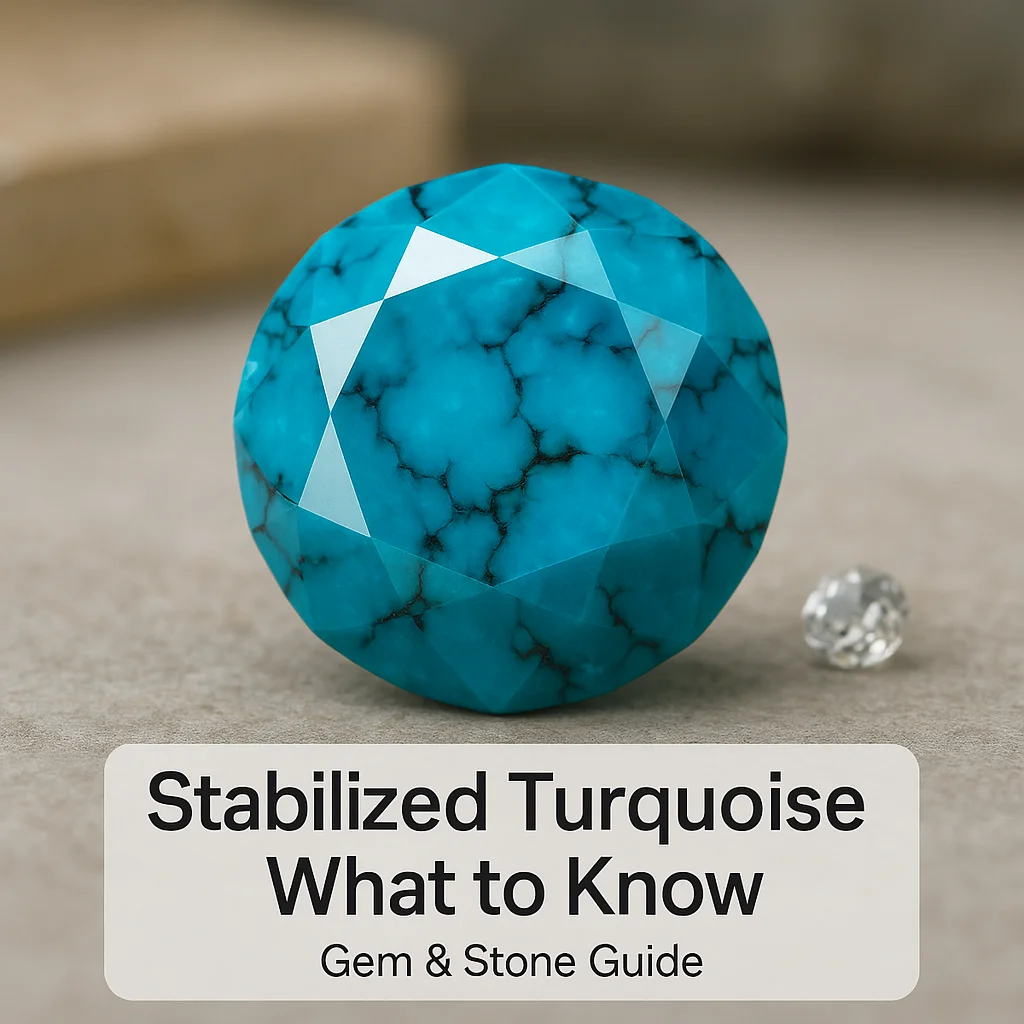
This gemstone is loved for its vibrant colors and unique patterns and is often used in crafting various jewelry pieces, ranging from rings and pendants to earrings and bracelets. It's important to note that December's birthstone is turquoise, making it a popular gift choice for those born in that month.
In this article, you'll learn about the origins, properties, appearance, care practices, buying tips, and identification of stabilized turquoise. We'll cover the essential aspects of this gemstone, ensuring you have a well-rounded understanding of what makes stabilized turquoise a beloved choice in the world of gemstones.
🌍 Where It Comes From
Stabilized turquoise is found in nature as turquoise nodules. These nodules form in arid regions around the world, where they develop through the processes of weathering and oxidation of specific mineral deposits. The host rocks commonly include limonite, sandstone, or other types of porous materials that allow for the infiltration of copper-rich solutions.
Countries like the United States, Mexico, Iran, and China are some of the renowned sources of turquoise. Within the United States, regions such as Arizona, Nevada, and New Mexico have historically been significant producers of the stone. Although differences exist in color and quality, these locations have contributed to turquoise's cultural importance throughout history.
The origin of a turquoise stone can impact its market reputation and perceived value. For instance, Persian turquoise, known for its brilliant sky-blue color and lack of veining, often fetches higher prices. In contrast, turquoise from other locations may exhibit a range of colors and matrix patterns that collectors find appealing.
🔬 How It Forms
Turquoise forms when water containing minerals such as copper and aluminum seeps through rocks for extended periods. This slow geological process results in the precipitation of turquoise in these porous spaces, often coexisting with other secondary minerals.
Over time, turquoise can develop into distinct crystal habits or nodules, frequently recognized by their bumpy, irregular shapes and vibrant coloration. The presence of trace elements like iron and zinc can cause natural variations in the hue of turquoise, thus explaining why some pieces lean more towards green or blue.
The stabilization process specifically involves treating natural turquoise with resin or other substances to fill pores and stabilize the structure. This treatment enhances the stone's durability, making it a practical choice for jewelry that will withstand daily wear and tear.
🎨 Color and Look
Turquoise is widely admired for its spectrum of colors ranging from sky blue to green, often interspersed with intricate, dark veining known as "matrix." The most valued specimens typically display a uniform blue color free from notable matrix inclusions.
Various factors influence the final appearance of turquoise gemstones. The cut and polish techniques can significantly enhance a stone's natural luster, while the clarity of the turquoise impacts its overall appeal. Under different lighting conditions, the stone's color may appear to shift subtly, adding to its dynamic visual interest.
Stabilization and other treatments, like dyeing, can alter the color of turquoise. Though treatments are common in the industry to improve color uniformity and strength, they must be disclosed to consumers, as they affect the stone's authenticity and value.
🧪 Properties That Matter
One of the critical properties of turquoise is its Mohs hardness ranking between 5 and 6. This means that while harder than some gems, turquoise is prone to scratching if not handled with care. Consequently, it is more suitable for occasional wear or protective settings in rings meant for everyday use.
The toughness of turquoise is generally fair, making it vulnerable to chipping and breakage. It does not have a cleavage plane, which defines how a gemstone breaks along specific lines of weakness. Instead, turquoise fractures conchoidally, in a shell-like pattern.
Turquoise's luster is waxy to sub-vitreous (glass-like), contributing to its pleasing, glowing look. Although opaque, polished turquoise gains a remarkable shine, particularly when well-crafted by skilled lapidarists. Opting for stabilized pieces can enhance the toughness and maintain the luster of turquoise over time.
✨ Meanings, Birthstones, and Culture
Turquoise has been traditionally associated with a range of cultural symbols and meanings. Historically, it has been valued for its perceived protective properties and as a talisman for good fortune. As December's birthstone, turquoise embodies qualities of prosperity, serenity, and protection.
Popular in various jewelry traditions from ancient Egypt to Native American cultures, turquoise is revered for its aesthetic and symbolic value. While these associations are cultural rather than scientific, they add another layer of appreciation for this captivating stone.
Many cultures link turquoise with emotional balance and spiritual grounding, though these interpretations are not backed by scientific studies. People often choose turquoise jewelry for its beauty and the stories it carries, enriching its narrative through the ages.
🧼 Care and Cleaning
To keep turquoise looking its best, gentle care is crucial. Water with mild soap and a soft cloth is recommended for routine cleaning, avoiding harsh chemicals and abrasive materials that can dull or damage the stone's surface.
Since turquoise is porous, avoiding prolonged exposure to water and heat is vital. Sudden temperature changes and long soaks can compromise its structure and appearance. For storage, keep turquoise away from harder gemstones and sharp objects to prevent scratches.
Turquoise's relative softness requires mindfulness during activities, especially in settings like rings, where stones may encounter impact or abrasion. Remember, stabilizing treatments do enhance durability, but care remains essential for maintaining longevity.
🛒 Buying Tips and What to Check
When purchasing turquoise, factors such as color, clarity, cut, and carat size affect its valuation. Stones with uniform color and minimal matrix commands premium prices, while clarity and a well-executed cut enhance visual appeal.
Transparency about treatments is crucial when buying. Asking for certification or gemologist reports can verify the authenticity and treatment details for valuable purchases. Laboratories offer insight into a stone's natural or treated state, though they stop short of subjective elements like artistic merit.
For online buyers, a robust checklist is helpful: scrutinize photos, ensure a reasonable return policy, and validate the seller's reputation. Look for complete treatment disclosures, as transparency reflects the seller's commitment to buyer satisfaction.
⚠️ Real vs Fake and Common Look-Alikes
Navigating the world of turquoise involves distinguishing natural stones from synthetics, imitations, and composites. Labs may grow synthetic turquoise that mimics natural appearances, while imitations can include glass or plastic dyed to desired colors.
Assembled stones, like doublets and triplets, combine layers of various materials to simulate genuine turquoise. Recognizing common look-alikes, such as dyed howlite, requires careful observation and professional testing to ascertain authenticity.
Professional gemological identification remains the safest method for confirming real turquoise. Avoid home tests that could damage stones, and rely on experienced gemologists for certainty.
❓ Common Questions and Misconceptions
Is it a mineral or a rock?
Turquoise is a mineral, specifically a hydrated copper aluminum phosphate.
Is it a birthstone?
Yes, turquoise is associated with December as a birthstone.
Will it scratch easily?
With a Mohs hardness of 5-6, it can scratch more readily than harder stones like diamonds or sapphires.
Can it go in water?
Brief exposure is fine, but avoid prolonged soaking or sudden temperature changes.
Does color fade in sunlight?
Prolonged UV exposure can sometimes alter the appearance of turquoise.
What treatments are common?
Common treatments include stabilization and filling to improve durability and appearance.
Is lab-grown "fake"?
Lab-grown stones are synthetic but not fake, as they replicate the natural mineral's structure.
How do I store it safely?
Store separately from harder gems, wrapped in soft cloth to prevent scratches.
Do inclusions always lower value?
Not always; some natural matrix patterns add character and are valued by collectors.
How do I pick a good one for jewelry?
Prioritize uniform color, treatment transparency, reputable sources, and pleasing aesthetic qualities for the piece.
📌 Summary
- Stabilized Turquoise is treated to enhance durability and color.
- Colors range from sky blue to green, often with matrix patterns.
- Forms over time from copper-rich water infiltrating porous rocks.
- Mohs hardness of 5-6: good for occasional wear, not daily rings.
- Common treatments include stabilization and filling.
- Clean gently with soap and water, avoid harsh chemicals.
- Best used in pendants, earrings, and settings that protect the stone.
- Howlite often imitates turquoise; professional testing finalizes ID.
- Authenticity confirmed by labs with gemologist reports.
- Ask for treatment disclosure and buy from reputable dealers.
- Traditionally a December birthstone with cultural symbolism.
- Informed choices enhance appreciation and long-term enjoyment.