💎 Treated Sapphire Heat Treatment Explained
🪨 What It Is
Sapphire is a gemstone, a variety of the mineral corundum, known for its remarkable hardness and vibrant colors, primarily blue. It holds the distinction of being one of the hardest materials, second only to diamond. Sapphires can be found in other colors as well, such as yellow, pink, and orange, but blue is the most well-known.
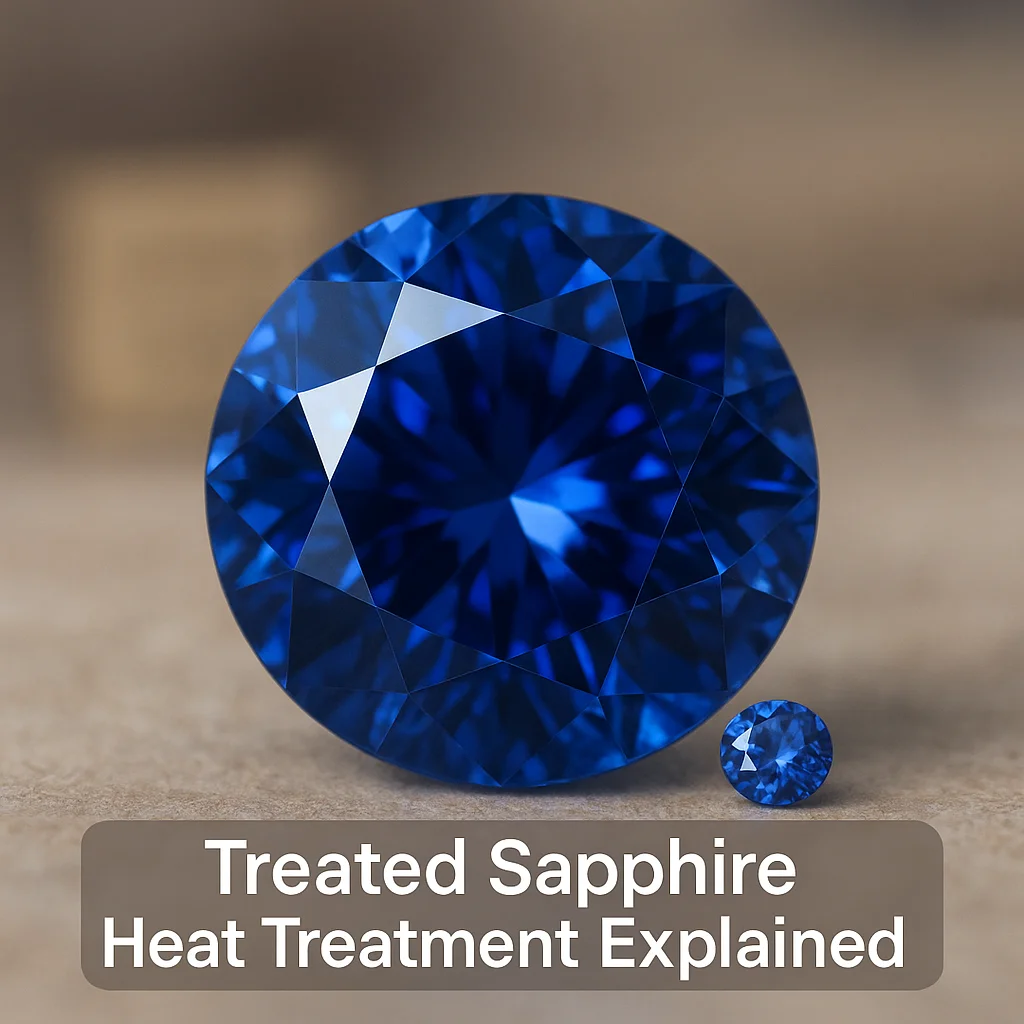
Sapphires are one of the most popular gemstones used in jewelry, celebrated for their beauty and durability. They are recognized as the birthstone for the month of September. This article will explore the specifics of treated sapphires, focusing on a popular enhancement method known as heat treatment.
Readers will learn about the origins and natural formation of sapphires, their appearances and properties, and the impact of treatments. We will also discuss how to care for and purchase sapphires, while highlighting how to distinguish genuine stones from imitations.
🌍 Where It Comes From
Sapphires naturally occur in metamorphic and igneous rocks. They form under conditions of high temperature and pressure within the Earth’s crust. Rich deposits are typically found where these geological processes are active.
Key sapphire-producing regions include parts of Africa, Asia, and Australia, with notable deposits coming from countries like Sri Lanka, Myanmar, and Madagascar. Each location can influence the color and quality of the sapphires, with specific regions being renowned for producing stones of particular hues and clarity.
Origin can affect the market value of sapphires, not only due to color and clarity but also because of historical and cultural associations. Sapphires from Myanmar, for example, are known for their exceptional quality and therefore often command a higher price.
🔬 How It Forms
Sapphires form over millions of years through processes involving heat and pressure deep within the Earth. When conditions are right, aluminum and oxygen combine to create corundum crystals. The presence of trace elements like iron and titanium imparts sapphire's blue color, while other trace elements can lead to a range of colors.
The crystals typically manifest in the hexagonal crystal system, displaying a variety of crystal habits. They might appear as tabular or prismatic crystals and are usually found within host rocks after weathering processes bring them closer to the Earth's surface.
Blue sapphires, specifically, owe their color mainly to the presence of iron and titanium. Each stone's unique shade depends on the precise balance and type of these and other trace elements during its formation.
🎨 Color and Look
Sapphires are most famous for their blue color, ranging from cornflower blue to a deep, rich hue. However, they are also found in a variety of other colors like pink, yellow, and green. These other shades are sometimes referred to as "fancy sapphires".
The appearance of a sapphire is influenced by the cut, polish, and clarity of the stone. Proper cutting enhances the stone's optical properties, such as luster and the way light refracts through it, contributing to its overall brilliance.
Heat treatment is a common practice that enhances the color and clarity of sapphires. By subjecting stones to high temperatures, certain elements within the sapphire can change, often resulting in improved aesthetics. However, it's essential to disclose such treatments when selling the gemstone.
🧪 Properties That Matter
Sapphires are exceptionally durable gemstones, with a Mohs hardness of 9, indicating excellent scratch resistance. They are a great choice for jewelry that sees regular wear, such as rings and bracelets.
The toughness of sapphires, their ability to withstand chipping and breaking, is also noteworthy, though care should still be taken to avoid hard impacts. Sapphires do not have cleavage planes, meaning they do not break along flat planes, adding to their durability.
They exhibit a vitreous to adamantine luster and can be fully transparent to translucent, depending on the number and nature of inclusions within the stone. This clarity affects the stone's value and appearance significantly.
✨ Meanings, Birthstones, and Culture
Traditionally, sapphires have been associated with wisdom, virtue, and good fortune. In cultural symbolism, they are thought to protect against negative energies and bring peace. Sapphires have long been prized in various cultures and worn by royalty and clergy as a symbol of power and wisdom.
As the birthstone for September, sapphires are favored gifts for birthdays and anniversaries falling in this month. While these associations are steeped in cultural tradition rather than scientific fact, they contribute to the stone's enduring popularity.
In modern jewelry design, sapphires are a staple, often featured in engagement rings, necklaces, and earrings because of their rich color and robust nature.
🧼 Care and Cleaning
Caring for sapphires involves gentle cleaning with mild soapy water and a soft cloth. Avoid harsh chemicals, ultrasonic cleaners, and steam cleaners, particularly for treated stones, to prevent potential damage.
Sapphires have excellent durability but can still be damaged by sharp impacts. Store them separately in a soft pouch or lined jewelry box to prevent scratches from harder gemstones like diamonds.
Though sapphires are generally heat-resistant, avoid exposing them to extreme temperature changes, which could harm treated stones or cause internal stresses.
🛒 Buying Tips and What to Check
When buying sapphires, consider the "Four Cs": color, clarity, cut, and carat weight. Vibrant, evenly distributed color often signifies high quality, while clarity affects transparency and luster.
Always inquire about treatments, and for significant purchases, request a lab report that can verify aspects of the stone, though reports may not identify origin conclusively.
For online purchases, ensure the seller has a good reputation, offers clear photographs, and provides a favorable return policy. These steps help ensure you receive a quality stone.
⚠️ Real vs Fake and Common Look-Alikes
Natural sapphires are formed over millions of years, while synthetic sapphires are produced in labs but have the same chemical composition and properties. Imitations, like glass or plastic, are merely look-alikes with different chemical structures.
Assembled stones, like doublets that fuse two materials together, are another category to be aware of. Professional testing by gemologists is necessary for reliable identification.
Common look-alikes include blue topaz and synthetic spinel, which may confuse consumers. Distinguishing these from sapphires requires careful examination and sometimes advanced testing.
❓ Common Questions and Misconceptions
Is it a mineral or a rock? Sapphire is a mineral, a specific variety of corundum.
Is it a birthstone? Yes, sapphire is the birthstone for September.
Will it scratch easily? No, sapphires are very hard, second only to diamonds.
Can it go in water? Generally yes, but avoid prolonged exposure and harsh chemicals.
Does color fade in sunlight? Natural sapphires are stable, but prolonged exposure should still be avoided.
What treatments are common? Heat treatment is the most common practice for enhancing sapphires.
Is lab-grown 'fake'? No, they are real sapphires with identical properties but made in labs.
How do I store it safely? Use a soft cloth pouch and keep it separate from other jewelry to avoid scratches.
Do inclusions always lower value? Not always; some inclusions are acceptable if they do not detract from the appearance.
How do I pick a good one for jewelry? Focus on the intensity of color, clarity, and a cut that enhances its natural brilliance.
📌 Summary
- Sapphire is a blue variety of the mineral corundum.
- It commonly appears in various shades of blue, pink, and yellow.
- Forms in high-pressure, high-temperature environments deep in the Earth.
- Has a Mohs hardness of 9, making it very durable for jewelry.
- Heat treatment is used to enhance color and clarity.
- Best cleaned with mild soap and water; avoid harsh impacts.
- Ideal for rings and earrings due to its durability and beauty.
- Look-alikes include synthetic spinel and blue topaz.
- Professional testing can confirm authenticity.
- Check color, clarity, and seller reputation when buying.
- A cultural birthstone for September, linked to wisdom and truth.
- Highly valued for its stunning blue hue and robust hardness.