💎 Amber Care Avoid Alcohol and Perfume
🪨 What It Is
Amber is a fascinating organic gemstone that originates from plant resin. Unlike many gemstones, it is not a mineral but a fossilized form of tree resin, which makes it unique in the world of gems. Amber's warm, golden hues have captivated humans for centuries, making it a timeless choice for jewelry and ornamental pieces.
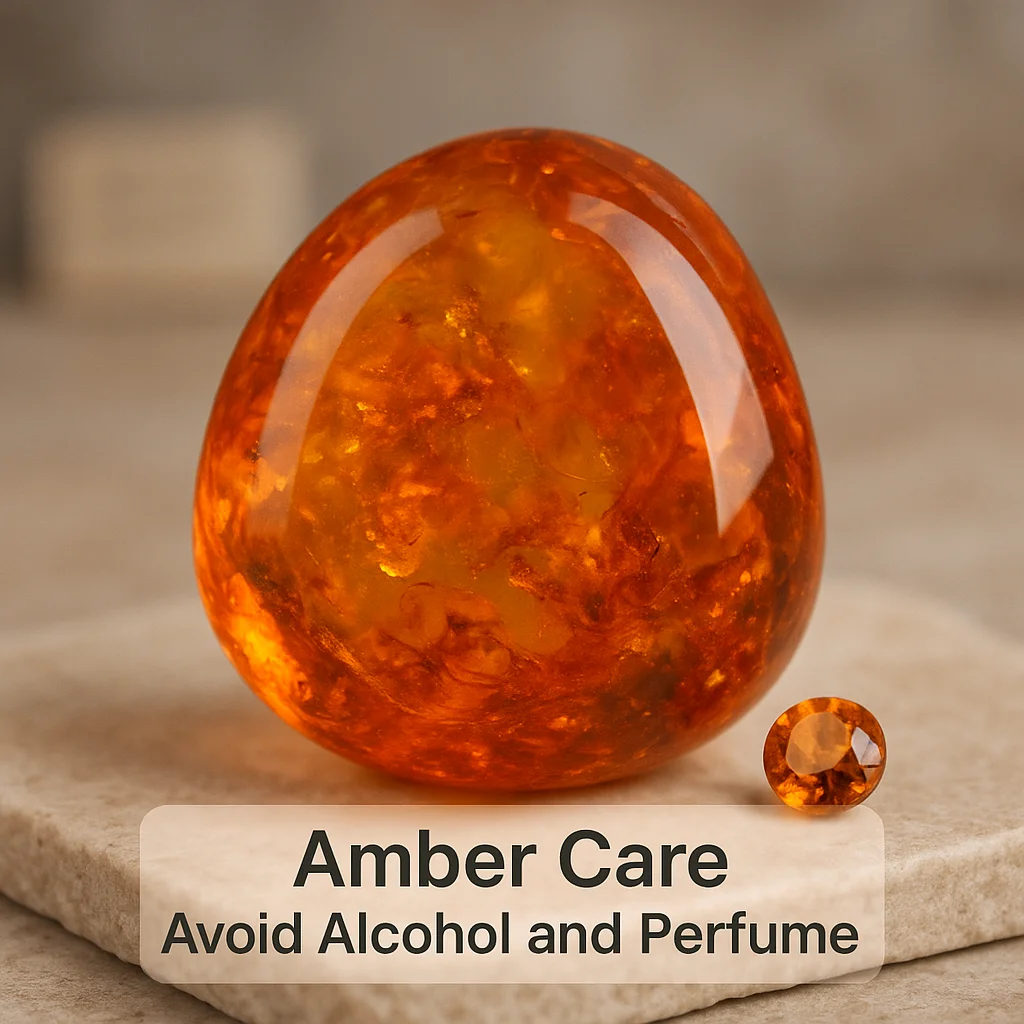
As an organic gemstone, amber is treasured for its natural beauty and distinct characteristics. It is widely used in jewelry and valued for its aesthetic appeal and historical significance. This article will explore the nature of amber, its origin, properties, care techniques, and buying tips for enthusiasts and beginners alike.
Throughout this article, you'll learn how to identify true amber, understand its formation and the significance of its unique properties. We'll also provide guidance on proper care and cleaning, particularly emphasizing why it is important to avoid harsh substances like alcohol and perfume that can damage its surface.
🌍 Where It Comes From
Amber is typically found in sedimentary deposits where ancient forests once thrived. Over millions of years, natural processes transformed tree resin into the stone-like material we know today as amber. This process often occurs in regions with historical links to vast forests, such as areas around the Baltic Sea.
The Baltic region is one of the most famous sources of high-quality amber, often referred to simply as "Baltic amber." This particular type is highly sought after for its rich color and relative abundance. Dominican Republic amber, another well-known variety, is prized for its clarity and the occasional presence of striking blue tones.
The origin of amber can impact its color, clarity, and market value. For instance, amber from the Baltic region often exhibits a rich, honey-like hue, while amber from the Dominican Republic can be found in a range of shades, including clear, yellow, and rare blue hues. Knowing the source of amber can help buyers set the right expectations regarding the stone's appearance and value.
🔬 How It Forms
Amber begins as sticky resin exuded by certain trees in response to injury or other stress factors. This resin captures small insects, plant material, and even air bubbles as it drips down the trunk. Over time, the resin hardens and is buried under layers of sediment and organic matter, where it goes through a chemical transformation.
During this transformation, known as polymerization, the resin loses volatile components and undergoes molecular changes that eventually lead to the formation of amber. This process can take tens of millions of years, during which the amber becomes more durable and stone-like.
Since amber is a product of ancient biological and geological processes, it often contains inclusions of prehistoric insects and plants. These inclusions add scientific interest and can significantly enhance the value of a piece of amber, offering a unique window into the past.
🎨 Color and Look
Amber is celebrated for its enchanting golden and honey hues, although it also appears in an array of other colors such as yellow, orange, deep brown, and even rare green or blue varieties. The presence of inclusions can add character and intrigue, captivating collectors and jewelers alike.
The luster of amber is typically resinous, contributing to its warm, inviting glow. When polished, amber can achieve a beautiful, smooth finish, enhancing its natural beauty. Its transparency and color depth can vary, often depending on its origin and the conditions under which it formed.
Amber can be subjected to treatments to enhance its clarity and color. However, such processes should be disclosed at the point of sale. As a buyer, understanding the interplay of natural formations and treatments can help in making an informed purchase.
🧪 Properties That Matter
Amber's Mohs hardness ranges from 2 to 2.5, which makes it relatively soft compared to other gemstones. This makes amber susceptible to scratches, so jewelry pieces should be worn with care, ideally in settings that minimize contact with harder materials.
Amber is not particularly tough, meaning it can chip or crack if struck hard. Its lack of cleavage means it doesn't break in predictable ways, often creating more irregular fragments when damaged. The stone's fracture is conchoidal, giving it curved fracture lines.
The lightweight nature of amber makes it a comfortable choice for a variety of jewelry styles, including necklaces, earrings, and pendants. However, its softness means it's best suited for pieces that face less daily wear and tear, like earrings or pins, rather than rings or bracelets.
✨ Meanings, Birthstones, and Culture
Amber is traditionally associated with warmth and vitality due to its sunny, golden hues. It is linked to various cultural symbols and myths, often thought to represent sunlight captured in stone. While not an official birthstone, amber holds symbolic importance in various traditions.
Different cultures have ascribed meanings to amber, ranging from protection to good luck. Though these associations are not scientifically proven, they add an element of mystique and appeal for collectors and jewelry aficionados.
In modern jewelry traditions, amber remains a popular choice for those seeking something unique and historically rich. It is frequently set in silver or gold to complement its natural glow, creating elegant and timeless pieces.
🧼 Care and Cleaning
Amber requires gentle care and cleaning to maintain its beauty. The safest method is to clean it with warm, soapy water and a soft cloth. Substances like detergents, alcohol, and perfume can damage its surface, making them important to avoid. After cleaning, amber should be dried thoroughly with a soft cloth.
Exposure to heat or sudden temperature changes can cause amber to crack, so it is wise to keep it at room temperature. Extended exposure to sunlight should be avoided as it can cause changes in color over time. For storage, place amber in a soft, lined box or a jewelry pouch to prevent scratches.
Regularly checking amber jewelry for any signs of damage or wear is advisable, as this can help prevent more severe issues later on. If extensive cleaning is required, consulting a professional jeweler is recommended to ensure the stone's integrity.
🛒 Buying Tips and What to Check
When buying amber, look for its color, clarity, and whether it comes with or without inclusions, as these factors largely affect its quality and price. Deep golden hues and clear stones generally command higher prices, although inclusions, if interesting, can also add value.
Prospective buyers should ask about any treatments applied to the amber, including details of its origin, which can impact value. For high-ticket items, requesting lab certification can provide additional assurance, as such reports can verify authenticity and disclose any enhancements.
When buying amber online, look for high-quality images, a clear return policy, and seller reputation. These factors will help ensure that buyers are making informed decisions, reducing the risk of disappointment upon receiving the item.
⚠️ Real vs Fake and Common Look-Alikes
Amber is often imitated by synthetic or composite materials like plastic or glass. While visually similar, true amber has distinct characteristics that can be distinguished through professional testing. Laboratory-grown amber isn’t equivalent to natural amber, though it may be used in jewelry as an accepted alternative.
Common look-alikes include copal, a younger version of resin that hasn’t fully fossilized. It's crucial to differentiate these materials when purchasing, as their lower market value means they should not be priced the same as true amber.
A proper identification from a gemological lab can offer reliable confirmation of authenticity, rather than relying on risky at-home tests that could damage the stone.
❓ Common Questions and Misconceptions
"Is it a mineral or a rock?" Amber is neither; it is an organic gemstone formed from fossilized tree resin.
"Is it a birthstone?" Amber is not traditionally recognized as one, but it holds cultural significance for some.
"Will it scratch easily?" Yes, due to its low hardness, amber is prone to scratching.
"Can it go in water?" Short exposures are usually safe, but prolonged soaking is not recommended.
"Does color fade in sunlight?" Extended sunlight exposure can cause amber's color to change over time.
"What treatments are common?" Amber can be heat-treated or clarified to enhance clarity and color.
"Is lab-grown 'fake'?" Lab-grown versions aren't fake, but they aren't naturally fossilized either.
"How do I store it safely?" Store amber in soft, padded pouches away from other jewelry to prevent scratches.
"Do inclusions always lower value?" Not always; interesting inclusions can increase amber's uniqueness and appeal.
"How do I pick a good one for jewelry?" Choose pieces with appealing color, clarity, and setting to suit your taste and lifestyle.
📌 Summary
- Amber is an organic gemstone formed from ancient tree resin.
- Typical colors include golden, honey, orange, and rare shades like blue.
- Forms through polymerization over millions of years.
- Low Mohs hardness makes it suitable for pendant and earring use.
- Treatments like heating and clarity enhancements are common.
- Clean with mild soap and water; avoid harsh chemicals.
- Preferred for pendants and earrings due to its softness.
- Copal and synthetic materials often mimic amber.
- Authentication should be confirmed by professional testing.
- Buying tips: check color, clarity, source, and seller reputation.
- Amber holds cultural significance but is not an official birthstone.
- Amber offers a glimpse into ancient ecosystems; its inclusions make each piece unique.