💎 Mohs Hardness Quick Guide for Everyday Wear
🪨 What It Is
The Mohs hardness scale is a qualitative scale that assesses the scratch resistance of various minerals. Developed by Friedrich Mohs in 1812, it provides insight into how minerals and gemstones can withstand everyday wear and tear. This guide will help you understand the practical applications of the Mohs scale, especially for jewelry wearers.
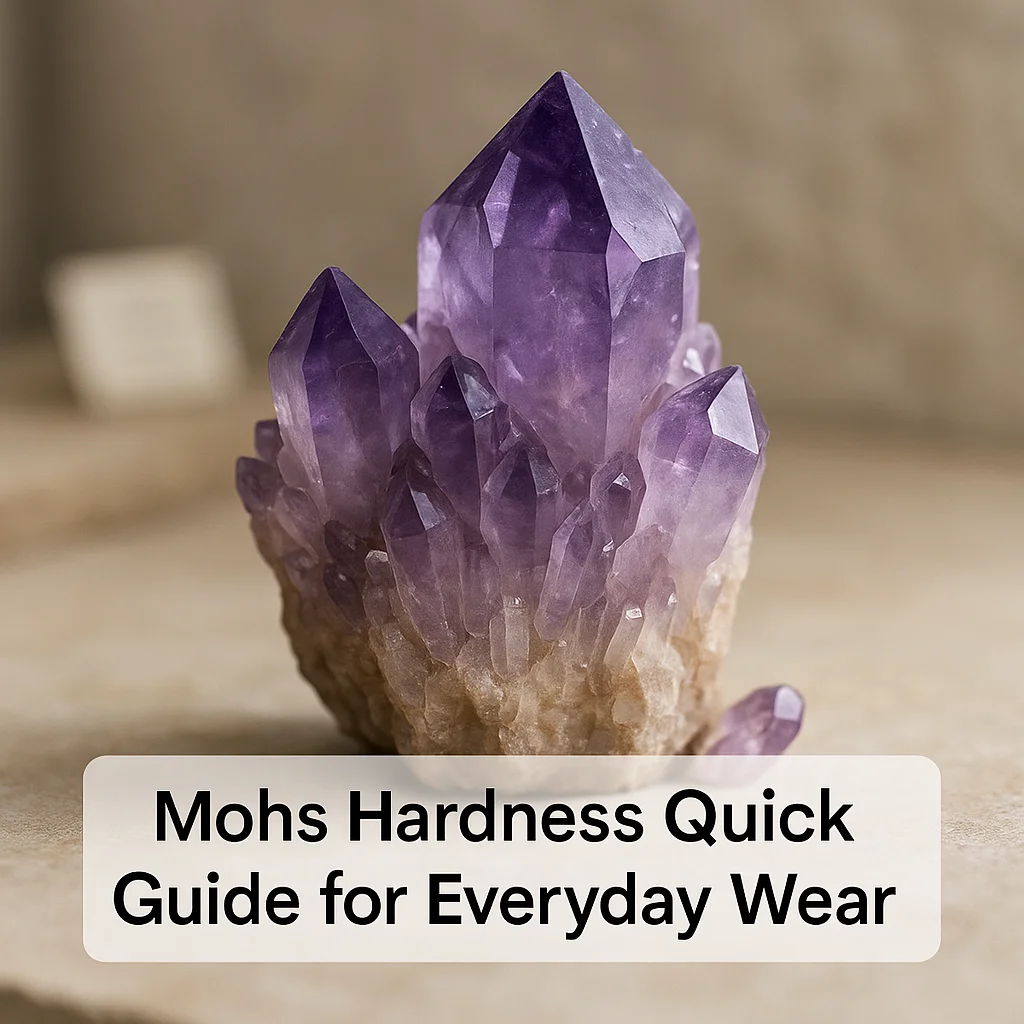
Using this guide, you will learn about the physical properties of different gemstones, including how their hardness impacts their durability and care. It will cover appearance, common treatments, origins, and practical tips for selection and maintenance.
Whether you're considering a diamond engagement ring or a pair of opal earrings, understanding hardness can guide you in making informed purchases and maintaining the longevity of your jewelry collection.
🌍 Where It Comes From
Gemstones and minerals originate from a wide range of geological settings. Some are formed deep within the Earth's crust through igneous processes, while others are the result of metamorphic or sedimentary processes. For example, diamonds are typically formed in high-pressure environments deep within the Earth.
Many gemstones, such as sapphires and rubies, are found in areas with rich geological activity. These regions include parts of Africa, Asia, and Australia. The specific location where a gem is mined can affect its color and quality. For instance, Burmese rubies are prized for their vivid "pigeon blood" red color.
The origin of a gemstone can also impact market reputation and value. Some regions are known for producing particularly high-quality gems, influencing consumer demand and price. It's important to have an understanding of this when purchasing gems.
🔬 How It Forms
Gemstones are formed through a variety of natural processes. Igneous formations occur when magma cools and crystallizes. Minerals like diamonds are an example of this type of formation. Metamorphic processes, involving intense heat and pressure, transform existing rock structures, forming gems like garnet.
In sedimentary settings, gems such as opals form through the deposition of silica in water. Hydrothermal processes, involving hot, mineral-rich solutions, create gems like quartz in cavities within rocks. The presence of trace elements during these processes can result in different colors in a gemstone, as seen in the varied hues of beryls like emerald and aquamarine.
The specific structure and clarity of gemstones can vary widely based on these formation processes. Minerals can form as crystals, nodules, or other shapes based on the environment in which they grow.
🎨 Color and Look
Gemstones are renowned for their varied colors and visual effects. Color is primarily influenced by the chemical composition of the mineral and the presence of trace elements. For example, chromium gives emeralds their lush green color. Optical phenomena like chatoyancy (cat's eye effect) or asterism (star effect) are sometimes seen in gemstones.
The cut and polish of a stone significantly impact its brilliance and overall look. Lighting conditions can also alter the perception of color, making some stones appear more vivid or dull. Treatments such as heat or irradiation are sometimes applied to enhance a gemstone's color and aesthetic appeal.
When purchasing gemstones, it's essential to inquire about any treatments they may have undergone, as this can affect their value and care requirements.
🧪 Properties That Matter
Understanding the properties of gemstones is crucial for selecting items suitable for everyday wear. The Mohs hardness scale measures scratch resistance, with 10 being the hardest (diamond) and 1 the softest (talc). Hardness affects a gem's ability to withstand abrasion.
A gemstone's toughness, or chipping resistance, is different from hardness and refers to its ability to resist breaking or cracking. Cleavage describes how a mineral may split along certain planes, which impacts durability. Luster denotes the quality of light reflection, contributing to a stone’s brilliance.
These qualities determine how a gemstone should be used in jewelry. High hardness stones are ideal for rings, while softer gems may be better for pendants or earrings, which face less daily wear.
✨ Meanings, Birthstones, and Culture
Throughout history, gemstones have held significant cultural symbolism and are often associated with specific months, serving as tradition-based birthstones. For example, the sapphire is September's birthstone and is traditionally linked with wisdom.
While these associations are culturally significant, it’s important to differentiate between empirical attributes and traditional beliefs. Gemstones have often been seen as symbols of specific traits or fortune-bringing talismans, even though these meanings are not scientifically proven.
Modern jewelry traditions continue to celebrate these cultural associations, often influencing buyer preference for birthstone jewelry.
🧼 Care and Cleaning
Proper care and cleaning begin with understanding the specific needs of your gemstones. As a rule of thumb, using gentle soap and water with a soft cloth is recommended for most stones. Avoid harsh chemicals and ultrasonic cleaners, especially for softer or treated gems.
Gemstones like opals and pearls are sensitive to heat and sudden temperature changes; they require more cautious handling and storage. Long soaking can be detrimental to porous stones, so cleaning should be prompt and gentle.
Storing gemstones individually in soft compartments prevents scratches and other damage. This is particularly important for softer stones that are more prone to abrasion.
🛒 Buying Tips and What to Check
When buying gemstones, several factors affect price and quality, including color, clarity, cut, carat weight, and origin. Understanding these can help you make informed decisions. Asking about treatments and obtaining certification for high-value stones is crucial.
Lab reports detail gem authenticity and treatment history, but they cannot ascribe mystical properties. For online purchases, check seller reputation, product images, and return policies thoroughly.
Paying attention to these aspects can help avoid pitfalls and ensure satisfaction with your purchase, whether buying in person or online.
⚠️ Real vs Fake and Common Look-Alikes
Gemstones come in natural, synthetic (lab-grown), and imitation (glass, plastic) forms. Understanding these distinctions is key to making informed purchases. Synthetics share the same physical and chemical properties as natural stones, while imitations do not.
Look-alike stones can cause confusion. For example, cubic zirconia often imitates diamonds. Doublets or triplets combine materials to enhance appearance or durability but can be less valuable.
Professional testing is essential for reliable identification, as visual inspection alone can be misleading and risky.
❓ Common Questions and Misconceptions
Is it a mineral or a rock? Most gemstones are minerals, with structured chemical compositions. Some, like lapis lazuli, are rocks.
Is it a birthstone? Yes, many gemstones are associated with specific birth months, like garnet for January.
Will it scratch easily? It depends on the Mohs hardness. Softer stones like pearl can scratch easily.
Can it go in water? Brief exposure is usually safe, but avoid soaking softer stones like opal.
Does color fade in sunlight? Some gems, like amethyst, can fade with prolonged sun exposure.
What treatments are common? Heat treatment to enhance color is common, particularly for sapphires.
Is lab-grown 'fake'? Lab-grown gems are real, sharing natural stone properties, but they are not naturally occurring.
How do I store it safely? Store gemstones individually in soft pouches to prevent scratches.
Do inclusions always lower value? Inclusions may decrease value but can also signify authenticity, as with emeralds.
How do I pick a good one for jewelry? Consider the gem's hardness, durability, and setting suitability for your lifestyle.
📌 Summary
- What it is: Minerals and gemstones categorized by Mohs hardness
- Typical colors/appearance vary widely by species and treatments
- Formed through igneous, sedimentary, metamorphic, and hydrothermal processes
- Key properties for wear include hardness, toughness, and luster
- Common treatments like heating enhance appearance
- Care: gentle cleaning, avoiding harsh chemicals and environments
- Best jewelry uses depend on hardness and toughness
- Common look-alikes include synthetic and imitation stones
- Authenticity confirmed through professional testing and certification
- Buying checklist: color, clarity, cut, carat, origin, treatment disclosure
- Birthstone associations for each month, steeped in tradition
- Hardness knowledge is pivotal for selecting jewelry suitable for daily wear