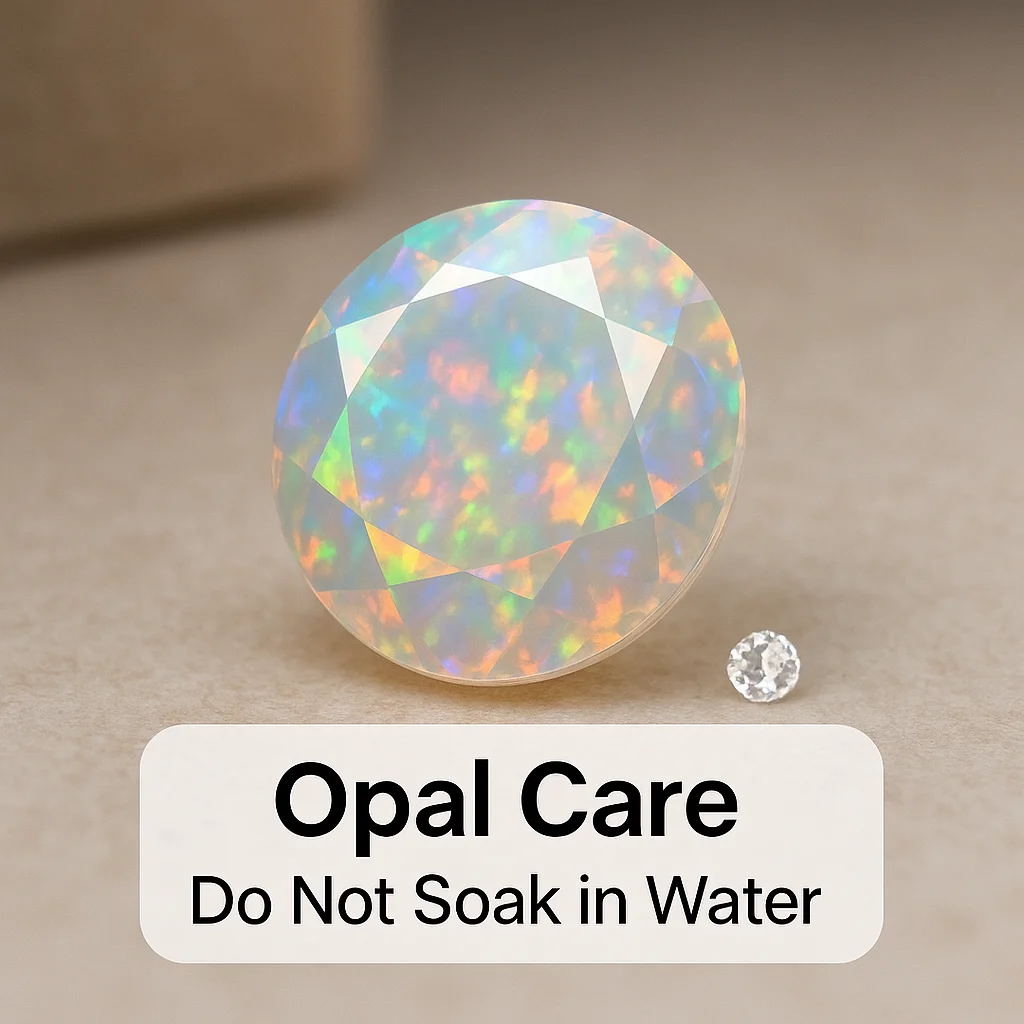
💎 Opal Care Do Not Soak in Water
🪨 What It Is
Opal is a mesmerizing gemstone known for its unique play of color, which results from the diffraction of light through its silica spheres. It is a mineraloid, composed mainly of silicon dioxide and water. Unlike most gemstones, opal does not have a crystalline structure, which contributes to its unique and often vibrant appearance.
Opal is cherished in the jewelry world and is often used in rings, pendants, and earrings. It is also one of the birthstones for October, making it a popular choice for those born in this month. Known for its ever-changing and colorful appearance, opal attracts both casual wearers and serious collectors.
Throughout this article, we'll explore various aspects of opal, including its formation, origins, care tips, and buying advice. Whether you're new to gemstones or expanding your existing knowledge, you'll learn how to care properly for opal, ensuring its beauty lasts for years to come.
🌍 Where It Comes From
Opal is primarily found in sedimentary settings, often in association with rock formations like sandstone and limestone. It typically forms in areas with ancient volcanic activity, where silica-rich water once flowed through rocks and filled cracks and voids.
Some of the most famous opal-producing regions include Australia, which is known for its vibrant and high-quality opals. Australia produces a wide variety of opal types, including the sought-after black opal. Other notable opal mining areas include Ethiopia, known for its hydrophane opals, and parts of South America and Northern Europe.
The origin of opal can significantly affect its market value and appearance. Australian opals, for example, are renowned for their intense play of color and are highly prized in the gemstone market. Meanwhile, Ethiopian opals are appreciated for their unique ability to absorb and release water.
🔬 How It Forms
Opal forms when silica-rich water filters down into the cracks and voids of sedimentary rocks. Over time, as the water evaporates, the silica particles are left behind to form opal. The process can take millions of years, contributing to the stone's unique beauty and rarity.
The vibrant colors seen in opal are due to the orderly arrangement of silica spheres within the stone. When light enters the opal, it is refracted and diffracted by these spheres, creating the characteristic and enchanting play of color. The size and arrangement of these spheres determine the colors that appear.
🎨 Color and Look
Opals are renowned for their play of color, displaying a kaleidoscope of hues as light interacts with the stone. Some opals have a translucent appearance with colorful flashes, while others can appear opaque with intense, vibrant coloration.
The cut and polish of an opal can enhance its natural beauty, allowing its colors to be seen in their full glory. Proper lighting is crucial to appreciate an opal’s display fully. Common treatments like color enhancement and filling are sometimes used but can affect the value and longevity of an opal.
🧪 Properties That Matter
On the Mohs scale of hardness, opal rates between 5.5 and 6.5, indicating moderate scratch resistance. It's not as hard as sapphire or diamond, making it more susceptible to scratches from everyday wear and tear.
The toughness of opal is relatively low due to its lack of crystal structure. It can be prone to chipping or breaking if not handled carefully. Opals do not have cleavage; instead, they exhibit a conchoidal fracture, breaking with smooth, rounded surfaces.
Opals can have a vitreous (glassy) to waxy luster and range from transparent to opaque. These properties make it essential to choose protective mountings for opals when used in jewelry intended for daily wear.
✨ Meanings, Birthstones, and Culture
Opal has traditionally been associated with hope, innocence, and purity. As an October birthstone, it is believed to bring good luck to those born in that month. In ancient times, opals were considered lucky charms, with some cultures associating them with the ability to grant invisibility.
While opals hold significant cultural and historical value, it is essential to separate these beliefs from scientific fact. Modern gemology does not support any special powers or effects attributed to opal beyond its physical properties.
🧼 Care and Cleaning
Opals require gentle care. Use mild soap and water with a soft cloth to clean your opal jewelry. Avoid harsh chemicals, which can damage the stone. Given their water content, opals should also be protected from prolonged exposure to water, particularly highly chlorinated or soapy water.
Changes in temperature can affect opals, especially those with high water content. Avoid exposing opal jewelry to sudden temperature changes or direct heat sources. For storage, keep opals separate from harder stones to prevent scratches.
🛒 Buying Tips and What to Check
When purchasing opals, factors such as color, clarity, cut, and carat size influence the price. The origin is also important, with stones from renowned regions like Australia generally commanding higher prices. Always inquire about treatments and request a gemological report for high-value opals.
When buying online, ensure clear photos are provided, check the seller’s return policy, and verify their reputation. Transparency in gemstone enhancement and origin is crucial for assessing the quality and value of your opal purchase.
⚠️ Real vs Fake and Common Look-Alikes
Distinguishing natural opals from synthetic ones can be challenging. Synthetic opals are laboratory-grown but share similar properties to natural opals. Imitations made from glass, plastic, or composites resemble opals but lack genuine properties.
Doublets and triplets are assembled stones that combine a thin layer of opal with other materials to enhance stability and appearance. Proper identification by a professional gemologist is recommended to confirm authenticity and avoid home testing, which can damage the stone.
❓ Common Questions and Misconceptions
Is it a mineral or a rock? Opal is a mineraloid, not a true mineral, due to its amorphous structure.
Is it a birthstone? Yes, opal is the birthstone for October.
Will it scratch easily? It's moderately scratch-resistant but softer than many other gemstones.
Can it go in water? Avoid soaking opals in water for prolonged periods.
Does color fade in sunlight? Yes, prolonged exposure to sunlight can affect opal color.
What treatments are common? Some opals undergo color enhancement or stabilization.
Is lab-grown 'fake'? Lab-grown opals are real opals but not naturally occurring.
How do I store it safely? Store opals away from direct sunlight and separate from other jewelry.
Do inclusions always lower value? Inclusions can affect value, but unique patterns might add character.
How do I pick a good one for jewelry? Look for vibrant color play and assess settings for protection.
📌 Summary
- Opal is a fascinating mineraloid known for its play of color.
- It typically features a rainbow spectrum under different light conditions.
- Forms from silica-rich water in sedimentary rocks over millions of years.
- Moderate hardness and low toughness; requires cautious handling.
- Color enhancement and stabilization are common treatments.
- Clean gently with soap and water; avoid harsh chemicals and long soaking.
- Ideal in pendants and earrings; protect rings from hard knocks.
- Common imitations include glass and plastic; doublets/triplets enhance appearance.
- Authenticity confirmed through professional gemological testing.
- Buy from reputable sellers with clear images and return policies.
- Known as an October birthstone, traditionally linked to luck and purity.
- Keep in a cool, dry place and away from direct sunlight for best care.