💎 Ring Durability Guide for Daily Use
🪨 What It Is
Rings are not only a symbol of commitment and style but also practical jewelry pieces that need to withstand daily wear. When choosing a ring for everyday use, understanding the stone's properties is crucial. Whether it's a mineral, gem variety, organic gem, or rock, each has unique characteristics that affect its durability.
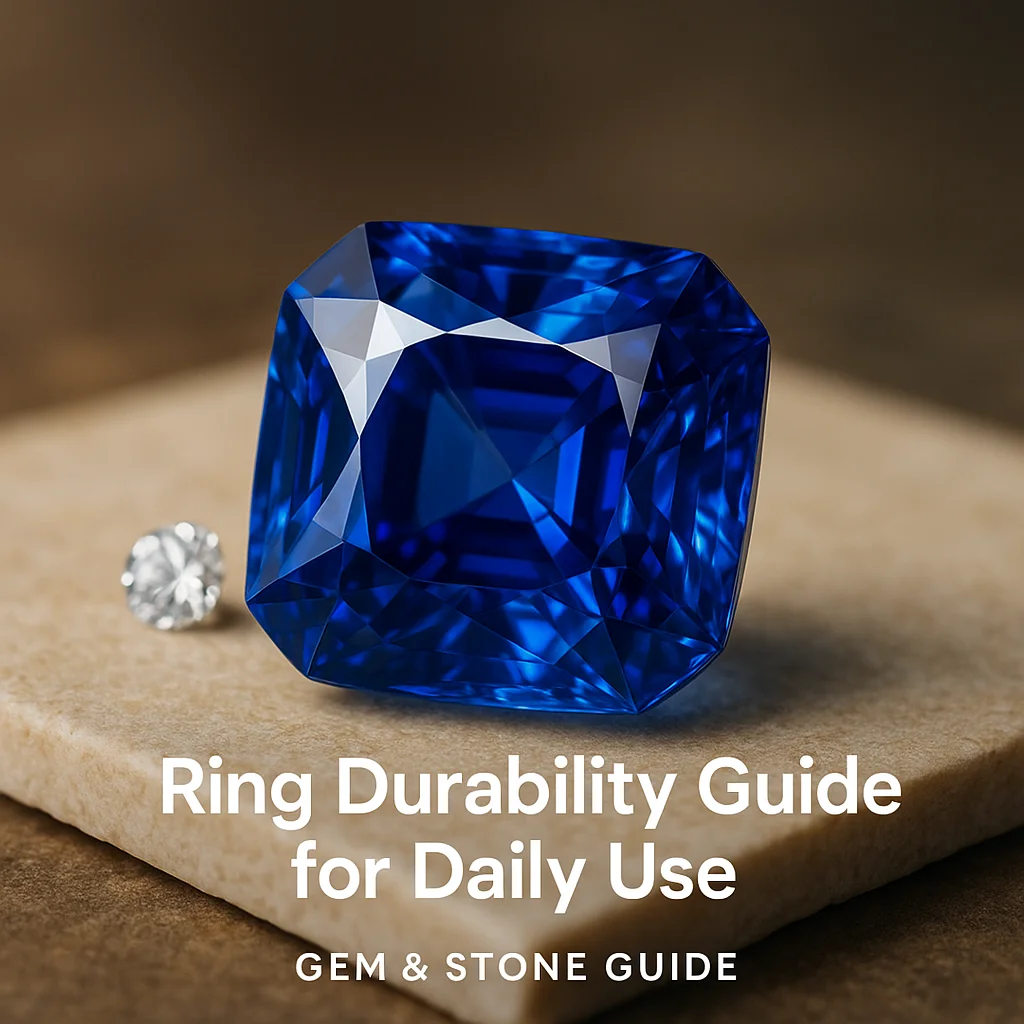
Commonly, gemstones used in rings include diamonds, sapphires, rubies, emeralds, and more. Each has its own specific properties, like hardness, toughness, and possible treatments, that can influence its appearance and lifespan.
This guide will help you understand what to expect in terms of appearance, properties, origin, value, care, and tips for purchasing a ring that can endure everyday activities.
🌍 Where It Comes From
Gemstones are formed in various geological settings. Diamonds, for example, are formed deep within the Earth's mantle and brought to the surface through volcanic eruptions. In contrast, emeralds are typically found in metamorphic rocks, while pearls are organic gems formed within mollusk shells in marine environments.
Gemstones can be found in regions around the world. For instance, rubies are predominantly found in Myanmar, while sapphires can be sourced from several countries, including Australia and Sri Lanka. The provenance of a gemstone can affect its color, clarity, and market reputation, and sometimes its value.
In general, gemstones extracted from well-known locations might carry a premium due to their established quality. However, newer sources may offer gemstones that are just as beautiful, albeit with less historical prestige.
🔬 How It Forms
Gemstones form under specific conditions involving heat, pressure, and time. For example, diamonds are carbon structures that crystallize under immense pressure and high temperatures over millions of years. Sapphires and rubies are varieties of the mineral corundum, with trace elements like iron or chromium causing their distinctive colors.
Quartz, a common gemstone family, forms in various conditions, typically from silica-rich fluids that are allowed to crystallize over time. Its varieties, including amethyst and citrine, derive their colors from differing trace elements and environmental factors.
Crystals can form in singular, well-defined shapes or as aggregates of smaller crystals. Some, like opal, do not form crystals but instead comprise hydrated silica in an amorphous arrangement, contributing to their unique appearance and effects like play-of-color.
🎨 Color and Look
Gemstone appearance can vary widely, from the deep blues of sapphires to the fiery reds of rubies. Treatments such as heat treatment are often applied to enhance or stabilize these colors, and while effective, they should be properly disclosed at the time of sale.
The optical effects such as chatoyancy (a cat's eye effect), asterism (star-like reflectance), and iridescence (rainbow colors) can contribute to a gemstone's appeal. However, these effects are typically dependent on the stone's internal structure and inclusions.
How a stone is cut and polished significantly affects its final appearance. A skillful cut maximizes brightness and minimizes visible inclusions, leading to a more appealing gemstone. Clarity, while crucial, is sometimes less important if the stone has particularly vibrant colors.
🧪 Properties That Matter
The Mohs hardness scale, which measures scratch resistance, is a critical factor in selecting a gemstone for a ring. Diamonds rank at 10, the highest, making them ideal for daily wear. In contrast, stones like opal and lapis lazuli are much softer and more vulnerable to scratches.
Toughness, or resistance to chipping, is another vital property. Some stones, like jade, are very tough, while others, such as emerald, can be more fragile due to internal inclusions.
Gemstones may feature cleavage planes, where they are more prone to breaking if struck. Understanding these properties helps in choosing settings that protect the stone from impacts and wear.
Luster ranges from vitreous (glassy) in diamonds to waxy or dull in stones like turquoise. Maximizing this luster involves proper polishing and maintenance.
✨ Meanings, Birthstones, and Culture
Many gemstones possess traditional meanings and are associated with certain birth months. For example, diamonds are April's birthstone, symbolizing clarity and strength, while sapphires, associated with wisdom and serenity, are September's birthstone.
Cultural significance can influence gemstone demand and pricing. Birthstones, for instance, are often purchased as gifts for special occasions, adding an emotional and symbolic layer to their physical properties.
While folklore and tradition ascribe various metaphysical properties to gemstones, these are not scientifically proven and should be viewed as part of cultural heritage rather than empirical fact.
🧼 Care and Cleaning
Proper care can maximize the lifespan of your ring. Cleaning with gentle soap and lukewarm water is a safe method for many stones. Always use a soft cloth and avoid harsh chemicals that might damage or discolor the stone.
Heat-sensitive stones like opal or pearl should not be exposed to extreme temperatures or prolonged soaking, as these conditions may cause the stones to crack or lose their luster.
When not being worn, store rings in a soft-lined box or pouch to prevent scratches and damage. Consider keeping the stones away from direct sunlight to avoid fading in stones that are light-sensitive.
🛒 Buying Tips and What to Check
When purchasing gemstones, the 4 Cs — color, clarity, cut, and carat weight — are crucial factors determining a gemstone's quality and price. Origin and reputation for particular gemstones may also affect valuation.
Understanding treatments is key; many gemstones undergo enhancements to improve their appearance. Reputable dealers should provide disclosure of any treatments.
For high-value stones, consider obtaining a lab report confirming the stone's identity and any detected treatments, though these reports are not definitive proof of value.
When buying online, ensure clear photographs, a robust return policy, the seller's reputation, and full disclosure on enhancements to avoid disappointment.
⚠️ Real vs Fake and Common Look-Alikes
Natural stones are mined from the earth, whereas synthetic stones are grown in laboratories using the same minerals. Imitations might use glass, plastic, or composites without any of the original stone's properties.
Assembled stones, such as doublets or triplets, combine layers of materials to mimic the appearance of a solid stone. Look-alikes, like cubic zirconia for diamonds, can be visually deceptive.
Professionals can accurately identify stones using advanced tools and tests, and any attempts to authenticate gemstones at home are not only unreliable but could damage the stone.
❓ Common Questions and Misconceptions
Is it a mineral or a rock? Most gemstones are minerals with specific chemical compositions.
Is it a birthstone? Many gemstones have birthstone status, notable examples include diamond for April and sapphire for September.
Will it scratch easily? It depends on the Mohs hardness; diamonds, for instance, do not scratch easily.
Can it go in water? Generally, yes, but avoid long exposure for porous stones like opal.
Does color fade in sunlight? Some stones like amethyst may fade with prolonged UV exposure.
What treatments are common? Heat and dye treatments are common; knowing about them is crucial before buying.
Is lab-grown "fake"? Lab-grown stones have identical properties to natural stones but are man-made.
How do I store it safely? Store in a soft-lined box to avoid scratches.
Do inclusions always lower value? Not always; some inclusions can enhance a stone's uniqueness.
How do I pick a good one for jewelry? Balance between the 4 Cs, personal taste, and the intended use.
📌 Summary
- What it is: minerals, gems, rocks, or organic gems
- Typical colors/appearance: diverse hues, optical effects
- How it forms: geological processes, time, conditions
- Key properties for wear: hardness, toughness, luster
- Common treatments/disclosures: heat, dyeing, resin
- Care and cleaning essentials: gentle methods, storage tips
- Best jewelry uses: daily rings, special pendants, resilient earrings
- Common look-alikes: synthetics, imitators, composites
- How authenticity is confirmed: professional tools/testing
- Buying checklist highlights: 4 Cs, treatments, origin, reputation
- Birthstone/cultural notes: traditional associations, symbolism
- Memorable takeaway: Choose wisely, maintain carefully, and enjoy gracefully.