💎 Brown Tiger Eye
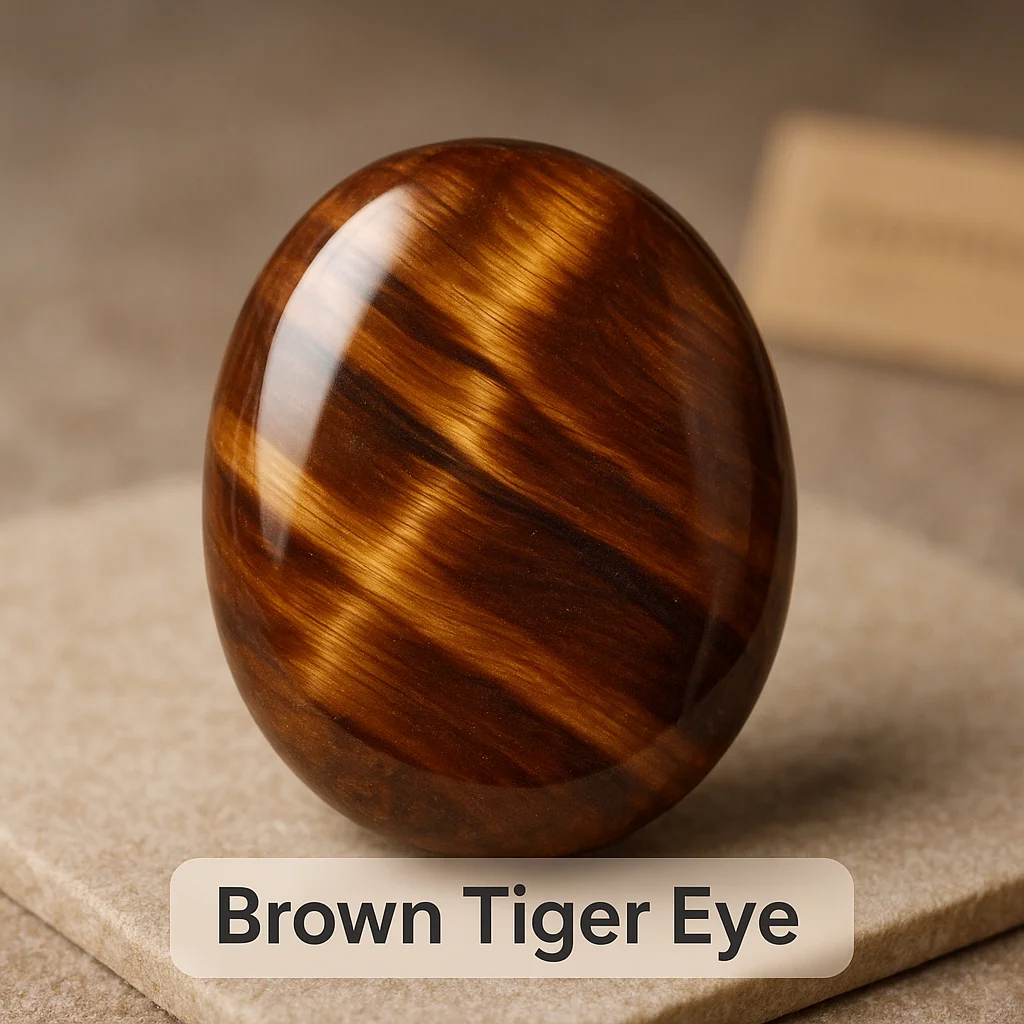
Brown Tiger Eye is a captivating gemstone with a silky luster that catches the eye with its shifting bands of color, known as chatoyancy. This stone belongs to the quartz family, which is one of the most abundant mineral groups on Earth. It is popular for jewelry and as a decorative stone, known for its rich colors and compelling optical effects.
Often found in rings, pendants, and beads, Brown Tiger Eye is appreciated not only for its aesthetic appeal but also for its durability and affordability compared to other gemstones. For those new to the world of gemstones, understanding the properties of Brown Tiger Eye can enhance both the purchase experience and the enjoyment of owning this unique stone.
In this article, you'll learn about its origin, formation, physical properties, cultural meanings, care tips, and buying advice. By the end, you’ll have a comprehensive understanding of what makes Brown Tiger Eye a treasured choice for both collectors and casual enthusiasts.
🪨 What It Is
Brown Tiger Eye is a specific variety of quartz characterized by its fibrous structure and silky luster. Unlike many gemstones, which may need extensive cutting and polishing to reveal their beauty, Tiger Eye displays its unique patterns and chatoyancy with relatively simple processing.
This gemstone is especially noted for its iridescent stripes that resemble the shimmering, reflected eyes of a tiger, hence the name. Its colors typically range from golden to deep brown, with bands that give it a sense of movement and depth.
While not considered a traditional birthstone, Tiger Eye is often associated with the zodiac sign Leo and is thought to bring protection and good fortune in various cultural beliefs. However, these associations are best viewed as symbolic rather than scientifically proven.
🌍 Where It Comes From
Tiger Eye is primarily formed under metamorphic conditions, where alterations in existing rocks lead to the creation of new minerals. Its formation often occurs within the confines of quartz deposits, influenced by the presence of iron which gives it its distinctive color bands.
Major producers of Brown Tiger Eye include regions in South Africa, where the stone is abundantly mined. Other known sources include countries like Namibia, Brazil, India, and Australia. Each region may contribute slight variations in the stone's appearance due to differing geological conditions.
The origin of a Tiger Eye piece can affect its market value depending on the clarity and character of its chatoyancy. Pieces from well-known regions might fetch higher prices due to perceived quality, although this is not a strict rule.
🔬 How It Forms
Brown Tiger Eye forms through the process of pseudomorphism, where one mineral slowly replaces another while retaining the original's structure. In this case, quartz replaces the fibrous crocidolite while maintaining its fibrous form. The iron content within the crocidolite eventually oxidizes, leading to the characteristic golden-brown hues.
The formation process results in the characteristic stripes or bands. These fibers are aligned in such a way that light reflecting off the surface creates the optical effect known as chatoyancy, or the "cat's eye" effect.
The crystals of Tiger Eye are generally fibrous in nature, often appearing as streaky or banded masses rather than discrete crystal structures. This contributes to its unique visual appeal, distinguishing it from other gemstones in the quartz family.
🎨 Color and Look
The most characteristic colors of Brown Tiger Eye range from golden yellow to a deep, rich brown. This coloration is due to iron oxide staining, which occurs naturally during the stone's geological formation. The bands that cross the stone are responsible for its distinctive shimmering appearance.
The appearance of Tiger Eye can be influenced by how it is cut and polished. Skilled lapidarists often cut the stone in cabochon style to best display its chatoyancy. The way light interacts with the fibrous structure of the stone can create a striking shimmering stripe, running parallel to the stone's layers.
Common treatments for Tiger Eye may include heating to enhance its color. However, these treatments do not affect its natural properties as they are primarily surface-level enhancements intended to accentuate its existing beauty.
🧪 Properties That Matter
Brown Tiger Eye has a Mohs hardness of about 6.5-7, making it relatively resistant to scratches and suitable for various types of jewelry. It is robust enough for daily wear in items like rings and is less prone to chipping than some softer stones.
The toughness of Tiger Eye is generally good, allowing it to withstand minor bumps. However, being a member of the quartz family, it can break with sufficient force, especially if it has internal flaws or inclusions.
This gemstone typically lacks cleavage, meaning it does not split cleanly along specific lines, which further adds to its durability for setting in various types of jewelry.
✨ Meanings, Birthstones, and Culture
Traditionally, Brown Tiger Eye is thought to symbolize protection and good fortune. Cultures around the world have ascribed various meanings to the stone, seeing it as a talisman against curses and offering mental clarity.
While it is not a traditional birthstone, it has been associated with the zodiac sign Leo due to its striking appearance and the bold nature often attributed to Leos. These connections are rooted more in cultural symbolism than in scientific evidence.
In modern jewelry, Tiger Eye is admired for its beauty and unique look, often being chosen for its aesthetically pleasing chatoyant effect rather than its cultural associations.
🧼 Care and Cleaning
Caring for your Brown Tiger Eye involves gentle cleaning with mild soap and warm water. Using a soft cloth to dry and polish the stone will help maintain its gleam without risking scratches.
It's best to avoid exposing Tiger Eye to harsh chemicals or prolonged exposure to high heat, as this can affect its appearance. Sudden temperature changes should also be avoided to prevent potential damage to the stone.
Store Tiger Eye jewelry separately from other harder gemstones to avoid scratches. Soft pouches or lined jewelry boxes are ideal storage solutions to maintain its polish and luster.
🛒 Buying Tips and What to Check
When purchasing Brown Tiger Eye, consider the color and clarity of the stone. Rich golden hues with clear chatoyancy typically indicate quality. The cut should enhance the stone's natural optical properties.
For more expensive pieces, ask about any treatments the stone may have undergone to determine authenticity and value. A reputable seller will be open about any enhancements.
Consider requesting a lab report for high-value purchases; these reports can verify the stone's natural origin but may not cover all potential treatments. For online purchases, check for clear photos, return policies, and seller reviews.
⚠️ Real vs Fake and Common Look-Alikes
Real Brown Tiger Eye can be confused with synthetic or imitation stones like glass or plastic, which mimic its appearance but lack natural properties and may have different weights. Understanding the stone's feel and weight can help identify authenticity, but professional testing is recommended for conclusive identification.
Common look-alikes can include hawk's eye or cat's eye, which offer similar chatoyancy but may differ in color or pattern. Recognizing these differences requires experience and careful observation.
Synthetic or assembled stones like doublets or triplets may combine layers of Tiger Eye or other materials to enhance appearance, but these will vary from natural stones in both structure and value.
❓ Common Questions and Misconceptions
Is it a mineral or a rock? Brown Tiger Eye is a variety of the mineral quartz.
Is it a birthstone? Although not a traditional birthstone, it is sometimes linked to the zodiac sign Leo.
Will it scratch easily? With a Mohs hardness of 6.5-7, it is relatively resistant to scratches.
Can it go in water? Brief exposure, like washing, is fine, but avoid prolonged soaking.
Does color fade in sunlight? Prolonged exposure to direct sunlight can lead to fading over time.
What treatments are common? Heat treatments may enhance color, but are not necessary for all stones.
Is lab-grown 'fake'? Lab-grown versions are not fake, but they are synthetic, differing from natural stones.
How do I store it safely? Store separately from other gems to prevent scratching or breaking.
Do inclusions always lower value? Not necessarily; inclusions can affect appearance, but perfect clarity isn't essential for all pieces.
How do I pick a good one for jewelry? Look for even coloring and pronounced chatoyancy enhanced by the cut.
📌 Summary
- Brown Tiger Eye is a variety of quartz known for its chatoyancy and appealing colors.
- Colors typically range from golden yellow to rich brown, with chatoyant reflections.
- Forms through pseudomorphism, where quartz replaces fibers of crocidolite.
- With a hardness of 6.5-7, it is suitable for many types of jewelry.
- Heat treatment may be used to enhance color; transparency about treatments is important when buying.
- Clean gently with soap and water, avoid harsh chemicals and heat.
- Ideal uses include rings and pendants where its chatoyancy can be displayed.
- Common look-alikes include synthetic imitations and stones like hawk's eye.
- Lab reports can offer natural vs synthetic verification, but not all treatments.
- Buying checklist: evaluate color, chatoyancy, cut quality, seller reputation.
- Cultural traditions link it to Leo; valued more for visual appeal than symbolism.
- Remember, Tiger Eye is admired for its unique optical effects and durability, making it a versatile choice for jewelry.