💎 Color Change Garnet
🪨 What It Is
Color Change Garnet is a fascinating gemstone known for its ability to change color under different lighting conditions. It is part of the larger garnet family, a group of silicate minerals that share similar physical properties. This unique gemstone is highly valued for its rarity and distinctive optical effects.
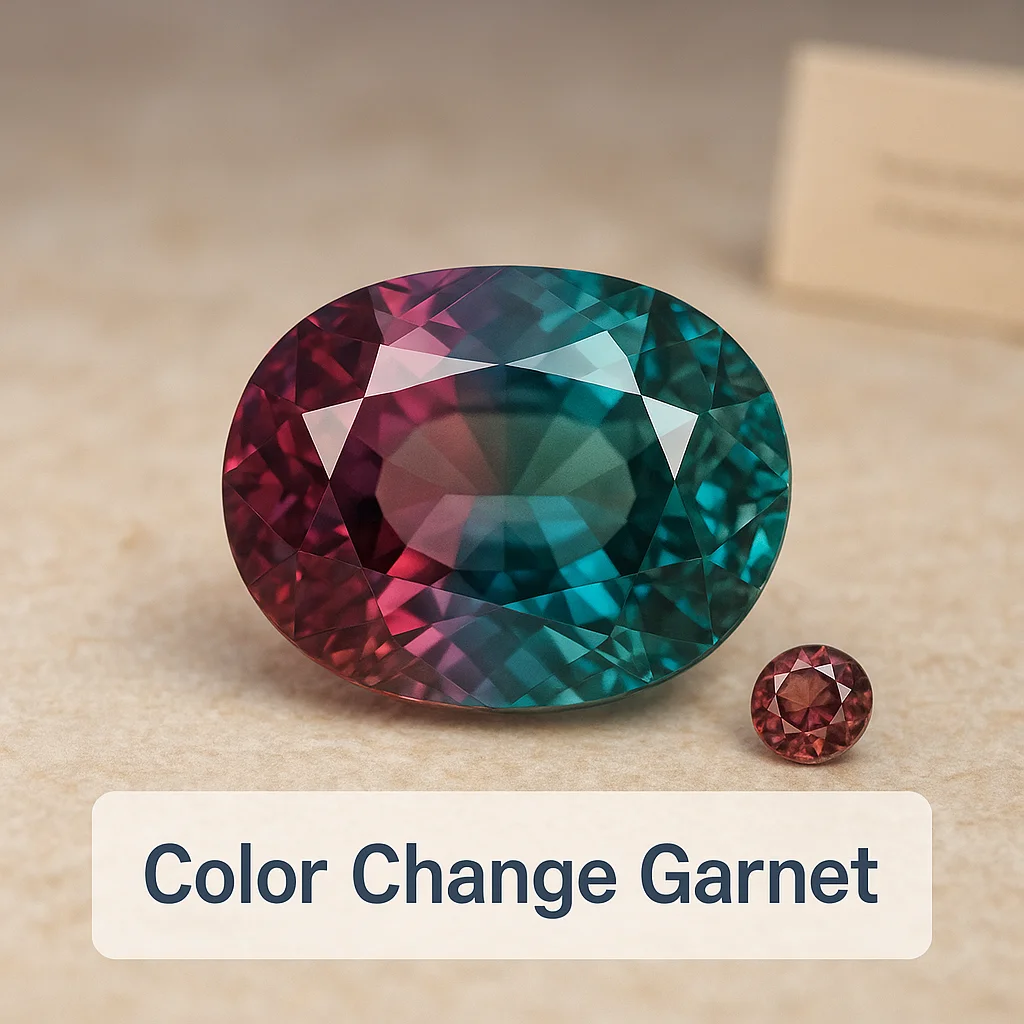
As a gemstone, garnet is often used in jewelry, including rings, necklaces, and earrings. Although it is not one of the traditional birthstones, Color Change Garnet is popular among gem enthusiasts and collectors for its unique properties and beauty. This article will provide insight into its appearance, properties, origin, value, care, and buying tips.
Color Change Garnet is highly sought after due to its ability to showcase different colors depending on the light source, ranging from shades of green and brown to vibrant purples and reds. Learning more about this gemstone can help enthusiasts appreciate its beauty and understand its unique place in the world of gemstones.
🌍 Where It Comes From
Color Change Garnets naturally occur in various geological environments, primarily in metamorphic rocks. These rocks are formed under high pressure and temperature conditions that facilitate the formation of garnets. Common environments include regions where tectonic plates converge, creating the necessary conditions for garnet formation.
These gemstones can be found in several parts of the world, including regions in Africa, Asia, and some parts of the Americas. Countries like Tanzania, Kenya, and Madagascar are known for producing high-quality Color Change Garnets. The origin of the gemstone can influence its color, clarity, and overall quality, affecting its reputation on the market.
Garnets from different regions may exhibit varying colors and optical properties, so collectors often take note of the origin when considering a purchase. Understanding the geological setting and mineral composition of the source can enhance appreciation and aid in identification.
🔬 How It Forms
The formation of Color Change Garnet involves a complex geological process over extended periods. It begins with the exposure of silicate minerals to high temperatures and pressures within the earth's crust. These conditions promote the growth of garnet crystals within metamorphic rock formations.
The color change effect results from the presence of trace elements in the crystal structure. Elements such as vanadium and chromium play a significant role in causing the stone to exhibit different colors depending on the type of lighting, such as daylight or incandescent light.
Color Change Garnets typically develop in the form of well-defined crystals embedded within host rocks. Mineral inclusions and trace elements contribute to the optical characteristics of each stone, making them unique and highly prized.
🎨 Color and Look
Color Change Garnet is celebrated for its ability to change color under different lighting sources. In natural daylight, these garnets often appear green, brown, or even yellowish. Under incandescent light, they can shift to shades of purple, red, or pink.
The cut and polish of the gemstone can significantly enhance its color and optical appeal. A well-executed cut allows for maximum light reflection and can intensify the color change effect. In terms of clarity, while some inclusions are common, high clarity stones are more desirable and valuable.
Treatments are generally not common for Color Change Garnet, which means that most stones on the market display their natural colors without alteration. However, it is always advisable to inquire about any possible treatments when purchasing these gems.
🧪 Properties That Matter
Color Change Garnet ranks about 6.5 to 7 on the Mohs hardness scale, which measures resistance to scratches. This makes it suitable for various types of jewelry, although care should be taken to avoid harsh impacts.
The toughness, or resistance to chipping and breaking, of Color Change Garnet is generally good, though not as strong as diamonds or sapphires. It means the gemstone can withstand daily wear, making it a popular choice for rings and pendants.
In terms of cleavage, garnets are known for their lack of natural cleavage, meaning they are less prone to breaking along specific lines, which enhances their durability. The gemstone’s vitreous luster gives it a bright, glass-like appearance that attracts many admirers.
✨ Meanings, Birthstones, and Culture
While Color Change Garnet is not a traditional birthstone, garnets in general are associated with the month of January. In terms of cultural significance, garnets have historically symbolized trust, friendship, and protection.
Traditionally, garnets have been thought to bring balance and enhance relationships. In modern jewelry trends, Color Change Garnet is valued for its unique beauty and the allure of its color-changing properties.
Folklore and various cultures have attributed protective qualities to garnets, often used as talismans throughout history. However, these should be understood as cultural associations rather than scientifically proven effects.
🧼 Care and Cleaning
To maintain the beauty of Color Change Garnet, cleaning with warm, soapy water and a soft cloth is recommended. Avoid using harsh chemicals or ultrasonic cleaners, which can damage the stone.
While garnets are generally durable, avoid exposing them to sudden temperature changes that might cause thermal shock. It's also best to steer clear of long soaking periods that might affect the gemstone's surface finish.
For storage, keep Color Change Garnet in a soft pouch or separate compartment to prevent scratches from harder gemstones like diamonds or sapphires. Ensure it’s kept away from prolonged exposure to intense light or heat.
🛒 Buying Tips and What to Check
When purchasing a Color Change Garnet, consider factors such as color change intensity under different lighting, overall clarity, and the quality of the cut. These factors significantly influence the value and appeal of the stone.
Ask about the origin of the garnet, as some regions are known for producing higher quality stones. Additionally, verify whether the stone has undergone any treatments or enhancements.
For high-value purchases, obtaining a lab report can provide assurance on authenticity and quality. Laboratory reports typically detail any treatments and provide certification for the stone's properties.
⚠️ Real vs Fake and Common Look-Alikes
Color Change Garnet can be distinguished from synthetic or lab-grown versions, which, while technically identical in composition, may not have the same market value as naturally occurring stones.
Imitations such as glass or plastic composites may mimic the appearance but lack the inherent properties of natural garnet. Look-alikes like alexandrite also share the color change effect, yet differ in composition and rarity.
Authentic identification should be conducted by professionals, as it requires expertise and equipment to differentiate between natural, synthetic, and imitation stones accurately.
❓ Common Questions and Misconceptions
Is it a mineral or a rock? Color Change Garnet is a mineral.
Is it a birthstone? While garnet is a January birthstone, Color Change Garnet is not traditionally listed separately.
Will it scratch easily? It ranks 6.5-7 on the Mohs scale, so it's fairly resistant to scratches.
Can it go in water? Brief exposure is fine, but avoid long soaking.
Does color fade in sunlight? Prolonged exposure to intense sunlight may cause slight fading.
What treatments are common? Color Change Garnet is generally untreated.
Is lab-grown 'fake'? Lab-grown garnets are real but may not have the same value as natural stones.
How do I store it safely? Store in a soft pouch, away from other harder gemstones.
Do inclusions always lower value? Not always, but higher clarity stones are generally more desirable.
How do I pick a good one for jewelry? Look for a strong color change effect, good clarity, and a quality cut.
📌 Summary
- Color Change Garnet is a unique gemstone known for its color-changing ability in different lighting.
- It typically appears green or brown in daylight but shifts to purple or red under incandescent light.
- Forms in metamorphic rocks under high temperatures and pressures.
- Around 6.5-7 on the Mohs hardness scale, suitable for various jewelry pieces.
- Generally untreated, so natural variations in color are common.
- Clean with gentle soap and water; store separately to avoid scratches.
- Best for rings, pendants, and earrings due to its optical appeal.
- Can be confused with alexandrite but differs in composition.
- Lab reports can confirm authenticity and detail any treatments.
- Consider factors like color change intensity, clarity, and cut when purchasing.
- Associated with traditional cultural meanings like protection and friendship.
- Remember its unique color change as a standout feature in gemstones.