💎 Green Peridot
🪨 What It Is
Green Peridot is a captivating gem known for its vibrant green color. It is a variety of the mineral olivine, which is prevalent in the Earth's mantle. As a gemstone, it is quite popular in jewelry, especially as a birthstone for those born in August.
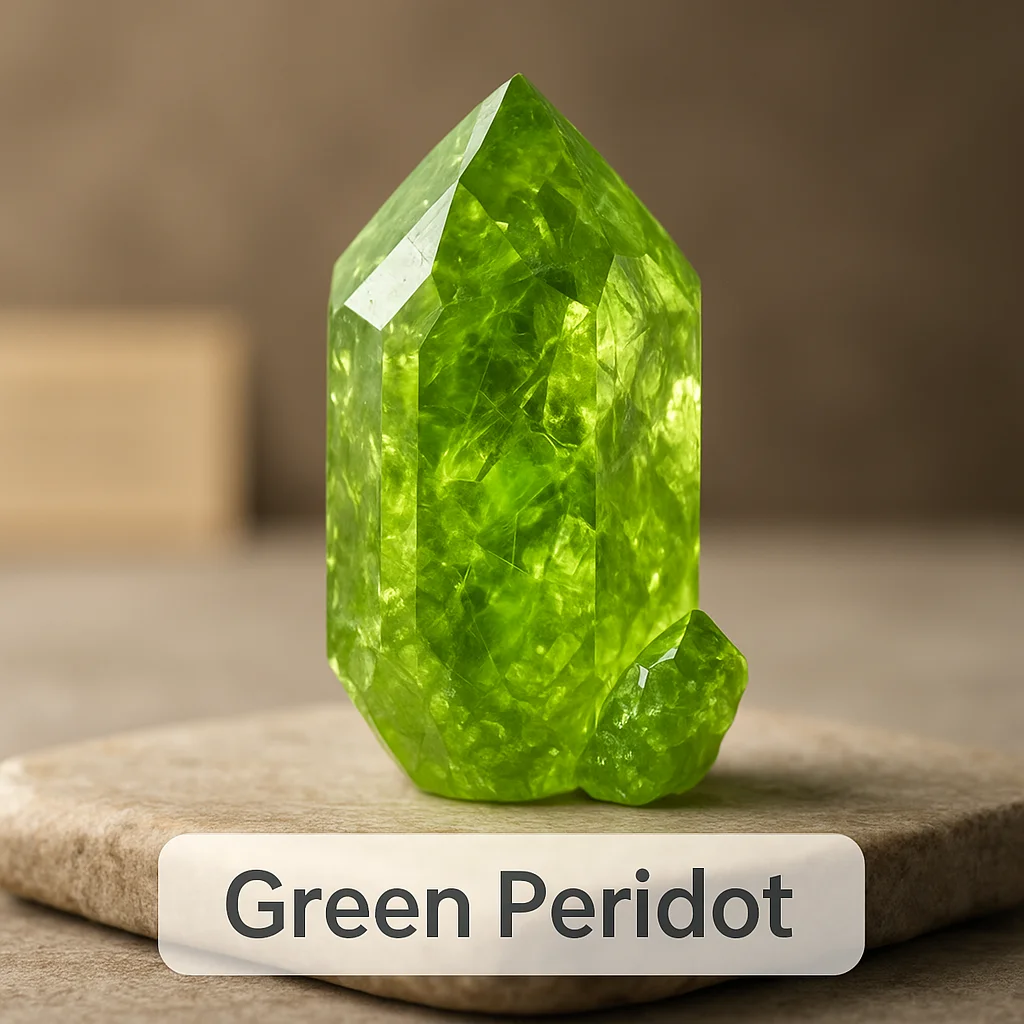
This article will introduce you to the various aspects of Green Peridot, including its appearance, physical properties, origin, value, care, and buying tips. Whether you're a budding gemstone enthusiast or simply curious about this beautiful gem, you'll find valuable information here.
By the end of this article, you'll have a well-rounded understanding of Green Peridot and how to appreciate its unique qualities, as well as insights into responsible buying and maintenance practices for your Peridot jewelry.
🌍 Where It Comes From
Green Peridot forms deep within the Earth in igneous and volcanic environments. These gems are typically found in basalt lava flows and occasionally in meteorites, which make them one of the few gemstones not derived from the Earth's crust.
Notable sources of Peridot include parts of the United States, China, Myanmar, and Pakistan. In particular, the deposits in Pakistan are renowned for producing some of the finest specimens, known for their clarity and rich color.
The origin of a Peridot stone can influence its market value. While stones from certain regions may be prized for their color and size, ultimately, each gem must be judged on its individual merits.
🔬 How It Forms
Peridot forms under intense conditions of heat and pressure below the Earth's surface. The mineral grows in volcanic rock, crystallizing as magma cools. The iron content within the mineral gives Peridot its distinctive green color.
Unlike many gemstones, the green color of Peridot does not change significantly with varying trace elements, although slight variations can occur. This consistent coloring makes Peridot unique among gemstones.
Typically, Peridot finds its way to the Earth's surface through volcanic activity. Lava flows carry it upward, where it solidifies into the vibrant crystals that are later polished and used in jewelry.
🎨 Color and Look
Green Peridot is renowned for its clear, vivid green hue, with shades ranging from yellowish-green to olive. The intensity of the color is determined by the amount of iron present in its structure.
The appearance of Peridot can be enhanced with expert cutting and polishing. High-quality stones exhibit excellent clarity, with minimal inclusions that might otherwise reduce their allure.
In some cases, Peridot is treated to improve its appearance, but treatments like heating are relatively rare compared to other gemstones. The straightforward nature of Peridot's coloration makes it a favorite with jewelers seeking a natural and vibrant green color.
🧪 Properties That Matter
Peridot has a Mohs hardness of 6.5 to 7, making it sufficiently durable for various types of jewelry, although not recommended for daily-wear rings that endure constant abrasion.
It features a vitreous luster that gives it a glass-like shine, adding to its appeal in well-polished pieces. Despite lacking cleavage, Peridot can fracture, particularly under impact or excessive pressure.
These properties make Peridot best suited for pendants, earrings, and other jewelry types less prone to daily wear-and-tear, ensuring the gem remains beautiful over time.
✨ Meanings, Birthstones, and Culture
Traditionally, Green Peridot is associated with August as a birthstone, gifted for reasons of love and friendship. Its rich green color symbolizes peace, growth, and prosperity in cultural lore.
While there is no scientific backing for these beliefs, many wear Peridot as a symbol of good fortune and to celebrate their birth month. Such cultural significance enhances its appeal as a personal and thoughtful gift.
Furthermore, the modern jewelry market often picks Peridot for its distinctive and alluring color, ensuring it remains a timeless choice across generations.
🧼 Care and Cleaning
Caring for Green Peridot involves gentle washing with mild soap and lukewarm water. Rinse well and pat dry with a soft cloth. Avoid using harsh chemicals or ultrasonic cleaners, which can damage the gem.
Peridot should be protected from sudden temperature changes and long soaking, which may lead to damage or discoloration. Storage in a soft-clothed case is recommended to prevent scratches when not in use.
For treated or delicate stones, extra precautions might be necessary, ensuring the gem retains its natural shine and beauty over time.
🛒 Buying Tips and What to Check
When purchasing Peridot, consider key quality aspects like color saturation, clarity, and cut. Stones with a deep, even green tone and minimal inclusions tend to be more valuable.
Ask sellers about any known treatments and insist on receiving a gemological report when buying high-value pieces to verify authenticity. A proper report outlines a gem's attributes and notes any enhancements.
For online purchases, check seller reputations, clear product images, and flexible return policies, ensuring you receive a quality and authentic product.
⚠️ Real vs Fake and Common Look-Alikes
Natural Peridot should not be confused with synthetic or imitation stones. While synthetic Peridot shares chemical properties, imitations may use materials like glass or composite stones such as doublets.
Common look-alikes include green tourmaline or green glass. Only professional testing can accurately distinguish these look-alikes from genuine Peridot.
To avoid confusion, purchase from reputable dealers who offer reliable identification and always ask about the gem's origin.
❓ Common Questions and Misconceptions
Is it a mineral or a rock? Peridot is a mineral, a form of olivine.
Is it a birthstone? Yes, it is the birthstone for August.
Will it scratch easily? With a Mohs hardness of 6.5 to 7, it can scratch but is reasonably durable.
Can it go in water? Yes, briefly, but avoid prolonged soaking.
Does color fade in sunlight? Peridot generally maintains its color but should be protected from harsh light for prolonged periods.
What treatments are common? Minimal treatments are typical, as its natural color is desirable.
Is lab-grown 'fake'? Lab-grown Peridot shares natural characteristics but differs in origin.
How do I store it safely? Store individually in a soft-lined box to prevent scratches.
Do inclusions always lower value? Significant inclusions can affect value, but minor ones are acceptable.
How do I pick a good one for jewelry? Look for vibrant color, good clarity, and precise cutting.
📌 Summary
- Green Peridot is a captivating mineral known for its vivid green color.
- Commonly found in igneous rock formations and volcanic regions.
- Forms under high heat and pressure deep within the Earth.
- Durable but susceptible to scratching; best for pendants and earrings.
- Rarely treated, with natural color typically enhancing its value.
- Care requires gentle methods; avoid harsh chemicals or extreme temperatures.
- Ideal for all types of jewelry, especially in less-exposed settings.
- Often confused with green tourmaline; testing confirms authenticity.
- Professional reports validate and certify high-value purchases.
- August birthstone that also symbolizes peace and prosperity.
- Memorable for its consistent green hue and transparent clarity.