💎 Green Tsavorite Garnet
🪨 What It Is
Tsavorite garnet is a vibrant green gemstone that belongs to the grossular species of garnets. It is a silicate mineral, characterized by its rich green color caused by trace amounts of vanadium and chromium. Known for its striking appearance and clarity, tsavorite is a popular choice among jewelers and gem enthusiasts.
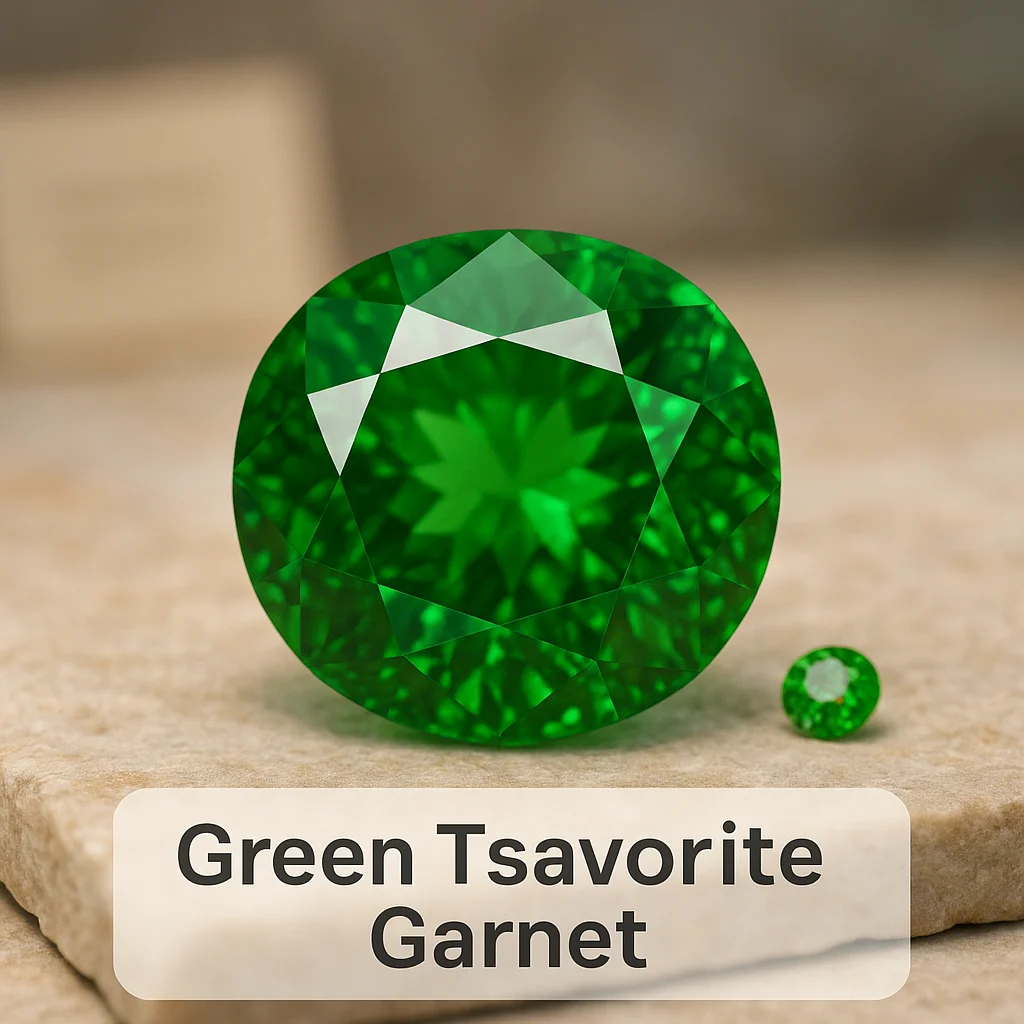
First discovered in Tanzania and subsequently named after the Tsavo National Park in Kenya, tsavorite remains a highly sought-after gem for its brilliant color and durability. It stands out among other green gemstones due to its vivid hue and relative scarcity. As a member of the garnet family, it is often associated with January as a birthstone.
This article will introduce you to tsavorite garnet's unique qualities, including its appearance, formation, geological origins, value in the marketplace, and guidelines for care, helping you make informed decisions if you plan to purchase or own this stunning gem.
🌍 Where It Comes From
Green tsavorite garnets are primarily found in East Africa, with major deposits located in Kenya and Tanzania. The gemstone forms in metamorphic rocks, which are created under conditions of high heat and pressure when pre-existing rocks undergo significant chemical and structural changes. These unique geological conditions contribute to tsavorite's vibrant color and high clarity.
Kenya's Tsavo region is particularly renowned for producing high-quality tsavorite garnets. The rugged terrain and distinct climate create the ideal environment for this gemstone's formation. Though deposits have been found elsewhere, East Africa remains the primary source, as these regions yield the most colorful and marketable stones.
The origin of a tsavorite garnet can influence its market reputation and value. Gems from reputable sources are often more desirable due to the consistent quality and ethical reputation associated with these mining operations. However, buyers should always prioritize the gemstone's intrinsic qualities over its origin when assessing value.
🔬 How It Forms
Tsavorite garnet forms through the metamorphic process, where pre-existing rocks are subjected to intense heat and pressure. This process occurs deep within the Earth's crust, where chemical alterations under extreme conditions lead to the formation of new mineral structures. During this transformation, elements such as vanadium and chromium may be incorporated, resulting in the green color associated with tsavorite.
The rich green color in tsavorite is due to the presence of trace elements. These inclusions absorb and reflect light differently, giving tsavorite its intense and brilliant hue. Unlike other garnets, tsavorite maintains its vibrant color without requiring any enhancements or treatments, a testament to its natural beauty.
Tsavorite most commonly forms in metamorphic rocks; its crystalline structure can appear as dodecahedrons or more complex shapes. The gemstone is typically found in smaller sizes, which makes larger quality specimens particularly valuable.
🎨 Color and Look
Tsavorite garnet is known for its intense green color, comparable to emeralds, although it exhibits a more brilliant luster due to its higher refractive index. Its color can range from light green to deep, rich forest green. The presence of vanadium and chromium gives tsavorite its distinctive hue, differing from emeralds, which only contain chromium.
Unlike many other gemstones, tsavorite does not require treatment to enhance its color or clarity. The stone's natural beauty makes additional processes unnecessary, offering a pure representation of its inherent qualities. The cut and polish of a tsavorite garnet can significantly affect its appearance, with well-cut stones maximizing the display of their color and brilliance.
Inclusions are rare in tsavorite garnets compared to other green gems. When present, they can sometimes enhance the stone's character without distracting from its beauty. Proper lighting can further enhance the perception of its depth and brilliance.
🧪 Properties That Matter
With a Mohs hardness of 7 to 7.5, tsavorite garnet is durable enough for various jewelry applications, including rings and everyday wear pieces. This hardness level means it's resistant to minor scratches, though care should be taken to avoid abrasive surfaces.
In terms of toughness, tsavorite garnet is relatively strong, meaning it is less likely to chip or crack compared to softer stones. Its lack of cleavage (tendency to split) makes it more durable under impact. However, caution is always advised to protect any gemstone from harsh knocks and extreme conditions.
The luster of tsavorite is described as vitreous, giving it a glass-like shine that complements its transparent to translucent clarity. Brilliant luster enhances its vivid green color and contributes to its overall allure.
✨ Meanings, Birthstones, and Culture
In cultural traditions, green tsavorite garnet is often associated with renewal and energy, reflecting the color of growth and life. As a stone that belongs to the garnet family, it is traditionally linked to January, serving as an alternative birthstone during this month.
Beyond its traditional associations, tsavorite garnet has gained modern recognition as a gemstone of prosperity and vigor, frequently chosen for contemporary designs. Its rich green hue symbolizes abundance and vitality, making it a favored choice for jewelry intended to convey these themes.
Though steeped in folklore, these symbolic associations are often passed through generations rather than based on scientific proof. As such, tsavorite garnet is treasured more for its tangible characteristics than for any purported mystical properties.
🧼 Care and Cleaning
Tsavorite garnet should be gently cleaned with mild soap and warm water. A soft cloth or brush can help remove dirt and restore shine. Care should be taken to avoid harsh chemicals and ultrasonic cleaners, which may damage the stone.
It's essential to avoid sudden temperature changes, as such exposure can cause fractures within the stone. Long soaking is not recommended, and steam cleaning should be avoided since the stone can be sensitive to extreme heat.
When storing tsavorite garnet jewelry, separate it from other gemstones to prevent scratches. Wrapping in a soft cloth or placing it in a padded jewelry box can provide the necessary protection to maintain its pristine condition.
🛒 Buying Tips and What to Check
When purchasing tsavorite garnet, consider factors like color, clarity, and cut. The most valued stones have a vivid, pure green with high transparency and excellent brilliance. Always inquire about the stone's origin and available reports to affirm its authenticity.
Lab reports can offer valuable insights into the stone's properties and confirm its natural formation. While reports can demonstrate authenticity, they cannot determine personal aesthetic or sentimental value, which should also play a role in the purchasing decision.
When buying online, ensure that the seller offers clear, high-quality photos and a credible return policy. Seller reputation and full disclosure of any treatments or enhancements are critical in making a well-informed choice.
⚠️ Real vs Fake and Common Look-Alikes
Natural tsavorite garnets can sometimes be confused with other green gemstones like emerald or green tourmaline. Synthetic options, while less intrusive than imitations, can also be found and may offer a similar look at a reduced cost, though these are lab-grown and not naturally sourced.
Imitation stones, including glass or plastic replicas, can frequently deceive unsuspecting buyers. Assembled stones like doublets or triplets, which involve layering materials to mimic the appearance of tsavorite, may also appear in the market.
To ensure authenticity, professional gemological testing is advised as novice methods may not accurately distinguish natural from synthetic or imitation stones. Reliable sellers often provide certification and detailed information about the gemstone's origin and characteristics.
❓ Common Questions and Misconceptions
Is it a mineral or a rock? Tsavorite is a mineral, specifically a variety of garnet.
Is it a birthstone? Yes, it can serve as an alternative birthstone for January.
Will it scratch easily? With a Mohs hardness of 7 to 7.5, it is relatively scratch-resistant but care should be taken.
Can it go in water? Tsavorite is safe in water but should not be left soaking for extended periods.
Does color fade in sunlight? Generally, tsavorite's color is stable but prolonged exposure can cause slight changes over time.
What treatments are common? Tsavorite requires no treatment for color or clarity, which enhances its appeal.
Is lab-grown 'fake'? No, lab-grown stones share the same composition as natural stones but are not formed in nature.
How do I store it safely? Store separately from other stones and wrap in soft cloth to prevent scratches.
Do inclusions always lower value? Not always; minor inclusions don't significantly impact value if they don't affect appearance.
How do I pick a good one for jewelry? Look for vivid color, high clarity, and a quality cut to maximize brilliance.
📌 Summary
- Green tsavorite garnet is a lush, green gemstone from the garnet family.
- Its color ranges from light to deep green, a result of vanadium and chromium.
- Forms in metamorphic rock under heat and pressure, allowing trace elements to develop color.
- Mohs hardness of 7 to 7.5 makes it suitable for various jewelry uses.
- No common treatments or enhancements are applied, valued for its natural beauty.
- Cleaning is safely done with mild soap and water; avoid extreme temperatures and harsh chemicals.
- Ideal for rings, earrings, and pendants due to its beautiful luster and durability.
- Commonly compared to emeralds, but with a distinct refractive brilliance.
- Authenticity confirmed via gemological testing; lab reports assure natural origin.
- When buying, prioritize color, clarity, and seller reputation; verify origin if important.
- Linked to January as a birthstone, traditionally associated with renewal and energy.
- A gem that's cherished for both its aesthetic beauty and symbolic significance.