💎 Multicolor Tourmaline
🪨 What It Is
Multicolor Tourmaline is a fascinating gemstone that belongs to the tourmaline group of minerals. Known for its vibrant array of colors, it is a popular choice for jewelry enthusiasts and collectors. This gemstone can showcase two or more colors within a single crystal, making each piece unique and stunning.
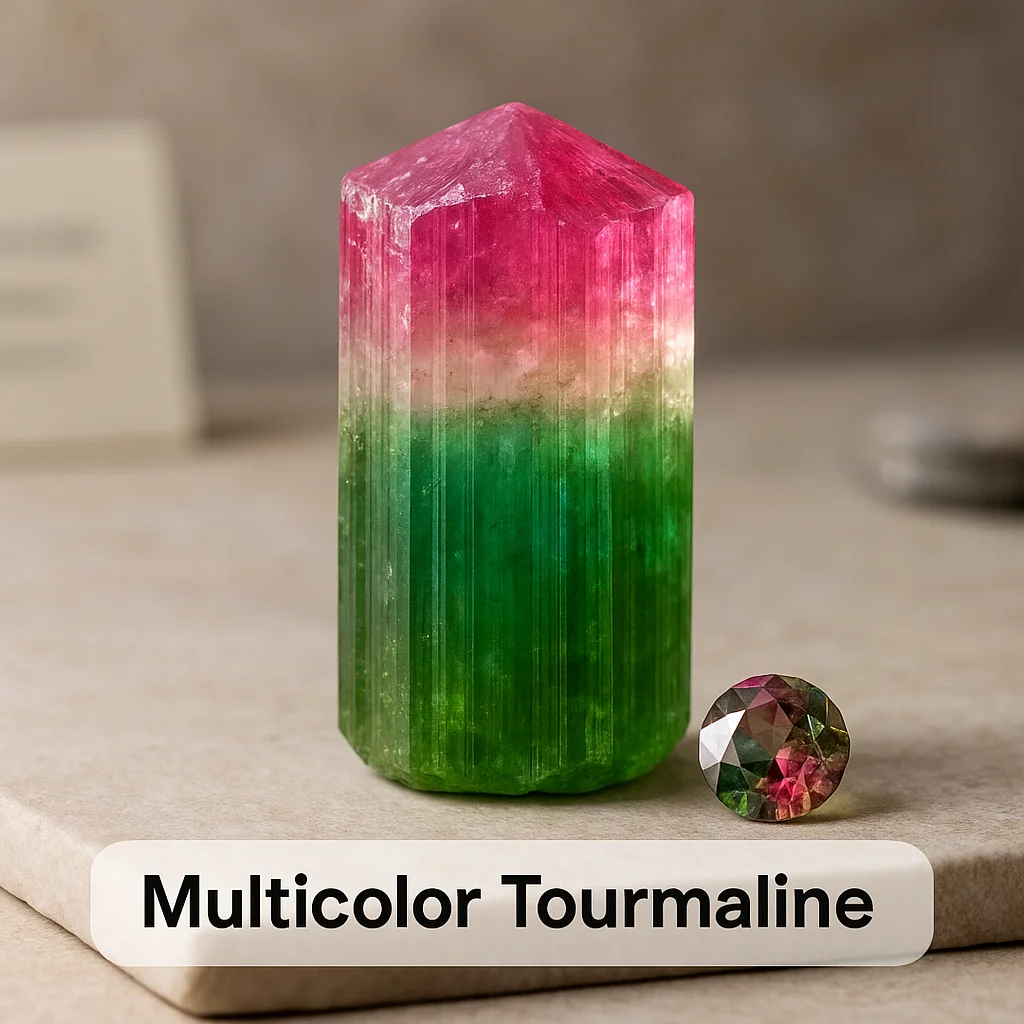
Tourmaline itself is a mineral that can exhibit a range of colors, such as green, pink, blue, and black. When it features multiple colors, it becomes especially desirable. This trait occurs due to the complex chemical composition of tourmaline, which can include elements like iron, magnesium, and lithium. Multicolor Tourmaline is often used in a variety of jewelry pieces, including rings, earrings, and pendants.
In this article, you'll learn about the origins, properties, value, care tips, and buying advice for Multicolor Tourmaline. We'll also explore some cultural aspects and common questions related to this striking gemstone.
🌍 Where It Comes From
Multicolor Tourmaline is found in various geological settings, primarily in igneous and metamorphic rocks. These environments provide the necessary conditions for tourmaline mineralization, involving high-temperature and pressure conditions.
Some well-known producing regions for tourmaline include parts of Africa, Asia, and South America. Countries like Brazil, Madagascar, and Mozambique are famous for their beautiful tourmaline specimens. Each region can produce crystals with distinct coloration patterns, affecting the gemstone's market value and desirability.
The origin of Multicolor Tourmaline can influence its color and clarity. For instance, Brazilian tourmaline might display a different range of hues than those found in Madagascar. Origin can also impact the gemstone's reputation in the market, with some locales being more sought after by collectors and jewelers.
🔬 How It Forms
Multicolor Tourmaline forms through a complex geological process that involves heat, pressure, and mineral-rich fluids. During this process, trace elements, such as iron, chromium, and manganese, are incorporated into the crystal structure, resulting in its various colors.
The crystal habit of tourmaline is typically elongated with striations running parallel to the length of the crystal. These crystals can often be found in pegmatite deposits, which are igneous rocks that contain large crystals and have a unique mineral composition.
The presence of multiple colors within a single tourmaline crystal occurs when different trace elements are present in different concentrations throughout the crystal. This phenomenon gives Multicolor Tourmaline its distinctive look and is a key factor in its aesthetic appeal.
🎨 Color and Look
Multicolor Tourmaline is prized for its striking array of colors, which can range from pink and green to blue and yellow in a single stone. The appearance of this gemstone can be influenced by several factors, including cut, polish, clarity, and lighting.
Cutting and polishing play a significant role in enhancing the stone's natural beauty. A well-cut tourmaline can exhibit vivid colors and a strong luster, making it eye-catching in jewelry. Clarity can also impact the stone's appearance, with clearer gemstones generally being more valuable.
Treatments are sometimes used to enhance a tourmaline's color or clarity. For instance, some stones undergo heat treatment to intensify or stabilize their colors. When shopping for Multicolor Tourmaline, it's important to inquire about any treatments the gemstone may have undergone to fully understand its value and care requirements.
🧪 Properties That Matter
When considering Multicolor Tourmaline for wear or collection, several properties matter. Its Mohs hardness is around 7 to 7.5, meaning it is reasonably scratch-resistant, making it suitable for everyday jewelry like rings and bracelets.
In terms of toughness, Multicolor Tourmaline is fair, so it is not immune to chipping or breaking if struck hard. The stone's cleavage is poor, meaning it does not have a common breaking pattern, which can be an advantage for durability.
The luster of Multicolor Tourmaline can be described as vitreous, giving it a shiny, glass-like appearance. Transparency can vary from transparent to opaque, affecting its application in different jewelry types.
✨ Meanings, Birthstones, and Culture
Multicolor Tourmaline holds cultural significance and is traditionally associated with creativity and inspiration. It is not designated as a birthstone for any specific month, but it remains popular in jewelry due to its unique look and vibrant array of colors.
In various cultures, tourmaline is thought to have been appreciated for its wide range of colors. Folklore often attributes the stone with the ability to inspire artistic endeavors and personal transformations, though these are not scientifically proven effects.
In modern jewelry traditions, Multicolor Tourmaline is celebrated for its versatility and ability to complement various fashion styles, making it a timeless choice for both personal and gift jewelry pieces.
🧼 Care and Cleaning
To care for Multicolor Tourmaline, it's recommended to use gentle soap and water, along with a soft cloth, for cleaning. Avoid harsh chemicals or ultrasonic cleaners, which can damage the stone.
Tourmaline is generally stable under normal conditions but should not be exposed to sudden temperature changes or prolonged direct sunlight, which could affect its coloration. Long soaking should also be avoided to prevent any potential damage to treated stones.
For storage, keep Multicolor Tourmaline separate from other gemstones to prevent scratches. Using a soft pouch or lined jewelry box is advisable to maintain its polish and beauty.
🛒 Buying Tips and What to Check
When buying Multicolor Tourmaline, consider factors like color, clarity, cut, and carat weight, as they all influence the gemstone's quality and price. Color is often the most significant factor, with more vivid and evenly distributed colors being more valuable.
It's important to ask about any treatments the tourmaline has undergone. For high-value purchases, requesting a gemological report can confirm the gemstone's authenticity and details.
For online purchases, ensure you purchase from reputable sellers, check their return policy, and make sure clear, accurate photographs are provided. Transparency in disclosure about the gemstone's attributes is key to a successful purchase.
⚠️ Real vs Fake and Common Look-Alikes
Distinguishing natural Multicolor Tourmaline from synthetic or imitation stones can be challenging. Synthetic tourmaline shares the same chemical structure as natural stones but is lab-created. Imitations, such as glass or plastic, merely mimic its appearance without the same properties.
Common look-alikes include colorful quartz or glass assembled stones, like doublets and triplets, which can mimic the appearance but not the properties of real tourmaline. Professional testing is recommended for accurate identification, as it can determine composition and confirm authenticity.
Home experiments to validate a gemstone are risky and can lead to damage. Instead, rely on experienced gemologists for evaluations and certifications.
❓ Common Questions and Misconceptions
Is it a mineral or a rock? Multicolor Tourmaline is a mineral.
Is it a birthstone? No, tourmaline is not a traditional birthstone, but it is popular in jewelry.
Will it scratch easily? It has a Mohs hardness of 7-7.5, making it scratch-resistant but not scratch-proof.
Can it go in water? Yes, but avoid prolonged soaking or exposure to harsh chemicals.
Does color fade in sunlight? Extended sunlight exposure can affect some tourmaline colors. Store carefully.
What treatments are common? Heat treatment may enhance colors; ask your jeweler about this.
Is lab-grown 'fake'? Lab-grown is not fake; it is chemically identical to natural but created in a lab.
How do I store it safely? Store separately in a soft pouch or lined box to avoid scratches.
Do inclusions always lower value? Not always; some inclusions can create unique appearances valued by collectors.
How do I pick a good one for jewelry? Look for vibrant colors, good clarity, and ask about any treatments performed.
📌 Summary
- Multicolor Tourmaline is a vibrant mineral known for its wide range of colors.
- Typical colors include pink, green, blue, and combinations within single crystals.
- Forms in igneous and metamorphic rocks with heat, pressure, and mineral-rich fluids.
- Mohs hardness of 7-7.5 makes it suitable for many types of jewelry.
- Heat treatments can enhance color; always ask about treatments.
- Care includes gentle cleaning with soap and water, avoiding harsh chemicals.
- Ideal for rings, pendants, earrings, and statement pieces.
- Common look-alikes include colorful quartz and assembled stones like doublets.
- Authenticity often confirmed by gemological testing, not home experiments.
- Check quality factors like color, clarity, and carat when buying.
- Tradition links tourmaline with creativity, but no scientific backing for effects.
- Remember its versatility, making it a prized choice for collectors and designers alike.