💎 Peach Moonstone
🪨 What It Is
Peach Moonstone is a gem variety of the mineral feldspar and is loved for its distinctive, soft peach hue. It falls under the larger umbrella of moonstones, which are particularly noted for their unique play of light and color. As part of the feldspar group, Peach Moonstone is closely related to other moonstone varieties that display adularescence, a glowing light that appears to billow across the gem.
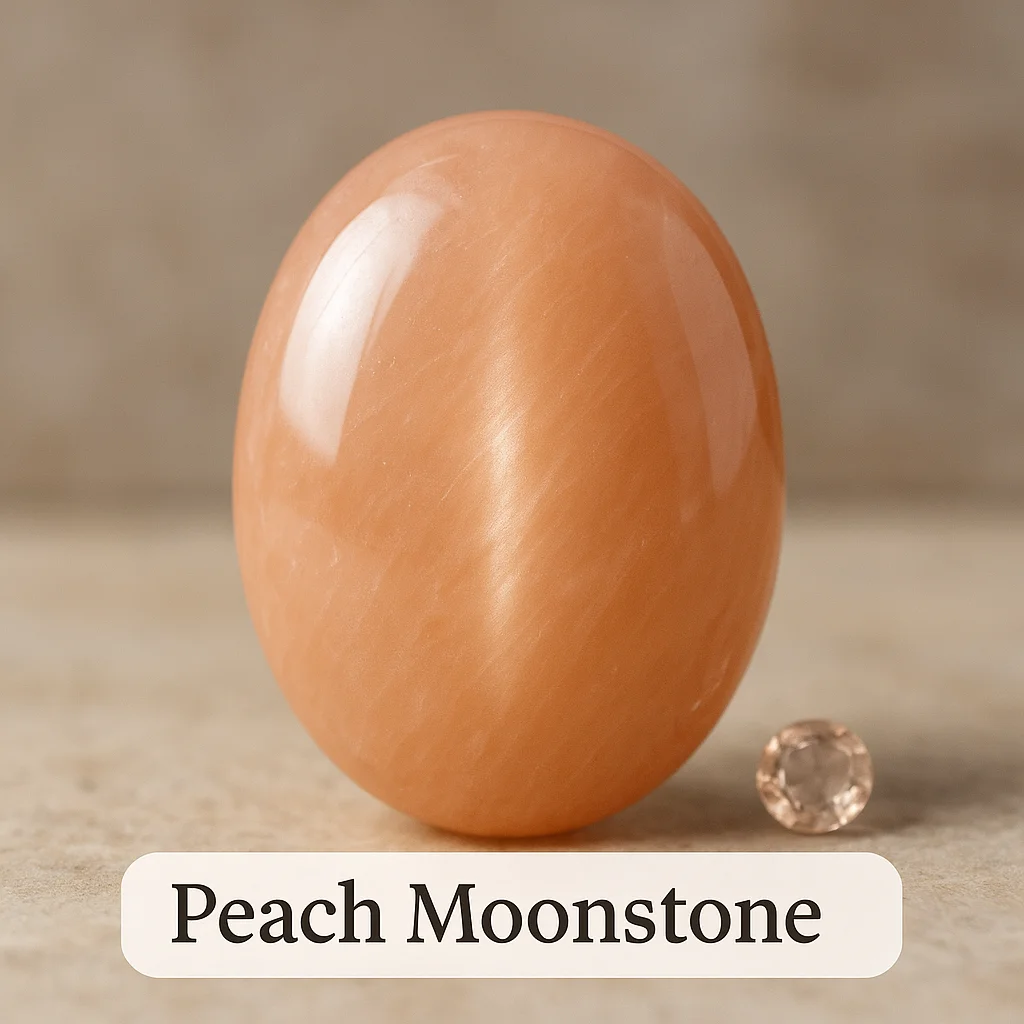
Moonstone, including the peach variety, is a popular choice for jewelry due to its soft iridescence and warm color palette. It is often set in rings, earrings, and pendants, valued for its classically mystical appearance. Additionally, moonstone is widely considered a birthstone for June, alongside pearl and alexandrite, making it a beloved choice for birthstone jewelry.
In this article, you will discover various aspects of Peach Moonstone, including its origins, physical properties, popular imitations, and tips for purchasing and care. Whether you're a budding gem enthusiast or looking to buy your first moonstone jewelry piece, this guide aims to provide a comprehensive introduction.
🌍 Where It Comes From
Peach Moonstone typically forms in igneous and metamorphic rock that includes feldspar minerals, which are commonly found throughout the Earth's crust. Feldspar, and thus moonstone, can form in a variety of geological environments but is primarily sourced from areas rich in silica and aluminum.
Noteworthy deposits of Peach Moonstone are found in countries like India, Sri Lanka, and parts of Africa, where geological conditions favor the formation of feldspar minerals. These regions are known to produce moonstone with superior clarity and color, leading to their favorable reputation in the gemstone market.
The origin of a Peach Moonstone can significantly impact its market value, with stones from certain regions being more desirable due to their quality and beauty. Reputable sources are often sought after by jewelers and collectors for their historical significance and established trust in gemstone quality.
🔬 How It Forms
The formation of Peach Moonstone involves several processes occurring deep within the Earth. As magma slowly cools and crystallizes, minerals like feldspar start to form. Over time, tectonic activity can expose these rocks to metamorphic processes, altering their structure and giving rise to moonstone across various environments.
The peach color of this moonstone variety is attributed to the presence of tiny inclusions of specific elements within the feldspar mineral. These inclusions scatter light in a way that creates the peach hue that is characteristic of this particular type of moonstone.
Moonstone crystals typically form as prismatic crystals and can occur in larger, more blocky masses. In their raw state, Peach Moonstones may appear opaque, but proper cutting and polishing by expert gem cutters reveal their subtle internal glow and color nuances.
🎨 Color and Look
Peach Moonstone is best known for its warm, orange-pink to peach coloration, which can range from very soft pastel tints to deeper, richer tones. The stone often displays a desirable optical effect known as adularescence, a phenomenon where light appears to float across the surface of the gem, enhancing its ethereal appearance.
The appearance of Peach Moonstone can be markedly affected by the way it is cut and polished. A cabochon cut, smooth and dome-shaped, is typically used to best showcase the adularescence. Under different lighting conditions, the gem may reveal varying degrees of this glowing sheen, making it a captivating choice for jewelry designers.
Though treatments such as dyeing and irradiation are sometimes used to enhance color in other gems, Peach Moonstone is generally appreciated in its natural state. It is always recommended to inquire about any potential treatments before purchase, as unaltered stones often hold more value.
🧪 Properties That Matter
Understanding the physical properties of Peach Moonstone can help potential buyers make informed decisions about its suitability for various kinds of jewelry. On the Mohs hardness scale, moonstone ranks around 6 to 6.5, indicating moderate scratch resistance. This means it is more susceptible to scratches and chips than harder stones like sapphires or diamonds.
The stone's cleavage, or the way it breaks along certain planes, is a factor to consider, as it may influence the settings in which it should be worn. Peach Moonstone features good cleavage and should be handled with care to avoid accidental damage.
Moonstone exhibits a vitreous to slightly pearly luster, adding to its visual appeal. Its transparency can range from opaque to semi-transparent, often with internal inclusions that enhance the play of light. While it makes a beautiful centerpiece in necklaces or earrings, users should consider the stone's moderate toughness when choosing settings.
✨ Meanings, Birthstones, and Culture
Throughout history, moonstone has been steeped in myth and symbolism. Traditionally associated with the moon and its reputed calming effects, moonstone, including Peach Moonstone, is often connected with themes of feminity, intuition, and introspection.
In modern culture, moonstone is designated as the birthstone for the month of June. It is celebrated for its perceived gentle energies and its ability to bring balance, especially as a gift for those born in this month. Peach Moonstone's tender color palette adds an extra layer of warmth and sentimentality to these attributes.
Moonstone folklore extends to various cultures, including Roman and Hindu traditions, where it is praised for its beauty and perceived protective virtues during travel or unadulterated love. While these associations are intriguing, they are traditional beliefs and should be considered as cultural stories rather than empirical truths.
🧼 Care and Cleaning
Caring for Peach Moonstone involves gentle handling to maintain its natural beauty. The best approach for cleaning is to use mild soapy water and a soft cloth, avoiding harsh chemicals or abrasive materials that might scratch the surface of the stone.
Moonstone should be protected from exposure to high heat or sudden temperature changes, which could lead to thermal shock and fracture. Prolonged soaking in water is not advised, particularly for stones with fractures or inclusions.
Storing Peach Moonstone safely is key to preserving its luster and preventing damage. It is recommended to keep moonstone jewelry in a cloth-lined box or a soft pouch separate from harder gemstones to avoid accidental scratching.
🛒 Buying Tips and What to Check
When purchasing Peach Moonstone, several factors can affect its price and quality. Color saturation, clarity, and the strength of adularescence significantly impact value. Eye-clean stones with a vivid peach tone tend to command higher prices.
Transparency and cut are crucial for maximizing a moonstone's visual effects. Expert gem cutters will typically employ a high dome cabochon cut to accentuate the stone's unique optical characteristics. Large, high-quality stones are rare and consequently more expensive.
Ask sellers about potential treatments the gemstone may have undergone and whether a professional report accompanies the stone, especially when investing in high-value pieces. A lab report can confirm natural origin and identify any enhancements but won't improve the gem's inherent properties.
⚠️ Real vs Fake and Common Look-Alikes
Distinguishing natural Peach Moonstone from synthetic or imitation alternatives is vital for buyers. Synthetic moonstone, produced in laboratories, mimics natural properties but lacks the organic formation history of true moonstone.
Common imitations include glass or plastic options that replicate moonstone's luster. Some may use doublets or triplets, assembled stones comprising two or more fused layers, to mimic natural moonstone. These may offer less durability and should be disclosed during sale.
For absolute certainty in identification, consult professional gemological testing. Lab equipment and trained specialists can accurately determine authenticity, making it a wise step for significant purchases.
❓ Common Questions and Misconceptions
Q: Is it a mineral or a rock? A: Peach Moonstone is a mineral, part of the feldspar group.
Q: Is it a birthstone? A: Yes, it is one of the birthstones for June.
Q: Will it scratch easily? A: It has moderate scratch resistance, with a Mohs hardness of 6–6.5.
Q: Can it go in water? A: It's best to avoid prolonged soaking and intense water exposure.
Q: Does color fade in sunlight? A: Overexposure can affect the gem, so avoid intense sunlight.
Q: What treatments are common? A: The true moonstone is often untreated but always confirm with the seller.
Q: Is lab-grown 'fake'? A: Lab-grown versions are synthetically produced but share similar chemical structures.
Q: How do I store it safely? A: Store in a soft pouch or lined box away from harder gemstones.
Q: Do inclusions always lower value? A: Not necessarily; some inclusions can enhance the stone's adularescence.
Q: How do I pick a good one for jewelry? A: Look for strong colors, vivid adularescence, and consult quality reports.
📌 Summary
- Peach Moonstone is a feldspar mineral known for its peach color and adularescence.
- Commonly found in India, Sri Lanka, and parts of Africa.
- Forms under igneous and metamorphic conditions with trace elements causing color.
- Has a Mohs hardness of 6–6.5, suitable for certain jewelry settings.
- Natural stones are often untreated, enhancing adularescence.
- Clean with mild soap; avoid strong chemicals and abrupt temperature shifts.
- Ideal for earrings, pendants, but monitor for wear in rings due to moderate toughness.
- Look-alikes include glass and synthetic versions; professional testing is advised.
- Authenticity is best confirmed with gemstone lab reports.
- For buying: prioritize color, clarity, cut, and treatment transparency.
- Considered a June birthstone, linked to themes of intuition and balance in tradition.
- The distinct peach hue and ethereal glow make it a unique choice for collectors and jewelry enthusiasts.