💎 Purple Amethyst
🪨 What It Is
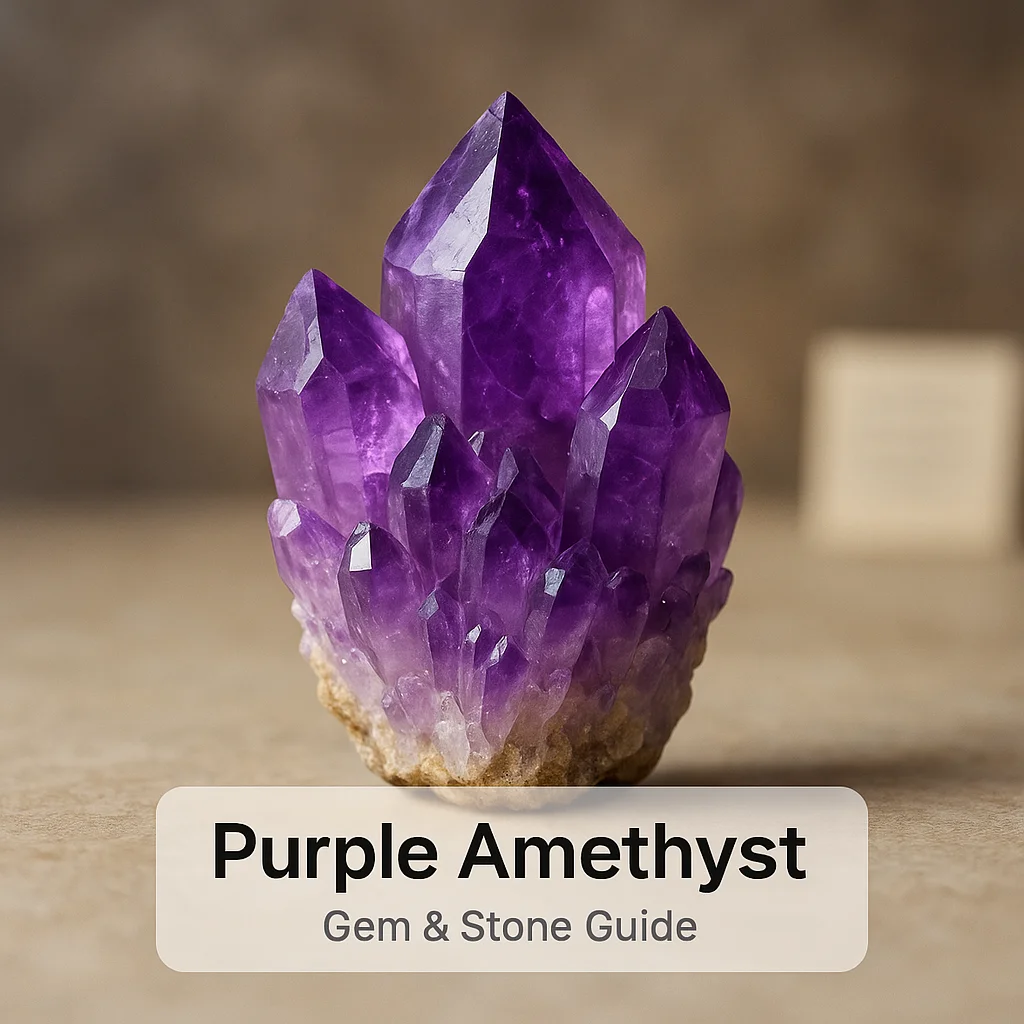
Purple Amethyst is a captivating gemstone known for its rich violet hue and remarkable clarity. It is a variety of quartz, one of the most widespread minerals on Earth. This gemstone is widely sought after for its stunning color and relatively affordable price. As a birthstone, it represents the month of February and holds special significance in various cultures worldwide.
In this article, we'll explore what makes Purple Amethyst so appealing and delve into aspects like its appearance, properties, origin, value, and care. We aim to equip you with the necessary knowledge to appreciate and potentially purchase this beautiful stone.
You'll learn about the science behind its formation, the importance of its color, practical considerations for jewelry wearers, and tips for buying genuine pieces. Understanding the difference between natural and synthetic versions, as well as the cultural meanings associated with amethyst, will further enrich your gemological journey.
🌍 Where It Comes From
Purple Amethyst can be found in a variety of geological settings. It is primarily formed in igneous rocks, which are created from the solidification of molten lava or magma. These environments provide the necessary conditions for quartz crystals to form over time.
Among the most famous sources of high-quality amethyst are mines in Brazil and Uruguay. These two countries are renowned for producing amethyst stones with rich, deep purples that are highly prized in the jewelry market. In addition, amethyst deposits are found in parts of Africa, notably in Zambia, as well as in the United States, particularly in Arizona and South Carolina.
The origin of an amethyst gemstone can influence its value and desirability. Stones from certain locations may possess a more intense color or superior clarity, affecting their market reputation. Collectors and gem enthusiasts often pay attention to the source region of a stone to gauge its quality and uniqueness.
🔬 How It Forms
Amethyst forms through a fascinating natural process involving heat, pressure, and time. It begins as silicon dioxide-rich solutions seep into rock cavities, where they slowly cool and crystallize. Over time, these quartz crystals grow and develop into the beautiful amethyst gemstones we admire today.
The characteristic purple color of amethyst arises from trace amounts of iron impurities in the quartz structure. When exposed to natural radiation over long periods, these iron impurities cause the stone to take on its distinctive violet hue.
Amethyst typically forms in crystal clusters or within geodes, which are hollow, rounded rocks lined with crystals. These unique formations not only protect the crystals but also allow them to grow undisturbed, resulting in their breathtaking beauty.
🎨 Color and Look
Amethyst is celebrated for its wide range of purple hues, from pale lavender to deep, intense violet. Its color can appear differently depending on the light source, with some stones displaying subtle red or blue undertones. The evenness of color throughout the stone also contributes to its desirability.
The appearance of amethyst is greatly influenced by how it is cut and polished. A well-cut stone will enhance its natural beauty and maximize its visual appeal by emphasizing its color and clarity. Clarity refers to the presence of inclusions or imperfections within the stone; fewer inclusions generally result in a more valuable gem.
Amethyst can be subject to treatments aimed at enhancing its color or clarity. Heat treatment, for instance, is occasionally used to deepen the color of pale stones. Gemologists encourage transparency about these treatments, as they can affect the gemstone's value and care requirements.
🧪 Properties That Matter
Understanding the physical properties of Purple Amethyst is essential for its care and selection in jewelry. On the Mohs scale of hardness, which measures scratch resistance, amethyst scores a 7. This makes it a durable option for jewelry pieces, as it can withstand daily wear without scratching easily.
However, it is important to note that while amethyst is relatively hard, it is not particularly tough. This means it can chip or fracture if struck sharply. The gemstone has no cleavage, meaning it does not split easily along specific planes, but it can break along irregular surfaces.
Amethyst is renowned for its vitreous, or glass-like, luster when polished. It is typically transparent, allowing light to pass through and giving it a beautiful, sparkling appearance when crafted into jewelry. These properties make amethyst a popular choice for rings, earrings, pendants, and bracelets.
✨ Meanings, Birthstones, and Culture
Amethyst has been traditionally associated with numerous cultural and symbolic meanings. It is believed to possess qualities of tranquility and clarity, often linked to wisdom and serenity. Many cultures have considered it a powerful stone for protection and abstinence.
As the birthstone for February, amethyst holds a special place in modern jewelry traditions. It is often chosen for gifts and engagement rings, valued for its beauty and symbolic connection to love and sincerity. Although these meanings are based on tradition, they continue to enhance the stone's allure for many.
Throughout history, amethyst has played a role in royal and religious attire, thought to symbolize authority and a purified spirit. Whether as a sign of status or a personal talisman, amethyst remains deeply woven into cultural narratives.
🧼 Care and Cleaning
Proper care and cleaning of Purple Amethyst are crucial to maintaining its beauty and extending its lifespan. For regular cleaning, use mild soap and warm water, gently scrubbing the stone with a soft cloth or toothbrush. Avoid harsh chemicals and ultrasonic cleaners, as these can damage the stone.
Amethyst should be kept away from prolonged exposure to heat and sudden temperature changes, which might alter its color or cause it to crack. It's best to remove amethyst jewelry before engaging in activities that may expose it to such conditions.
When storing amethyst, use a soft pouch or lined box to shield it from other items that may cause scratches. Proper storage helps preserve the stone's shine and prevents unintentional damage.
🛒 Buying Tips and What to Check
When purchasing Purple Amethyst, consider factors such as color, clarity, cut, carat size, and the stone's origin. Rich, even colors with minimal inclusions are typically the most sought after. The cut of the gemstone should enhance its natural beauty, with a well-polished finish.
Inquire about any treatments the stone has undergone and request a gemological report for high-value purchases. Such reports can confirm the stone's natural origin and provide details about its quality.
For online purchases, check the seller's reputation and ensure there is a clear return policy. Look at high-quality photos to assess the stone's appearance and ask for information about its origin and any treatments or enhancements.
⚠️ Real vs Fake and Common Look-Alikes
Purple Amethyst can be natural, synthetic, or an imitation. Natural amethysts are formed in the Earth, while synthetic versions are lab-grown yet share identical chemical and physical properties. Imitations, often made from glass or plastic, aim to mimic the appearance without replicating the properties.
Common look-alikes include synthetic purple quartz and colored glass gems. They can often be distinguished by their lack of natural inclusions and differing visual characteristics. Assembled stones like doublets and triplets may also be encountered but are identifiable by more detailed examination.
Authenticating amethyst typically requires professional testing. Specialist equipment can distinguish between natural and synthetic stones, providing assurance of genuine quality.
❓ Common Questions and Misconceptions
Is it a mineral or a rock? Amethyst is a mineral, specifically a variety of quartz.
Is it a birthstone? Yes, amethyst is the birthstone for February.
Will it scratch easily? With a Mohs hardness of 7, it is quite resistant to scratches but not immune to chipping.
Can it go in water? Yes, amethyst can be safely cleaned with water, but avoid long soaking.
Does color fade in sunlight? Prolonged exposure to direct sunlight can cause fading, so it's best stored away from intense light.
What treatments are common? Heat treatment is occasionally used to enhance color.
Is lab-grown 'fake'? Synthetic amethyst is not fake; it's chemically identical but grown in a lab.
How do I store it safely? Store in a soft pouch away from other items to prevent scratches.
Do inclusions always lower value? Not necessarily; minimal inclusions are ideal, but some may add character without diminishing value.
How do I pick a good one for jewelry? Look for rich, even color, clarity, and an attractive cut.
📌 Summary
- Purple Amethyst is a gemstone variety of quartz.
- Usually found in shades ranging from pale lavender to deep violet.
- Forms from silicon dioxide-rich solutions over time.
- Has a Mohs hardness of 7, suitable for daily wear.
- Commonly heat-treated to enhance color.
- Regular cleaning with mild soap and water is recommended.
- Ideal for rings, pendants, and earrings.
- Commonly imitated using glass or synthetic materials.
- Authentication generally requires professional testing.
- Research color, clarity, and origin when buying.
- Recognized as February's birthstone and linked to wisdom and clarity.
- A beautiful and historical choice that marries aesthetic appeal with cultural depth.