💎 Red Garnet
🪨 What It Is
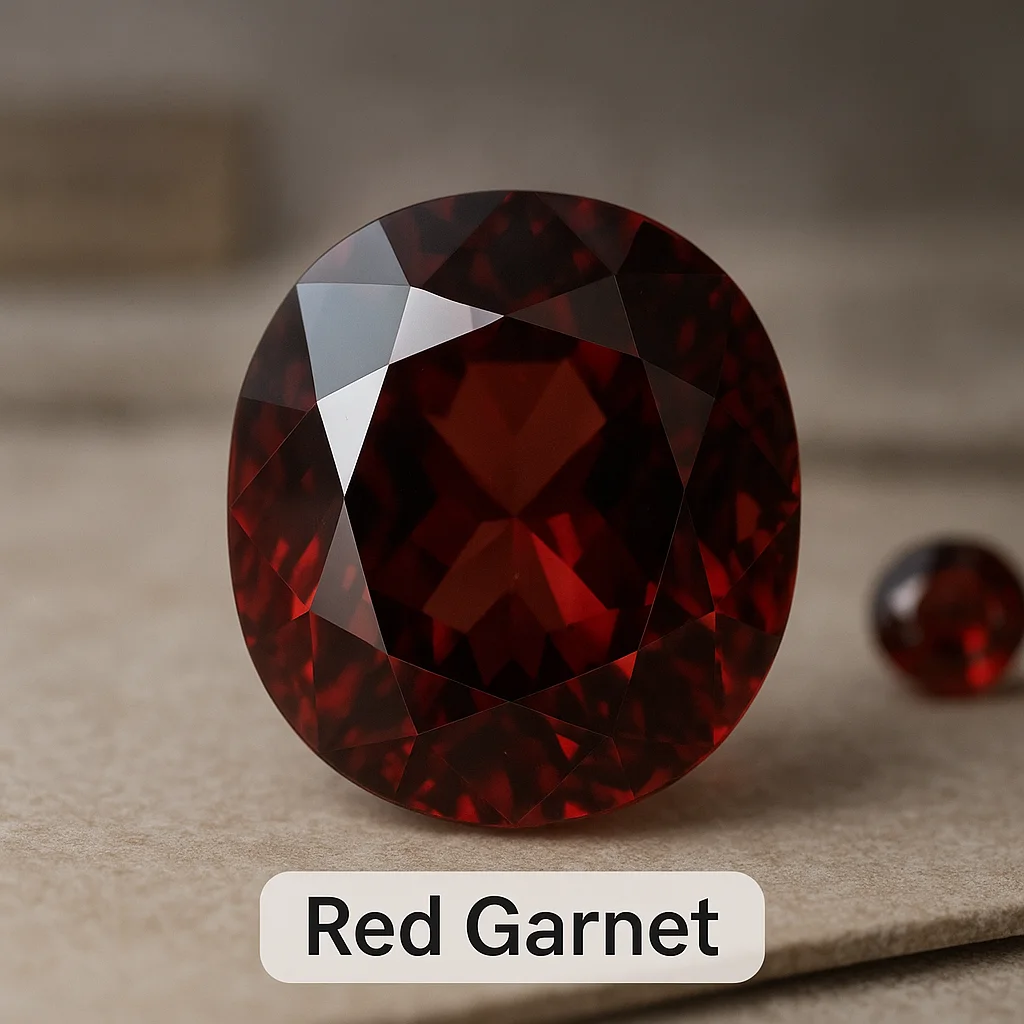
Red Garnet is a type of mineral known for its striking red hue, often used in jewelry as both an affordable and beautiful gemstone. It belongs to a broader group of minerals called garnets, which can come in various colors, though red is the most popular. Red Garnets are commonly found in rings, necklaces, and earrings, making them a favorite among gemstone collectors and jewelry enthusiasts alike.
As a January birthstone, Red Garnet holds cultural significance and is frequently gifted for birthdays occurring in that month. Enthusiasts appreciate its vibrant color and durability, which make it suitable for everyday wear. In this article, you will learn about Red Garnet's appearance, properties, origin, value, care, and buying tips.
The Red Garnet's allure is not just in its stunning appearance but also in its practical considerations. From its geological formation to its use in modern jewelry, this guide covers a range of topics designed to enhance your understanding of this captivating gemstone.
🌍 Where It Comes From
Red Garnet forms under specific geological conditions and is typically found in metamorphic rocks. These rocks have undergone significant changes due to heat and pressure, making them ideal environments for garnet formation. Red Garnet can also appear in igneous rocks, where it forms as a result of mineral crystallization.
This gemstone is widely distributed across the globe, with notable deposits in parts of Africa, India, Sri Lanka, and Brazil. These regions are renowned for producing high-quality Red Garnet that is sought after in the gemstone market. The origin of Red Garnet can influence its color and clarity, which in turn affects its market value.
The value of Red Garnet is often linked to its origin, as stones from certain locations are known for superior qualities. However, buyers should focus not just on origin but also on individual stone characteristics when evaluating garnets. This holistic approach ensures a more complete understanding of each stone's worth.
🔬 How It Forms
Red Garnet forms through a natural process involving heat and pressure over thousands of years. As metamorphic rocks undergo transformations, garnet crystals slowly develop within them. The presence of specific trace elements, such as iron and aluminum, contributes to the characteristic red color of these garnets.
Most Red Garnet crystals exhibit a rounded, dodecahedron shape, although variations may occur based on formation conditions. Gemologists note that the crystal habit can influence not only the appearance but also the cutting and polishing process, which ultimately impacts the finished gemstone's appeal.
The formation of Red Garnet is a testament to the intricate processes occurring beneath the Earth's surface. Understanding these processes allows gemstone enthusiasts to appreciate the natural beauty and uniqueness of each garnet crystal.
🎨 Color and Look
Red Garnet is best known for its deep red color, though variations can range from orange-red to purplish-red. The stone's appearance can dramatically change depending on how it is cut and polished. A well-cut Red Garnet will exhibit a vibrant color with exceptional brilliance, enhancing its overall visual appeal.
The color of garnet is largely influenced by the trace elements incorporated during its formation. Lighting can also affect its appearance; natural daylight often brings out the best in a Red Garnet's colors, while artificial lighting may alter its hue.
Unlike some other gemstones, Red Garnets typically do not undergo color-enhancing treatments. This makes them a naturally beautiful choice for those seeking an untreated gemstone. However, it is important to confirm this with sellers when making a purchase.
🧪 Properties That Matter
One of the most practical aspects of Red Garnet is its Mohs hardness rating, typically around 6.5 to 7.5. This means it is reasonably resistant to scratching, especially compared to softer gemstones. Despite being hard, garnets can be brittle, so care should be taken to avoid chipping.
Red Garnet lacks cleavage, meaning it does not split along defined planes, which contributes to its durability as a gemstone for rings and other jewelry that experiences daily wear. Its luster, often described as vitreous or glass-like, adds to its attractiveness.
When selecting Red Garnet jewelry, consider the stone's toughness and hardness. A well-set garnet can be a stunning centerpiece in any collection, yet is suitable for regular use, making it versatile for numerous jewelry applications.
✨ Meanings, Birthstones, and Culture
In addition to its physical attributes, Red Garnet is steeped in tradition and symbolism. Culturally, it is associated with qualities like passion and energy, often representing love and vitality. As the birthstone for January, it is traditionally linked to new beginnings and renewal.
The use of Red Garnet in jewelry dates back centuries, with many cultures valuing it for both decorative and ritual purposes. While some of these beliefs persist, it's important to note that they are rooted in tradition rather than scientific evidence.
Today, Red Garnet remains a popular choice in birthstone jewelry, prized for its beauty and the meaningful connections it offers to wearers. These traditions continue to shape its role in the modern gem and jewelry market.
🧼 Care and Cleaning
Caring for Red Garnet is relatively simple and can be achieved with gentle soap and water. A soft cloth should be used to clean and dry the stone, avoiding any harsh chemicals or abrasive materials that could damage its surface.
While Red Garnet is durable, it is best to avoid exposing it to sudden temperature changes, such as extreme heat or cold. This can prevent potential issues with structural integrity.
For safe storage, keep garnet jewelry in separate compartments to prevent scratching against other harder materials. Proper care will ensure that your Red Garnet maintains its beauty over time.
🛒 Buying Tips and What to Check
When buying Red Garnet, color is typically the most important factor influencing quality and price. Look for stones with a vivid, uniform color without visible inclusions that may distract from its clarity.
Certification from a reputable gemological laboratory can verify the authenticity and details of a high-value garnet. This includes insights into any treatments the stone may have undergone.
When purchasing online, ensure that you have access to clear, high-quality photos of the garnet, a return policy, and confirm the seller's reputation. Always ensure transparency regarding any potential treatments or enhancements.
⚠️ Real vs Fake and Common Look-Alikes
Red Garnet can be confused with other red gemstones such as ruby or spinel. However, careful examination and professional testing can differentiate these stones. Garnets are also occasionally imitated by glass or synthetic crystals.
The main difference between natural and synthetic garnets is their formation process, with synthetic versions created in a laboratory. While they offer the same visual appeal, natural garnets are often more highly valued.
To avoid purchasing imitations, seek a gemologist's opinion or a lab report to confirm authenticity. These measures ensure you're investing in a genuine Red Garnet.
❓ Common Questions and Misconceptions
Is it a mineral or a rock? Red Garnet is a mineral, part of the garnet family.
Is it a birthstone? Yes, it is the birthstone for January.
Will it scratch easily? With a hardness of 6.5–7.5, it is fairly scratch-resistant.
Can it go in water? Brief exposure is fine, but prolonged soaking should be avoided.
Does color fade in sunlight? No, its color is generally stable under normal light exposure.
What treatments are common? Red Garnets are mostly untreated; always verify with sellers.
Is lab-grown 'fake'? No, lab-grown garnets are real but manufactured differently from natural ones.
How do I store it safely? Use a pouch or separate compartment to prevent scratches.
Do inclusions always lower value? Not necessarily; inclusions can add uniqueness unless they affect transparency.
How do I pick a good one for jewelry? Consider color richness, clarity, cut, and setting quality.
📌 Summary
- Red Garnet is a mineral and the birthstone for January.
- Typical color ranges from deep red to purplish-red.
- Forms in metamorphic rocks over time and heat.
- Hardness of 6.5 to 7.5, suitable for most jewelry.
- Usually untreated; confirm with supplier
- Easy to clean with mild soap and water.
- Popular for rings, necklaces, and earrings.
- Look-alikes include ruby and synthetic stones.
- Lab reports confirm authenticity and quality.
- Verify color, clarity, and cut before buying.
- Rich cultural significance as an energy symbol.
- Embrace its historic allure alongside practical value.