💎 Red Spinel
🪨 What It Is
Red Spinel is a precious gemstone that belongs to the spinel mineral group. Known for its brilliant red hue, it was often mistaken for ruby in historical contexts. Spinel comes in a variety of colors, but red is the most sought-after for its rich and vibrant appearance.
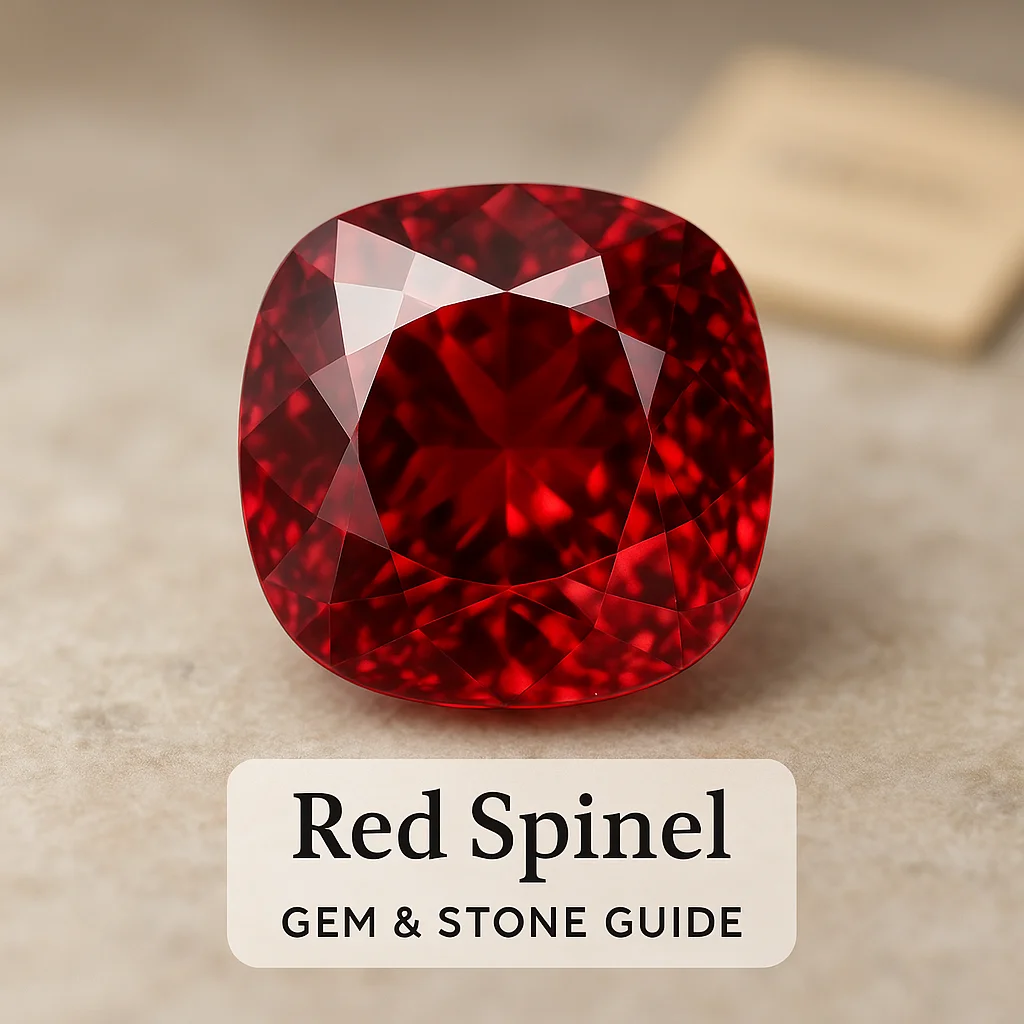
It is often used in jewelry for its striking look and has gained popularity as a gemstone for both men and women. As a birthstone, spinel is associated with the month of August, offering an alternative to the more traditional peridot.
In this article, you'll learn about the physical characteristics of Red Spinel, its natural origins, and how it is formed. We'll also delve into its properties, care tips, buying guidelines, and cultural significance.
🌍 Where It Comes From
Red Spinel naturally occurs in metamorphic rocks and alluvial deposits. Metamorphic rocks form under heat and pressure conditions where existing rocks transform into new types. The gemstone is often found alongside corundum, which leads to the historical confusion with ruby.
Some of the best-quality Red Spinel comes from parts of Southeast Asia and Central Asia. Myanmar (Burma) and Sri Lanka are particularly well-known for producing high-quality specimens that are prized in the gemstone market.
The origin of a Red Spinel can impact its value, with stones from well-regarded localities often fetching higher prices. The origin can influence the stone's color, clarity, and overall market reputation, making it a crucial factor for collectors and buyers.
🔬 How It Forms
Red Spinel forms under high temperatures and pressures found in the Earth's crust. This process occurs over millions of years and typically takes place in marble deposits as a result of metamorphic conditions.
The rich red color of spinel is mainly due to the presence of trace elements such as chromium, which also leads to its resemblance to ruby. Unlike many other gemstones, spinel forms in well-shaped octahedral crystals, which are naturally appealing.
Given these conditions, spinel crystals typically form in a rhomboidal or octahedral habit, making them suitable for cutting and polishing into dazzling gemstones used in fine jewelry.
🎨 Color and Look
Red Spinel ranges in color from deep, vibrant red to paler pinkish-red hues. This variance in color is largely influenced by the specific type and quantity of trace elements such as chromium within the stone.
The appearance of Red Spinel is greatly affected by its cut and polish. A well-cut stone will maximize light return, enhancing its natural brilliance and color depth. Clarity is another important factor; fewer inclusions generally mean a more valuable gemstone.
While most Red Spinels are untreated, it's essential to consult sellers about any treatments. Heat treatment is common for enhancing color, but it's always advisable to confirm these details for authenticity.
🧪 Properties That Matter
Red Spinel boasts a Mohs hardness of 8, making it durable and resistant to scratching, suitable for everyday wear in rings and jewelry. Its toughness is considered good, providing resilience against chipping.
Unlike other gemstones, spinel has no significant cleavage, meaning it doesn't split along defined lines but has a conchoidal fracture pattern instead. This characteristic contributes to its durability in jewelry.
The gemstone's luster is described as vitreous, giving it a glass-like shine when properly polished. Its transparency ranges from transparent to nearly opaque, depending on the specific stone and any inclusions present.
✨ Meanings, Birthstones, and Culture
Throughout history, Red Spinel has been linked with vitality, passion, and protection. It is traditionally associated with strength and prosperity in various cultures, although there are no scientific claims supporting these meanings.
As a birthstone, spinel shares its month with peridot and sardonyx in August. These associations do not have any scientifically proven effects but are celebrated in certain cultural practices and modern jewelry traditions.
In the world of fine jewelry, Red Spinel is highly prized for its beauty and durability. It offers a charming alternative to rubies and is often featured in high-end collections.
🧼 Care and Cleaning
To maintain the luster and longevity of Red Spinel, regular cleaning with gentle soap and water is recommended. Use a soft cloth to dry the stone and avoid harsh chemicals which may damage its surface.
Spinel should be stored separately from harder gemstones like diamonds to prevent scratches. When adjusting to different temperatures or cleaning, avoid rapid temperature changes to prevent potential damage.
Although spinels are durable, it is always good practice to store them in a soft pouch and away from prolonged exposure to direct sunlight to maintain their vibrant color.
🛒 Buying Tips and What to Check
When buying Red Spinel, consider aspects like the color, clarity, cut, and carat weight. Deep red tones are generally more valuable, while clarity free from noticeable inclusions often indicates higher quality.
Ask sellers about any treatments and request a lab report for high-value purchases to verify authenticity. This report will confirm the stone's natural origin and any treatments undergone.
For online purchasing, evaluate detailed photographs, check for a clear return policy, and research the seller's reputation. Disclosures regarding any treatments should be readily available to ensure transparency.
⚠️ Real vs Fake and Common Look-Alikes
Red Spinel exists in natural and synthetic forms. Synthetic spinels are lab-grown and share the same chemical properties but are generally less valuable. They shouldn't be confused with fake stones made of glass or plastic.
Imitation stones or assembled stones (doublets and triplets) may mimic Red Spinel's look without possessing its actual properties. These are crafted by layering different materials to imitate the gem's appearance.
Professional gemological testing is crucial for accurate identification since visual examination alone may not be sufficient. Home experiments such as scratch tests should be avoided as they may damage the gemstone.
❓ Common Questions and Misconceptions
Is it a mineral or a rock? Red Spinel is a mineral, not a rock, specifically a member of the spinel mineral group.
Is it a birthstone? Yes, spinel is one of the birthstones for August.
Will it scratch easily? No, with a Mohs hardness of 8, it is resistant to scratches.
Can it go in water? Yes, but avoid prolonged soaking and dry it thoroughly afterward.
Does color fade in sunlight? Generally, no, but it's best to avoid extended exposure to direct sunlight.
What treatments are common? Occasionally, heat treatment is used to enhance color.
Is lab-grown 'fake'? No, lab-grown spinel is chemically identical but generally less valuable.
How do I store it safely? Store separately in a soft pouch to prevent scratches.
Do inclusions always lower value? Not always; minor inclusions may not significantly impact value.
How do I pick a good one for jewelry? Focus on color, clarity, and reputable sourcing.
📌 Summary
- Red Spinel is a precious gemstone known for its vibrant red color.
- Typical colors range from deep red to pinkish-red, enhanced by trace elements.
- Forms under heat and pressure in metamorphic settings.
- High Mohs hardness makes it suitable for daily wear jewelry.
- Commonly untreated, but heat treatment may enhance color.
- Regular soap and water cleaning keeps it looking its best.
- Excellent for rings, pendants, and earrings due to its brilliance and durability.
- Similar in appearance to ruby; natural vs synthetic differentiation is crucial.
- Professional testing confirms authenticity and helps discern real from imitation.
- Buy with a focus on color, clarity, and seller transparency.
- August birthstone traditionally linked with strength and prosperity.
- Remember: confirmed origins and gemological reports are key when buying.