💎 Rubellite Tourmaline
🪨 What It Is
Rubellite Tourmaline is a captivating gemstone known for its vibrant red to pink hues. It belongs to the broader family of tourmaline minerals, which are complex borosilicates. Gemologists appreciate rubellite for its remarkable color, which is often compared to the reds of a ruby.
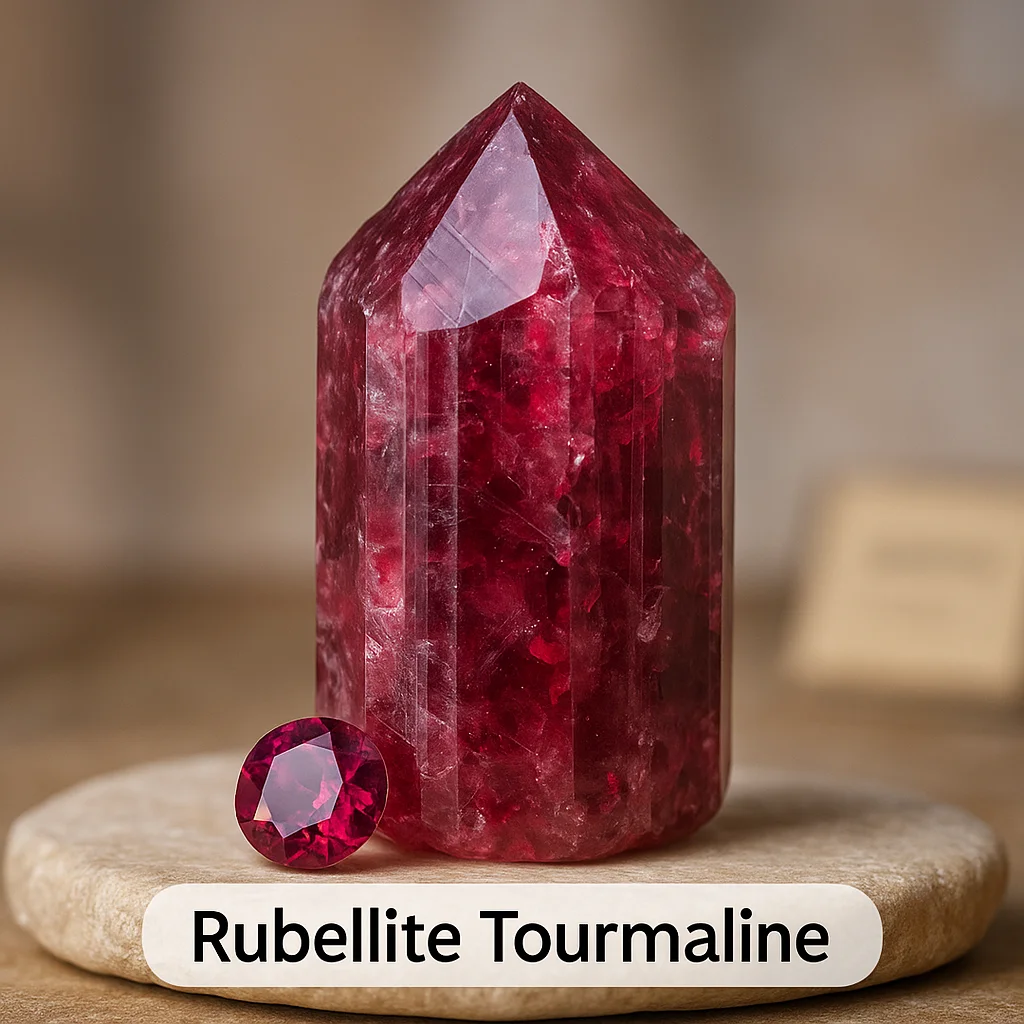
Tourmaline is a well-known gemstone variety used extensively in jewelry, appreciated for its beauty and range of colors. Rubellite stands out for its rich and striking shades, making it a popular choice for rings, pendants, and earrings. This guide will delve into rubellite's appearance, properties, origin, value, care, and buying tips.
As a birthstone, although not universally recognized, rubellite’s beauty and symbolism have made it a favored choice for those seeking something extraordinary. It is renowned for its aesthetic appeal as well as its cultural significance in jewelry fashion.
🌍 Where It Comes From
Rubellite Tourmaline occurs naturally in a variety of geological settings, primarily within igneous rocks and pegmatites, type of intrusive igneous rocks. These rich mineral deposits provide the perfect environment for tourmaline to form over millions of years under specific conditions of heat and pressure.
Rubellite is sourced from various locations around the world, including parts of Brazil and Africa. Each region contributes to the gemstone’s unique characteristics. For example, Brazilian rubellites are often lauded for their vibrant saturation, while African sources may yield stones with unique overtones.
The origin of rubellite can influence its color, clarity, and ultimately its market value. Certain origins are sought after due to their reputation for producing high-quality stones. However, appearance and quality should be prioritized over origin when selecting a gemstone.
🔬 How It Forms
The formation of Rubellite Tourmaline involves a fascinating process where magma cools and mineral-rich fluids interact with surrounding rocks. These conditions, coupled with trace elements like manganese, give rise to the brilliant reds and pinks characteristic of rubellite.
The intensity of rubellite’s color primarily comes from the presence of manganese in the crystal structure. How the gemstone forms in its crystalline habit—often prismatic or columnar—also plays a significant role in the appearance of the final gem.
This mineral crystallizes into elongated prismatic crystals, which are often vertically striated or furrowed, showcasing its natural beauty. Such geological factors contribute to the range of colors and saturation levels seen in rubellite gemstones.
🎨 Color and Look
Rubellite Tourmaline is recognized for its spectrum of red hues, ranging from pale pink to deep red. Its color is often intense and homogenous, a key factor in its desirability. This vivid coloration is one of the stone’s most attractive features.
The gem’s appearance can be significantly affected by its cut, as a well-executed cut can enhance color saturation and brightness. Rubellite also retains its lustrous shine when adequately polished, complementing its translucent to transparent nature.
Some rubellites undergo treatments to enhance color and clarity, such as heat treatment. While this is a common and accepted practice, buyers should inquire about any treatments the gemstone has undergone to make informed decisions.
🧪 Properties That Matter
The Mohs hardness scale rates rubellite between 7 and 7.5, indicating good resistance to scratches. This makes it a suitable choice for jewelry intended for regular wear, such as rings or bracelets.
In terms of toughness, rubellite is relatively durable but may still be susceptible to chipping or breaking if struck sharply. Its conchoidal fracture pattern means it breaks irregularly rather than along planes of cleavage.
Rubellite has a vitreous to glassy luster, which contributes to its brilliance and sparkle in finished jewelry pieces. The gemstone’s transparency ranges from translucent to transparent, bringing out its rich colors when expertly faceted.
✨ Meanings, Birthstones, and Culture
Traditionally associated with love and emotional balance, rubellite is embraced for its symbolic meanings. Many cultures have linked it to peace, compassion, and harmony. These attributes have made it a popular choice for those looking to infuse their jewelry with additional personal significance.
Although not officially designated as a birthstone, rubellite's beauty and unique qualities often see it associated with various months and zodiac signs. Its allure as a modern jewelry piece has made it a beloved addition to personal collections.
Wearing rubellite is often seen as a fashionable statement, with its vivid colors and associations with love and friendship making it a meaningful gift for many occasions.
🧼 Care and Cleaning
To maintain rubellite’s beauty, clean it gently using mild soap and water. A soft cloth or brush can be used to remove any grime without risking scratches. Avoid harsh chemicals which can damage the stone’s surface.
Rubellite should not be exposed to sudden temperature changes or prolonged heat, as these can result in damage or a loss of color intensity. It is advisable to remove rubellite jewelry when engaging in activities that could cause physical impact.
When storing rubellite, use a soft pouch or a separate compartment to prevent scratches from contact with other gemstones or jewelry pieces. Proper care will ensure that your rubellite retains its color and luster over time.
🛒 Buying Tips and What to Check
When purchasing rubellite, consider factors like color intensity, clarity, and cut. Rich red hues are generally more valuable, and clarity without visible inclusions is preferred. Cut quality can greatly enhance the stone’s natural beauty.
Always inquire about treatments and request certification or a lab report for high-value rubellites. Such reports can confirm aspects like authenticity and treatment history, essential for making an informed purchase.
If buying online, examine clear photos, verify the seller’s reputation, and check return policies. Ensure all disclosures regarding treatments and origins are clearly provided to avoid surprises.
⚠️ Real vs Fake and Common Look-Alikes
Natural rubellite can sometimes be confused with synthetic (lab-grown) versions or imitations made from glass or composite materials. These alternatives may appear similar but differ in properties and value.
A genuine rubellite will possess features that require professional testing to confirm, such as specific refractive indices and internal characteristics unique to tourmalines. Caution is advised against risky home tests which can damage the stone.
Common look-alikes include other red gemstones like garnet or synthetic creations, which may mimic rubellite’s appearance but lack its unique properties. Always rely on expert analysis for accurate identification.
❓ Common Questions and Misconceptions
Is it a mineral or a rock? Rubellite is a mineral, part of the tourmaline group.
Is it a birthstone? While not officially a birthstone, its beauty makes it a favored choice for many.
Will it scratch easily? With a Mohs hardness of 7 to 7.5, it is relatively scratch-resistant.
Can it go in water? Brief contact with water is fine, but avoid prolonged exposure.
Does color fade in sunlight? Rubellite’s color is generally stable but avoid prolonged exposure to intense light.
What treatments are common? Heat treatment is the most common to enhance color.
Is lab-grown 'fake'? Lab-grown stones are not fake but synthetic, created to mimic natural ones.
How do I store it safely? Use a soft pouch or compartment in a jewelry box to prevent scratches.
Do inclusions always lower value? Not always; clarity is important, but slight inclusions can be acceptable.
How do I pick a good one for jewelry? Look for vibrant color, good clarity, and an excellent cut.
📌 Summary
- Rubellite Tourmaline is a vibrant, red-pink gemstone.
- Colors range from pale pink to deep red.
- Forms in igneous rocks and pegmatites with manganese influence.
- Mohs hardness of 7-7.5 makes it suitable for regular wear.
- Commonly heat treated to enhance color and clarity.
- Gentle cleaning with mild soap and water is recommended.
- Perfect for rings, pendants, and earrings.
- Common look-alikes include garnet and synthetic alternatives.
- Authentication requires professional gemological testing.
- Buying checklist: color, clarity, cut, origin, and disclosure.
- Associated with love and emotional balance in cultural traditions.
- A memorable choice for those seeking a unique addition to their collection.