💎 Violet Iolite
🪨 What It Is
Violet Iolite is a stunning gemstone often admired for its rich, captivating color. It is a variety of the mineral cordierite, which is widely recognized for its unique pleochroism—a property that allows the stone to display different colors when viewed from various angles. Iolite is sometimes referred to as "water sapphire" due to its lovely blue-violet hues, though it is not a sapphire.
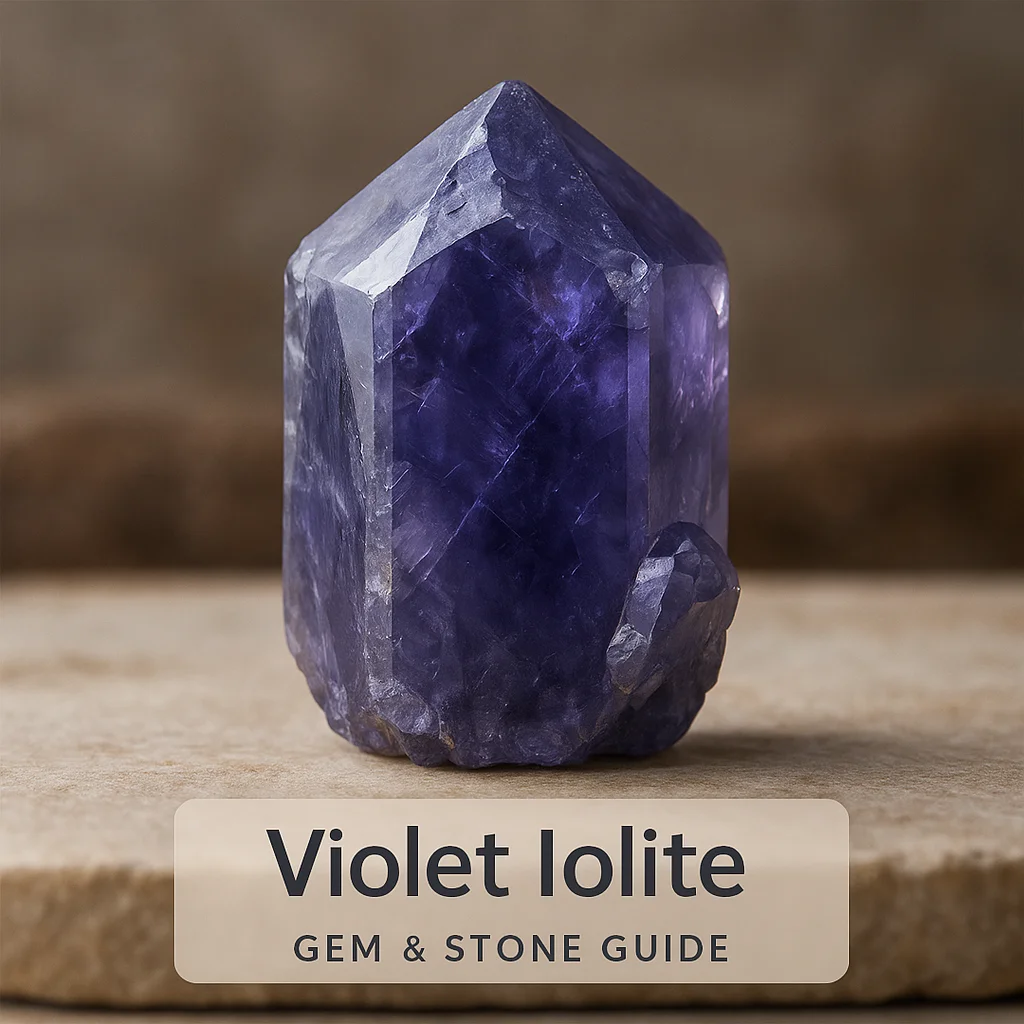
As a popular choice in the world of jewelry, Iolite is often cut into faceted stones to showcase its dazzling optical properties. While it isn't an official birthstone, Iolite holds a special place in modern jewelry collections due to its intriguing coloration and relative affordability compared to other precious stones.
This article will take you through the fascinating journey of Violet Iolite, covering its origin, formation, appearance, properties, cultural significance, care tips, buying guidance, and common myths. We aim to enrich your understanding and help you make informed choices if you consider adding this gemstone to your collection.
🌍 Where It Comes From
Violet Iolite is typically found in metamorphic rocks, formed under high temperature and pressure conditions. These environments allow the mineralogical transformations necessary to create cordierite. Iolite deposits are distributed across the globe, with significant sources in regions such as Sri Lanka, India, Madagascar, and parts of Africa and Brazil.
The origin of Iolite can be a matter of interest to collectors and jewelers, mainly because location can influence color, clarity, and market reputation. For instance, stones from certain regions may feature more intense hues or improved transparency, appealing to different buyer preferences.
While buying Iolite, knowing its geological and geographical origin can help in determining its potential value and distinguishing features. Nevertheless, the stone's inherent beauty often remains its primary attraction, regardless of origin.
🔬 How It Forms
Iolite forms within metamorphic rocks through a process involving the alteration of clay-rich sediments under high heat and pressure. Over geological time, these processes crystallize the mineral cordierite, which may then develop into the variety known as Iolite. The violet-blue color typically associated with Iolite is primarily due to trace elements like iron present during formation.
The crystalline structure of Iolite forms in an orthorhombic system, meaning its crystals are typically prismatic. It has a distinct pleochroic nature which is evident as the stone shows different colors when viewed from different directions—a characteristic that makes it both challenging and rewarding to cut.
🎨 Color and Look
Iolite is most celebrated for its striking violet-blue color, though it may range from grayish-blue to more intense hues. The stone's optical effect of pleochroism allows it to present different colors depending on the viewing angle, usually showing blue, violet, or even nearly colorless shades.
Appearance can be significantly affected by the quality of the cut and polish. A well-faceted Iolite can enhance its deep colors and maximize its pleochroic properties. While natural Iolite is generally untreated, attention should be paid to the stone's clarity and any potential inclusions, as these can impact its visual appeal.
🧪 Properties That Matter
The Mohs hardness scale ranks Iolite at about 7 to 7.5, meaning it's relatively resistant to scratching but not as hard as gems like sapphire. Its toughness, or resistance to breaking, is considered fair, and it can be prone to chipping or cracking if subjected to hard impacts or stress.
Iolite has cleavage, meaning it can split along defined planes, which should be considered if the stone is to be set in a frequently worn piece of jewelry, like a ring. Additionally, Iolite has a vitreous luster, giving it a glassy appearance, and it tends to be transparent when high quality.
✨ Meanings, Birthstones, and Culture
Culturally, Iolite has been traditionally associated with navigation and direction, inspired by its pleochroic property, which allows skilled users to determine the angle of sunlight in overcast conditions—an ancient technique purportedly used by Viking sailors.
While Iolite overflows with symbolism representing insight and exploration, it lacks official recognition as a traditional birthstone. However, its beauty and unique characteristics make it a cherished choice for bespoke jewelry pieces.
🧼 Care and Cleaning
To keep Iolite jewelry in pristine condition, clean it gently using soap, water, and a soft cloth. Avoid harsh chemicals or ultrasonic cleaners, as they may damage the stone. Prolonged exposure to heat or rapid temperature changes should also be avoided to prevent damage.
Special caution is required for storing Iolite. To avoid scratches or damage, store the gemstone separately from harder gemstones or in a soft pouch. This helps maintain its surface integrity, ensuring it remains an eye-catching piece in your collection.
🛒 Buying Tips and What to Check
When buying Iolite, consider factors like color, clarity, cut, and carat weight, as these determine both its beauty and value. Deep, velvety blue hues are generally more prized, though personal preference plays a significant role in choice.
Ask about any treatments, although natural Iolite is typically untreated, and request lab reports for high-value stones to confirm authenticity. Shopping online requires additional care: check the seller’s reputation, scrutinize photos, and ensure a solid return policy.
⚠️ Real vs Fake and Common Look-Alikes
Iolite can be confused with similar-looking stones like tanzanite or sapphire. However, these stones differ in composition and optical properties. Synthetic Iolites are rare, and most look-alikes on the market are simply imitations, often glass or plastic composites.
Due to the complexities in identification, professional testing is recommended to confirm authenticity and prevent buyers from inadvertently purchasing misrepresented stones.
❓ Common Questions and Misconceptions
Is it a mineral or a rock? Iolite is a mineral, specifically a variety of cordierite.
Is it a birthstone? It is not an official birthstone but remains popular in jewelry.
Will it scratch easily? With a Mohs hardness of 7 to 7.5, it resists scratches fairly well.
Can it go in water? It's safe in water, but prolonged exposure should be avoided.
Does color fade in sunlight? Iolite generally maintains its color well in sunlight.
What treatments are common? Iolite is rarely treated and usually found in its natural state.
Is lab-grown 'fake'? Lab-grown stones replicate natural properties but aren't 'fake'.
How do I store it safely? Store separately to prevent scratching, ideally in a soft pouch.
Do inclusions always lower value? Not necessarily; it depends on their impact on appearance.
How do I pick a good one for jewelry? Look for rich color, good clarity, and a well-executed cut.
📌 Summary
- Iolite is a variety of the mineral cordierite.
- It typically exhibits violet-blue color due to pleochroism.
- Forms in high-pressure, high-temperature metamorphic environments.
- Mohs hardness of 7 to 7.5 provides moderate wearability for jewelry.
- Natural stones are usually untreated.
- Clean gently with soap, water, and soft cloth; avoid harsh cleaners.
- Best suited for less-exposed jewelry like pendants and earrings.
- Common look-alikes include tanzanite and sapphire.
- Lab reports can confirm authenticity and disclose treatments.
- Check origins, color, clarity, and seller reputation before buying.
- Traditionally linked with navigation and exploration symbolism.
- Remember Iolite for its enchanting pleochroic display and affordability.