💎 White Opal
🪨 What It Is
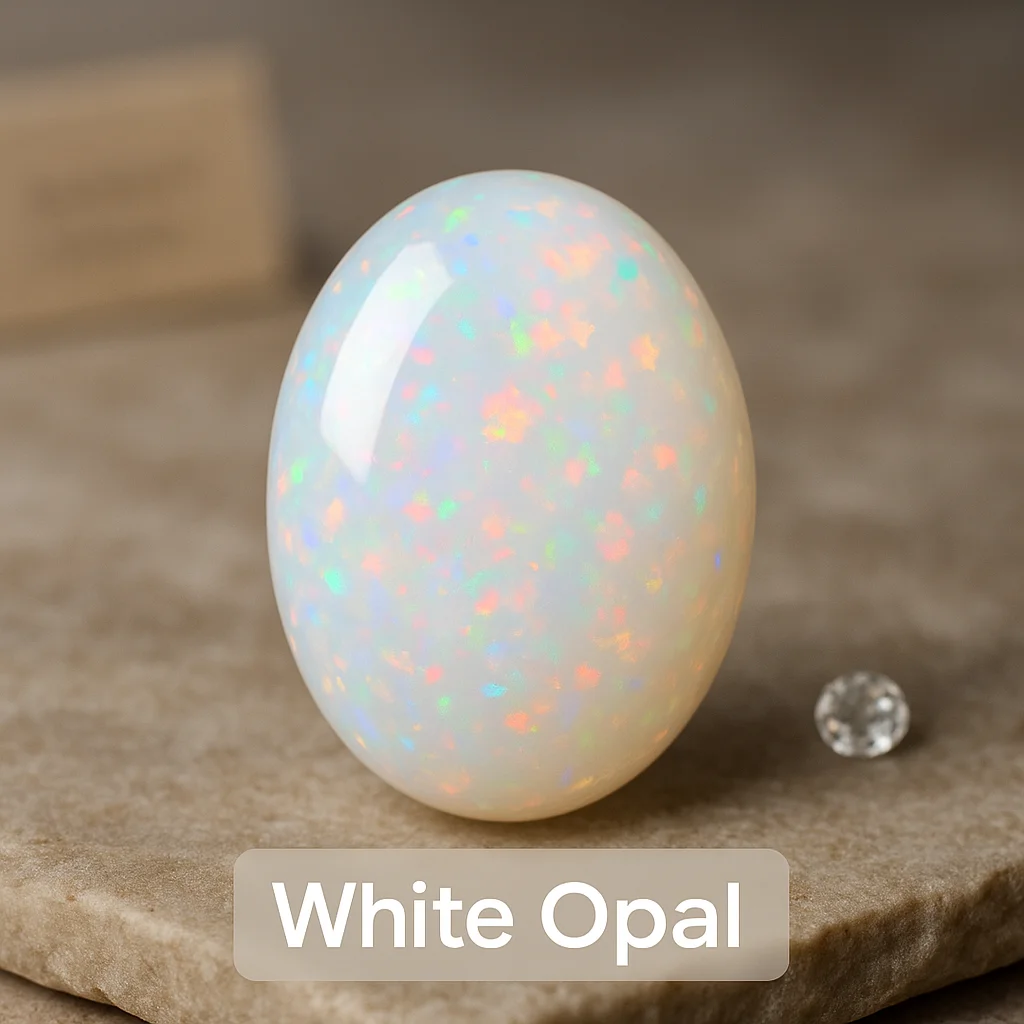
White Opal is a mesmerizing gemstone celebrated for its unique play-of-color, which refers to the shifting spectral hues that dance across its surface. This optical phenomenon is caused by microscopic silica spheres that diffract light. White Opal is a popular jewelry stone, often used in rings, earrings, and pendants.
In terms of gemology, White Opal is classified as a mineraloid, which means it doesn't have a crystalline structure like typical minerals. It consists mainly of silica and water, giving it a distinctive and mesmerizing appearance. The play-of-color is what sets opals apart from other gemstones.
In this article, you will learn about the fascinating properties of White Opal, including its origins, formation, appearance, properties, and cultural significance. We'll also explore practical care tips and buying advice to ensure you make informed decisions when purchasing this beautiful gemstone.
🌍 Where It Comes From
White Opal is primarily found in sedimentary environments where silica-rich solutions seep into sedimentary rocks, forming opal deposits over millions of years. These opals are typically associated with areas that were once ancient seabeds.
Some of the world's most renowned White Opal reserves are located in Australia. This region is famous for producing opals of extraordinary quality and vibrant play-of-color. Other notable sources include Ethiopia, Brazil, and parts of the United States.
The origin of White Opal can significantly impact its market value and desirability. Australian opals, for example, are highly regarded for their rich color patterns and durability, while Ethiopian opals may offer different color variations. As a buyer, understanding the origin helps in assessing the quality and value of the opal.
🔬 How It Forms
The formation of White Opal is a fascinating geological process that requires specific conditions. Water plays a crucial role in this process, as silica-rich solutions percolate through rocks. Over time, the water evaporates, leaving behind silica deposits that gradually solidify into opal.
The play-of-color in White Opal is due to the arrangement of silica spheres within the stone. These spheres diffract light, creating the vibrant colors observed on its surface. The size and arrangement of the spheres determine the type and intensity of the play-of-color.
White Opal doesn't form crystals like other minerals, so it is often found in nodules, seams, or as coatings. Its formation is a slow process involving geological changes over millions of years, making each opal unique in its appearance.
🎨 Color and Look
White Opal is known for its translucent to opaque base color with a mesmerizing play-of-color. This optical phenomenon can include flashes of red, blue, green, and yellow, adding to its enchanting appeal. The stone's base color can range from milky white to pale blue or even a delicate pink.
The appearance of White Opal is influenced by how it is cut and polished. A well-cut opal will showcase its play-of-color more vividly. Cabochon cuts, which are smooth and rounded, are common for opals to maximize their optical effects.
While White Opal is often untreated, some stones may undergo processes to enhance their stability or color. Such treatments include hydrophane stabilization, which helps protect the opal from absorbing water and changing appearance.
🧪 Properties That Matter
White Opal has a Mohs hardness of 5.5 to 6.5, making it softer than many other gemstones. This means it can scratch more easily and requires careful handling. Despite being softer, White Opal is relatively tough because it doesn't have cleavage, meaning it won't split easily along specific directions.
In terms of luster, White Opal exhibits a sub-vitreous to waxy appearance, contributing to its characteristic glow. Its transparency ranges from translucent to opaque, depending on the specific stone and cut.
Because of its softness, White Opal is most suitable for jewelry pieces that don't experience constant wear, such as pendants or earrings. Rings made with White Opal should be worn with care, avoiding rough activities that may cause damage.
✨ Meanings, Birthstones, and Culture
Traditionally, White Opal is associated with purity and hope. It is believed to bring emotional balance and symbolizes creativity and inspiration. As an October birthstone, it is linked to Libra and Scorpio zodiac signs, offering a touch of personal significance.
In many cultures, opals are revered for their mesmerizing colors and are often seen as symbols of good luck and fortune. Modern jewelry traditions continue to use opals in designs that highlight their unique play-of-color.
While the cultural associations of White Opal are rich and varied, it's essential to differentiate these traditions from proven gemological properties. White Opal remains a fascinating gemstone embodying both science and culture.
🧼 Care and Cleaning
To clean White Opal safely, use lukewarm water with mild soap and a soft cloth. Avoid ultrasonic cleaners or harsh chemicals, as these can damage the opal. Gently wipe the opal after wearing to remove any oils or residues.
White Opal is sensitive to sudden temperature changes, so avoid exposing it to extreme heat or cold. This sensitivity extends to activities involving hot water or steam, which can cause the opal to crack.
When storing White Opal, place it in a soft pouch or jewelry box to prevent scratches. If you plan to store it for extended periods, consider keeping it in a slightly humid environment to prevent dehydration.
🛒 Buying Tips and What to Check
When purchasing White Opal, consider factors like color quality, play-of-color intensity, and overall appearance. Larger opals with vivid colors tend to command higher prices, so it's important to balance size with quality.
Always inquire about any treatments the opal may have undergone, and consider obtaining a gemological report for high-value stones. Such reports can provide insights into the opal's authenticity and treatments.
For online purchases, rely on reputable sellers with clear photos and return policies. Check seller reviews and transparency about the stone's origin, characteristics, and any enhancements or treatments it may have.
⚠️ Real vs Fake and Common Look-Alikes
In the world of opals, it's important to distinguish between natural, synthetic, and imitation options. Natural White Opals are mined directly from the earth, while synthetic opals are lab-grown but have the same chemical properties.
Imitations, such as those made from glass or plastic, lack the vibrant play-of-color found in true opals. Doublets and triplets, which are assembled stones comprising thin layers of opal, may also be encountered.
Common look-alikes can include opalite glass and plastic materials that mimic opal's appearance. Proper identification should always be confirmed through professional testing to avoid costly mistakes.
❓ Common Questions and Misconceptions
Is it a mineral or a rock? White Opal is considered a mineraloid because it lacks a crystalline structure.
Is it a birthstone? Yes, White Opal is an October birthstone.
Will it scratch easily? Yes, with a Mohs hardness of 5.5 to 6.5, it can scratch more easily than harder gemstones.
Can it go in water? Brief exposure is fine, but prolonged soaking can damage the opal.
Does color fade in sunlight? With prolonged exposure, the play-of-color can appear dull, so storing it away from light helps preserve its appearance.
What treatments are common? Stabilization treatments are sometimes applied to enhance durability.
Is lab-grown 'fake'? No, synthetic opals are real opals, but they are created in a laboratory environment.
How do I store it safely? Keep it in a soft, padded container away from direct sunlight and extreme temperatures.
Do inclusions always lower value? Not necessarily, as some inclusions can add character, but excessive inclusions may diminish the stone's value.
How do I pick a good one for jewelry? Look for even color distribution, vivid play-of-color, and a pleasing cut.
📌 Summary
- White Opal is a mineraloid known for its play-of-color.
- Typically exhibits a milky white to pastel base color.
- Forms from silica-rich solutions over millions of years.
- Mohs hardness of 5.5 to 6.5, softer and needs careful handling.
- Common treatments include hydrophane stabilization.
- Clean with mild soap and water; store carefully to avoid damage.
- Ideal for pendants and earrings rather than daily-wear rings.
- Common look-alikes include opalite glass and plastic.
- Authenticity confirmed through professional gemological testing.
- Inquire about bands, treatments, and consider a gem report.
- October birthstone, symbolizes creativity and emotional balance.
- A beautiful reminder of nature's artistry through play-of-color.