💎 Amethyst Crystal
🪨 What It Is
Amethyst is a popular variety of quartz, highly prized for its stunning purple hue. It's a mineral admired for both its beauty and its versatility, often used in jewelry such as rings, necklaces, bracelets, and earrings. Amethyst is traditionally recognized as the birthstone for February.
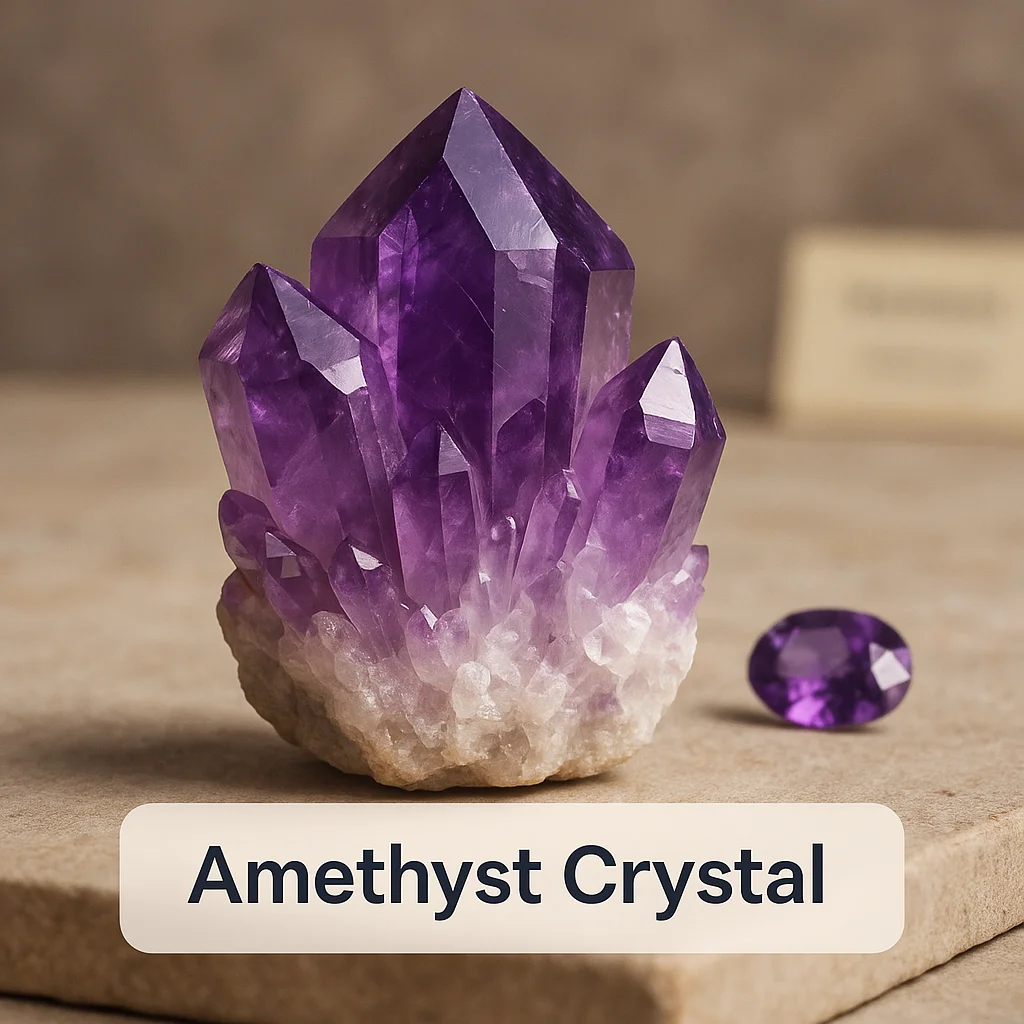
In this article, you will learn about the appearance, properties, origin, value, care, and buying tips associated with amethyst crystals. We'll cover how this captivating gemstone forms in nature and what makes it unique.
Amethyst is celebrated not only for its aesthetic appeal but also for its role in countless cultural traditions and as a significant feature in modern jewelry design.
🌍 Where It Comes From
Amethyst can be found globally, but it typically forms in igneous rocks—rocks formed from cooled magma or lava. Moreover, it can occasionally be located in geodes, which are hollow, rounded formations lined with crystals on the inside.
Prominent sources of amethyst include Brazil, Uruguay, and parts of Africa and the United States. These regions are known for producing high-quality stones that are sought after in the gemstone market.
The origin of amethyst crystals can affect several factors, including their color and clarity. For instance, Brazilian amethysts are known for their deep purple shades, which are often more highly valued.
🔬 How It Forms
Amethyst forms over millions of years under specific geological conditions. It starts as silica-rich fluids that seep into cavities of rocks. With time, heat, and pressure, these fluids crystallize to form quartz. The purple color of amethyst is primarily due to trace amounts of iron within its structure.
The crystal habit, or common forms that amethyst takes, often appears as prismatic crystals or in massive shapes like geodes. The formation is a combination of both natural environmental processes, providing a fascinating glimpse into Earth's history.
🎨 Color and Look
The signature color of amethyst ranges from light lavender to deep violet. This variation is due to different levels of iron and other trace elements. Occasionally, the color may show bands or zones, with lighter and darker areas within the same crystal.
Proper cutting and polishing greatly enhance the stone's natural beauty. The depth and richness of amethyst's color can be emphasized using various cuts, ensuring maximum luster and appeal. Some amethysts have undergone heat treatment to improve or stabilize their color, which is generally accepted in the gem industry.
🧪 Properties That Matter
Amethyst has a Mohs hardness of 7, making it a fairly durable choice for jewelry that is worn regularly, like rings or bracelets. Despite its hardness, it is important to avoid harsh impacts which could cause chipping.
The luster of amethyst is described as vitreous, or glass-like, complementing its attractive transparency, which can range from translucent to transparent. It doesn't have perfect cleavage, meaning it will not split easily along specific planes, a favorable property for jewelry durability.
✨ Meanings, Birthstones, and Culture
Amethyst is traditionally associated with the month of February and is often gifted for sixth wedding anniversaries. This gemstone is believed by many to symbolize clarity of mind and protection, although these interpretations are cultural rather than scientific.
Throughout history, it has been linked to various myths and legends. While such folklore enriches its appeal, these stories are not grounded in confirmed scientific properties. In modern jewelry, amethyst's vivid color makes it a favorite for everything from dazzling statement pieces to delicate everyday wear.
🧼 Care and Cleaning
Amethyst should be cleaned gently using mild soap and lukewarm water. It's advisable to use a soft cloth to avoid scratches and to steer clear of any harsh chemicals during cleaning.
While amethyst is relatively sturdy, it should not be subjected to sudden temperature changes or extended soaking, as these could affect the stone's structural integrity. Store amethyst jewelry separately in a soft pouch or lined box to prevent scratching from harder materials.
🛒 Buying Tips and What to Check
Several factors influence the value of amethyst, including color intensity, clarity, cut, and carat weight. Rich, evenly colored stones are typically more prized. Clear, well-cut amethyst can showcase its purple brilliance beautifully.
When purchasing amethyst, inquire about any treatments it may have undergone and request a lab report if buying high-value pieces. The report can confirm authenticity and disclose treatments, ensuring informed buying decisions.
For online purchases, check the seller's reputation, examine detailed photos, and review the return policy. Ensure that the description is comprehensive and transparent regarding treatments or enhancements.
⚠️ Real vs Fake and Common Look-Alikes
Natural amethyst can be distinguished from its synthetic counterparts by expert gemological tests. Synthetic amethyst is lab-grown but possesses the same chemical properties as natural amethyst, making it legitimate though not naturally formed.
Imitations such as colored glass or plastic can deceive the untrained eye. Common look-alikes include stones like fluorite or colored quartz, which may be mistaken for amethyst. Professional testing is recommended to confirm authenticity.
❓ Common Questions and Misconceptions
"Is it a mineral or a rock?" - Amethyst is a mineral, a crystalline form of quartz.
"Is it a birthstone?" - Yes, amethyst is the birthstone for February.
"Will it scratch easily?" - Less likely due to its Mohs hardness of 7, but it can chip if struck hard.
"Can it go in water?" - Brief water exposure is fine, but avoid prolonged soaking.
"Does color fade in sunlight?" - Overexposure to sunlight can cause fading over time.
"What treatments are common?" - Heat treatment is occasionally used to enhance color.
"Is lab-grown 'fake'?" - Lab-grown amethyst is not fake; it is chemically identical but lacks natural formation.
"How do I store it safely?" - Store in a soft pouch or lined box away from harder stones.
"Do inclusions always lower value?" - Inclusions can affect value if they detract from clarity but are acceptable if they don't diminish beauty.
"How do I pick a good one for jewelry?" - Look for deep, even coloring with minimal inclusions for the best quality.
📌 Summary
- Amethyst is a mineral and a popular variety of quartz.
- Its stunning color ranges from light lavender to deep violet.
- Forms over millions of years in igneous rocks and geodes.
- Has a Mohs hardness of 7, making it durable for regular wear.
- Commonly treated with heat to enhance color.
- Clean with mild soap, water, and a soft cloth, avoid harsh chemicals.
- Ideal for a variety of jewelry pieces, including rings and pendants.
- Common look-alikes include synthetic amethyst and colored glass.
- Authenticity confirmed through professional gemological testing.
- Check color, clarity, and treatment disclosures when buying.
- February birthstone, traditionally symbolizes clarity and protection.
- Known for natural beauty and cultural allure, amethyst remains a favorite.