💎 Calcite
🪨 What It Is
Calcite is a common mineral known for its wide range of colors and crystal forms. As a member of the carbonate mineral family, it is primarily composed of calcium carbonate. Although calcite is not traditionally used as a birthstone or major jewelry stone, it is highly valued by collectors for its diverse crystal shapes and vibrant colors.
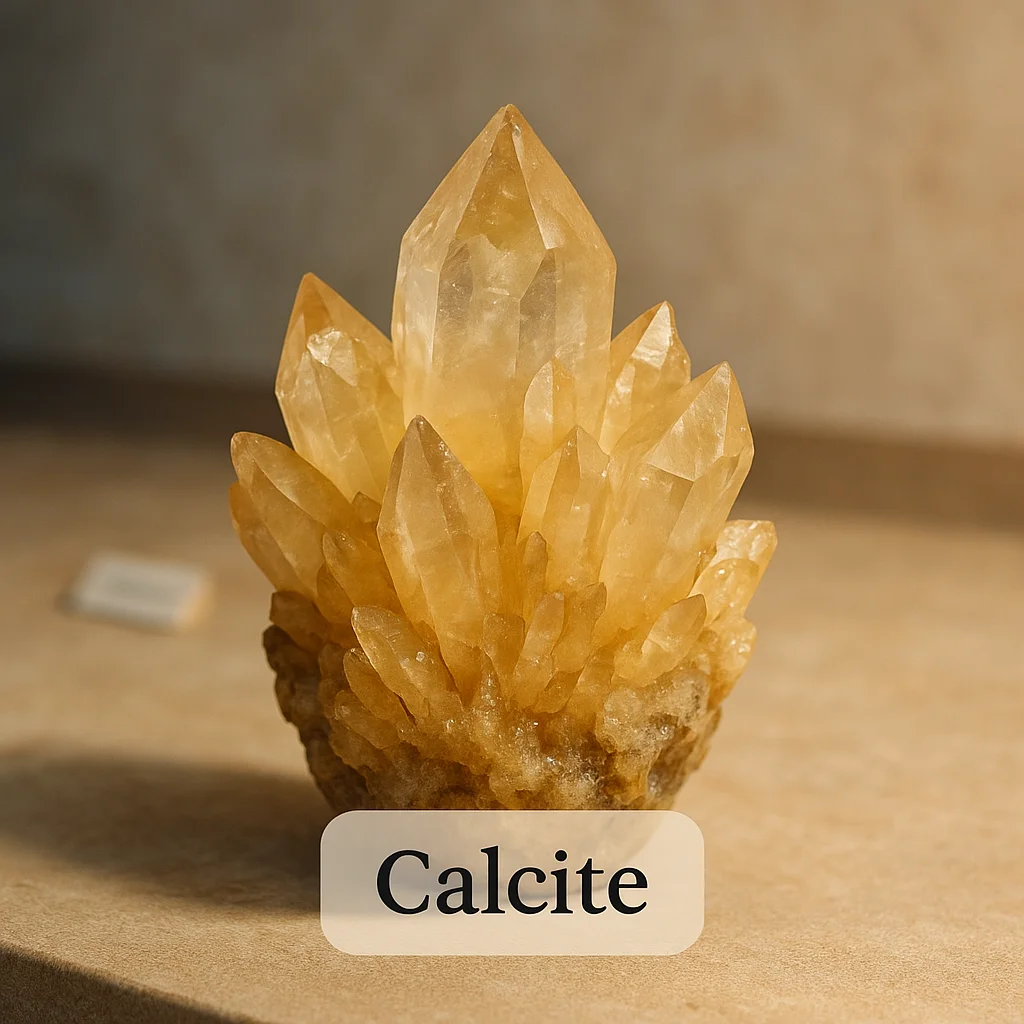
This beginner-friendly guide will explore calcite’s appearance, properties, origins, and how to care for it. You'll also learn what to check when buying calcite, how to tell real from fake, and common misconceptions about this intriguing mineral.
By the end of this article, you'll have a clearer understanding of calcite's role in both geological contexts and cultural traditions. Whether you are interested in calcite for collecting or jewelry, the information here will ensure you make informed decisions.
🌍 Where It Comes From
Calcite is found in various geological settings around the world, including igneous, metamorphic, and sedimentary environments. It often forms in hydrothermal veins and is a key component of limestone and marble. Its widespread occurrence makes it one of the most abundant minerals on Earth.
Prominent regions producing calcite include parts of the United States, Mexico, and Europe. Each region can offer distinct varieties and colors, which may affect its appearance and market value. For instance, some areas are known for their clear and transparent calcite crystals, while others may yield colorful specimens.
The origin of calcite can impact its desirability for collectors and jewelers. Some origins are renowned for producing calcite with excellent clarity or striking colors, resulting in a higher market demand. Buyers often seek out specific regions when investing in calcite specimens for their collections.
🔬 How It Forms
Calcite forms under a variety of conditions, often through the precipitation of calcium carbonate from solutions rich in calcium. These conditions can include marine environments, where calcite precipitates from seawater, or through the metamorphism of limestone and dolomite rocks.
The formation process involves a combination of heat, pressure, and time. As calcium-rich fluids penetrate rock fractures, calcite crystals can grow within these spaces. The crystal habit, or growth shape, of calcite is diverse, ranging from rhombohedral to scalenohedral forms.
Variations in trace elements and conditions during formation can lead to color differences in calcite. The presence of elements such as iron, manganese, and cobalt can result in a wide range of shades including clear, white, yellow, orange, red, green, and blue.
🎨 Color and Look
Calcite is renowned for its kaleidoscope of colors, varying from transparent to vibrant hues such as yellow, pink, and blue. This variety is largely due to the trace elements present during formation, which affect its color and how it reflects light.
Stone quality is enhanced by a good cut and polish, which can intensify calcite’s natural luster and color. Lighting conditions can also play a significant role in how calcite is perceived, with some colors appearing more vivid under artificial or natural light.
Common treatments for enhancing calcite’s appearance are minimal, as its inherent beauty is often sufficient. However, careful handling is advisable since calcite is softer than many other minerals, and improper cleaning can dull its surface.
🧪 Properties That Matter
Calcite has a Mohs hardness of 3, which means it is relatively soft and prone to scratching by harder substances. This limits its suitability for daily-wear jewelry like rings, which may be subjected to knocks and scratches.
The mineral's cleavage is prominent, meaning it can break along defined planes. This characteristic necessitates careful cutting and setting in jewelry to minimize the risk of chipping or breakage.
Calcite exhibits a vitreous luster, offering a glass-like shine that can enhance its visual appeal when well-polished. Its transparency varies from transparent to translucent, impacting its aesthetic and lighting interaction when set in jewelry.
✨ Meanings, Birthstones, and Culture
Throughout history, calcite has been associated with a variety of cultural beliefs and symbolisms. Often linked with clarity of thought and emotional balance, calcite is traditionally valued more for its symbolic meanings than scientific properties.
Though it is not a traditional birthstone, calcite enjoys a place in the realms of folklore and mythology. Some cultures associate calcite with new beginnings or increased spiritual awareness, viewing it as a stone of transformation.
Modern jewelry practices occasionally incorporate calcite into designs for its color play and unique look, catering to those seeking unusual and vibrant pieces. Its soft nature makes it more suitable for pendants or earrings rather than rings or bracelets.
🧼 Care and Cleaning
The soft nature of calcite necessitates careful handling and cleaning. A gentle soap and water solution, along with a soft cloth, should be used to clean calcite. Avoid harsh chemicals and prolonged soaking, which can damage the stone.
Because of its low hardness, calcite is susceptible to scratching. Store it separately from harder gemstones to prevent damage. Wrapped in a soft fabric or placed in a lined jewelry box can offer adequate protection.
Exposure to heat and sudden temperature changes can pose risks to calcite, so it's best to keep it away from direct sunlight and other heat sources for extended periods.
🛒 Buying Tips and What to Check
When purchasing calcite, consider factors such as color, clarity, cut, and carat size. These qualities significantly influence its price and appeal. The origin may also affect desirability, with certain localities known for superior specimens.
Inquiring about any treatments the calcite may have undergone is essential, particularly for high-value pieces. For peace of mind, consider requesting a lab report, which can confirm the stone's identity and any enhancements.
If buying calcite online, check the seller's reputation and look for clear photos. A solid return policy can provide additional security in case the stone doesn’t meet your expectations upon arrival.
⚠️ Real vs Fake and Common Look-Alikes
Calcite, like many other minerals, can be confused with imitations or synthetics. Synthetic calcite is lab-grown but chemically identical to the natural form. Imitations can be made of glass or plastic, aiming to mimic calcite's appearance.
Distinguishing between natural and fake calcite requires professional gemological testing, as look-alikes can appear identical to the untrained eye. Common look-alikes for calcite include gypsum, aragonite, and even quartz in some cases.
Beware of assembled stones such as doublets or triplets, where thin layers of calcite may be bonded to other materials to enhance durability or appearance.
❓ Common Questions and Misconceptions
Is it a mineral or a rock? Calcite is a mineral, not a rock.
Is it a birthstone? No, calcite is not a traditional birthstone.
Will it scratch easily? Yes, due to its Mohs hardness of 3, calcite can scratch easily.
Can it go in water? Brief contact with water is usually safe, but prolonged exposure should be avoided.
Does color fade in sunlight? Prolonged exposure to direct sunlight can cause some colors in calcite to fade.
What treatments are common? Calcite is rarely treated, though some stones might be polished to enhance luster.
Is lab-grown 'fake'? Lab-grown calcite is not fake; it has the same chemical composition as natural calcite but is grown in a controlled environment.
How do I store it safely? Store calcite separately from harder stones, ideally wrapped in a soft cloth to prevent scratches.
Do inclusions always lower value? Not necessarily; some calcite collectors appreciate unique inclusions for their aesthetic appeal.
How do I pick a good one for jewelry? Focus on vibrant color, good clarity, and an appealing cut for calcite jewelry pieces.
📌 Summary
- Calcite is a common mineral made of calcium carbonate.
- It comes in a wide range of colors, from transparent to vivid hues.
- Calcite forms under various geological conditions, often via precipitation.
- The mineral is relatively soft, with a Mohs hardness of 3.
- Treatments are minimal, often limited to polishing.
- Use gentle cleaning methods and careful storage to maintain quality.
- Best used in pendants or earrings due to its softness.
- Common look-alikes include gypsum and aragonite.
- Professional testing is needed to confirm authenticity.
- Consider color, clarity, cut, and origin when buying.
- Associated with clarity and transformation in cultural contexts, not as a birthstone.
- A versatile collector's item, calcite has aesthetic appeal and geological interest.