💎 Celestite
🪨 What It Is
Celestite, also known as celestine, is a mineral composed primarily of strontium sulfate. It is renowned for its beautiful pale blue color, although it can also be found in other hues such as white, yellow, red, and even colorless. Celestite is not classified as a birthstone, but it is popular among collectors and those interested in metaphysical properties. It is not a traditional gemstone but is often used in decorative objects and crystal healing circles.
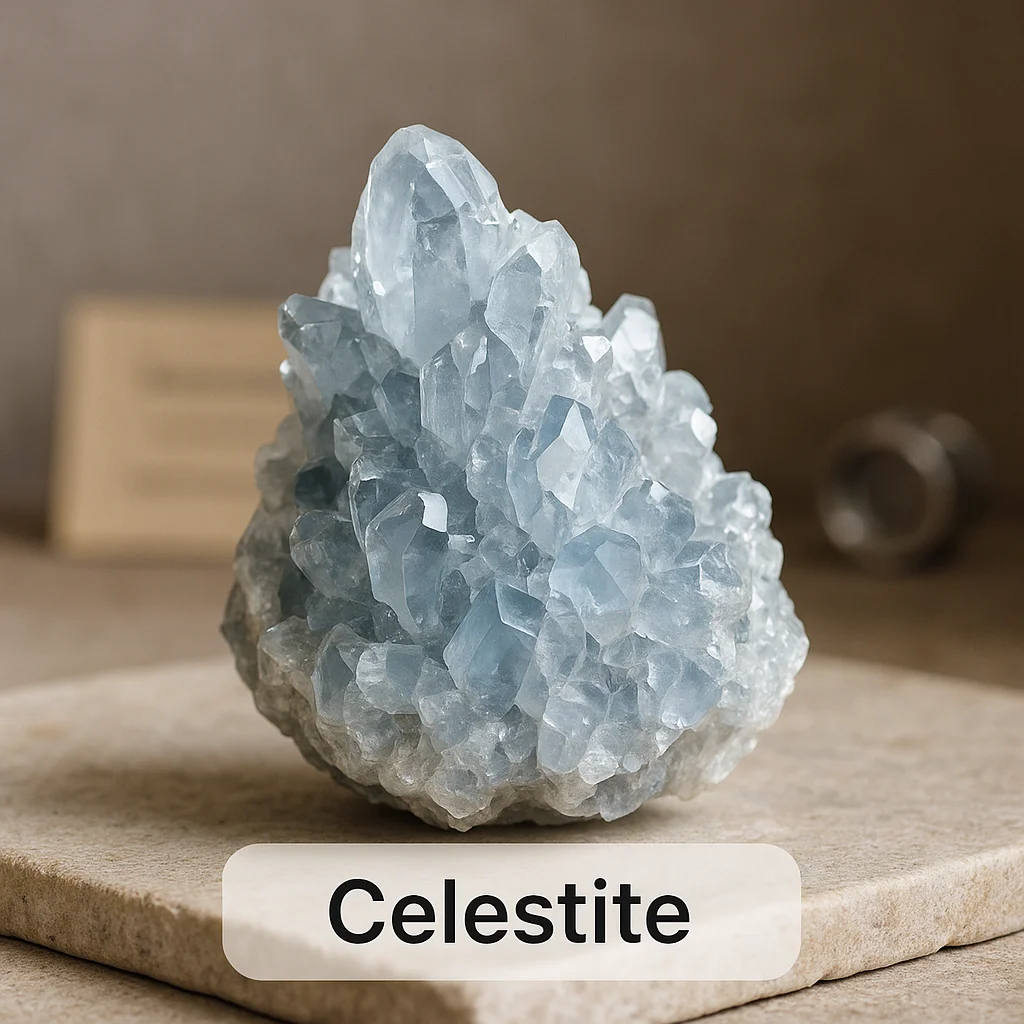
This article will introduce you to celestite’s appearance, physical properties, origins, and uses. We will explore its formation process, how it is typically found, and where in the world it can be located. You'll also learn about the properties that make celestite a special material, how to care for it, and what to look for when purchasing.
By the end of this article, you will have a basic understanding of celestite that will be useful whether you are considering purchasing it for its beauty or simply satisfying a curiosity about this intriguing mineral.
🌍 Where It Comes From
Celestite typically forms in sedimentary rocks such as limestone and dolomite. It is frequently found in geodes, often intergrown with other minerals such as calcite and gypsum. The most desirable specimens exhibit bright color and excellent transparency, which are indicators of high quality.
Celestite is commonly sourced from several regions around the world. Notable deposits can be found in Madagascar, known for producing impressive blue crystals. Other important sites include parts of the United States, Spain, and Mexico. The regional origin of celestite can affect its color and transparency, with certain areas being more sought after for their unique characteristics.
Geologically, celestite is often associated with evaporite deposits. These are formations where evaporating waters leave behind layers of minerals. Such environments provide the perfect conditions for celestite crystals to grow and develop into the sizes and shapes appreciated by collectors and jewelers.
🔬 How It Forms
The formation of celestite starts with the evaporation of mineral-rich waters, depositing layers of strontium sulfate. Over time, under the right conditions of pressure and temperature, these deposits crystallize into celestite. The presence of small amounts of other elements can lead to variations in color, with trace amounts of iron, for example, contributing to reddish hues.
Celestite often forms as prismatic or tabular crystals. It may also occur as fibrous masses or as granular aggregates. In geodes, celestite crystals can form beautiful radial clusters that are highly prized for their aesthetic appeal.
Unlike gems formed deep within the earth's crust, celestite's relatively shallow formation process contributes to its widespread occurrence and varied crystal habits, making it an accessible mineral for enthusiasts.
🎨 Color and Look
Celestite is most commonly associated with a delicate sky-blue color, which is highly sought after. However, the mineral can also display a range of other colors, including white, gray, and pink. The blue color is particularly valued and is caused by minute inclusions within the crystal that influence its optics.
The color of celestite can be influenced by its cut and polish, which enhance its natural beauty by allowing light to pass through and reflect off its surfaces. However, these processes must be performed carefully, as celestite is relatively soft and can scratch easily.
It's important to note that celestite is typically not subjected to treatments that alter its color or clarity. Its natural hues are part of what makes it charming, and collectors often seek this authenticity.
🧪 Properties That Matter
On the Mohs scale of hardness, celestite registers at around 3 to 3.5, which means it is quite soft and prone to scratching. Due to its low hardness, celestite is best suited for displays or gentle handling rather than everyday jewelry such as rings.
Celestite has perfect cleavage, which means it can split along specific planes with ease. This property requires careful handling to avoid damage. Its luster, which is how the surface of the crystal reflects light, is vitreous, giving it a glassy appearance that enhances its lapidary appeal.
The mineral's transparency can range from transparent to translucent, offering varied visual effects depending on the specific sample. For those interested in crystal optics, celestite offers an intriguing play of light that's both soothing and visually engaging.
✨ Meanings, Birthstones, and Culture
In cultural traditions, celestite is often associated with peace and calming energies, but these are traditional interpretations rather than scientifically proven properties. It is not assigned to any particular month or zodiac sign as a birthstone, but it is popular in modern crystal healing practices and decorative collections.
While some people believe celestite has metaphysical properties like promoting mental clarity or enhancing communication, such claims are part of cultural lore and personal beliefs rather than scientific findings.
In jewelry, celestite’s delicate color and calming aspect make it a popular choice for decorative pieces such as pendants and ornamental carvings rather than everyday wear.
🧼 Care and Cleaning
Because celestite is a soft and fragile mineral, it requires gentle care. Cleaning should always be done with a soft cloth and mild soap and water. Avoid harsh chemicals or abrasives that could scratch or damage the surface.
Take particular care to protect celestite from sudden temperature changes, which could cause it to crack. Long-term exposure to water should also be avoided, as even subtle changes in the surface or cleavage might occur.
When storing celestite, use a padded container to prevent any accidental scratches or damage from contact with other harder materials. Keeping celestite out of direct sunlight will help maintain its beautiful color over time.
🛒 Buying Tips and What to Check
When purchasing celestite, the color, clarity, and size are primary factors influencing its price. Clearer crystals with a vibrant blue color are generally considered more valuable. Inspect the crystal for any visible fractures or cloudiness that could affect its overall quality.
It's advisable to ask about the stone's origin, as certain regions are renowned for higher-quality celestite. Be sure to inquire about any treatments or enhancements that may have been applied to the crystal.
If buying online, look for reputable sellers with clear imagery of the actual piece, a good return policy, and clear descriptions. Certification or verification by a gemologist can provide peace of mind for higher-value purchases but remember that such reports confirm specific characteristics, not metaphysical claims.
⚠️ Real vs Fake and Common Look-Alikes
Celestite is sometimes confused with other blue minerals such as blue calcite or aquamarine. However, celestite's softness and specific gravity can help distinguish it. A professional gemologist can confirm authenticity through specialized testing, which is advisable for any high-value purchase.
While synthetic celestite isn't common, imitations made of glass or plastic might be encountered, especially in decorative items. Since celestite can be fragile, doublets or triplets are rarely seen, but it's essential to be aware of assembled stones.
Only trained professionals with the right equipment can reliably differentiate natural celestite from synthetic or imitation materials. Avoid attempting to test at home, as this could damage the stone.
❓ Common Questions and Misconceptions
Is it a mineral or a rock? Celestite is a mineral, specifically strontium sulfate.
Is it a birthstone? No, celestite is not traditionally a birthstone.
Will it scratch easily? Yes, due to its Mohs hardness of 3 to 3.5, celestite can scratch easily.
Can it go in water? Limited exposure to water is safe, but avoid prolonged immersion.
Does color fade in sunlight? Prolonged exposure to direct sunlight may cause fading.
What treatments are common? Celestite is typically natural with no common treatments.
Is lab-grown 'fake'? Lab-grown stones are synthetic but structurally identical to natural ones.
How do I store it safely? Store in a padded box away from harder stones and direct sunlight.
Do inclusions always lower value? Not necessarily, minor inclusions are common and accepted.
How do I pick a good one for jewelry? Look for clarity, color saturation, and ensure proper setting protection.
📌 Summary
- Celestite is a mineral composed of strontium sulfate.
- Typically sky-blue but found in other colors as well.
- Formed in sedimentary rocks through mineral-rich evaporation.
- Soft with a Mohs hardness of 3 to 3.5, requiring gentle care.
- No common treatments; usually appreciated in its natural state.
- Clean with mild soap and water, store carefully padded.
- Best used in ornaments and collection pieces, less so for wearable jewelry.
- Common look-alikes include blue calcite and aquamarine.
- Authenticity confirmed through professional assessment.
- Prioritize color and clarity when buying; ask about treatments.
- Not a birthstone, but holds traditional calming associations.
- Remember: celestite's charm lies in its natural, delicate color and soothing presence.