💎 Citrine Crystal
🪨 What It Is
Citrine is a popular variety of quartz, a widely found mineral in the Earth's crust. It is particularly cherished for its warm, sunny hues ranging from pale yellow to deep honey gold. As a type of crystalline quartz, citrine is often used in jewelry due to its appealing color and durability.
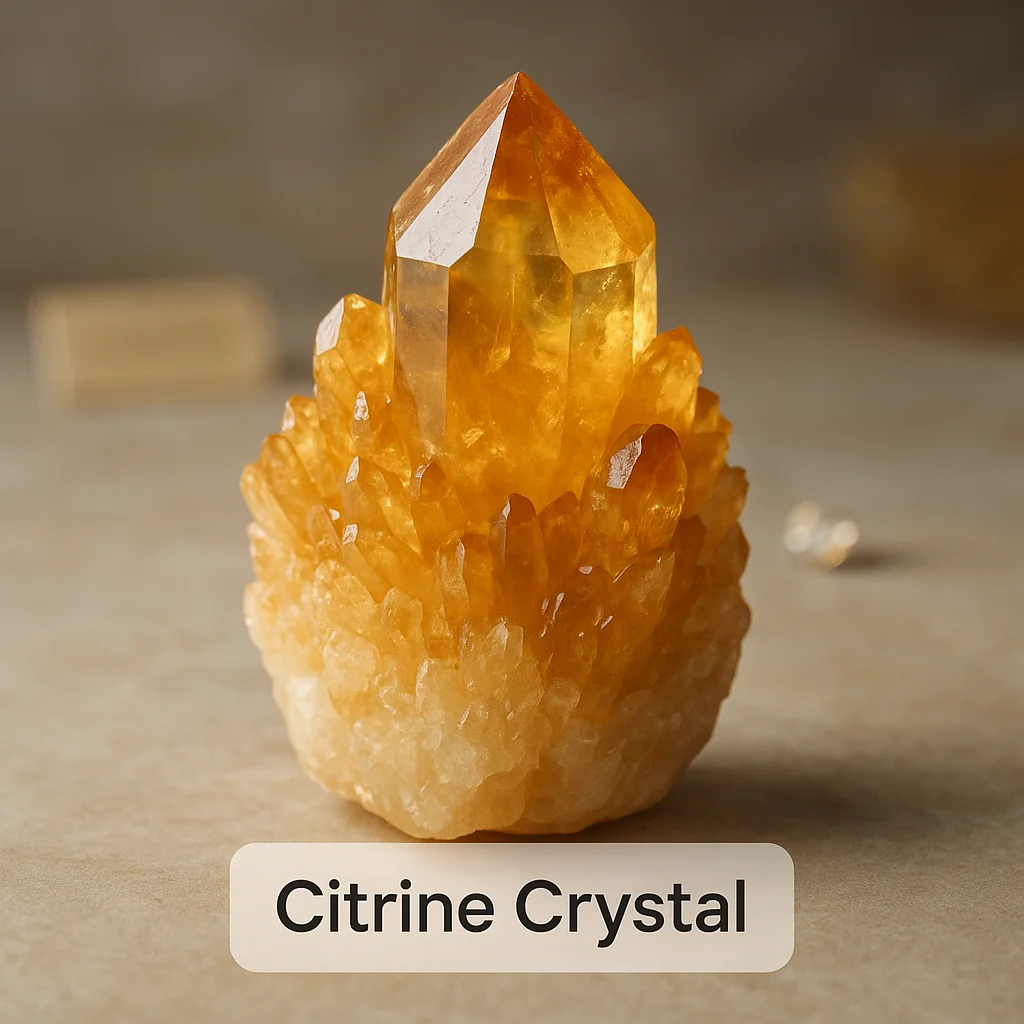
This gemstone is recognized as a birthstone for November, making it a sought-after option for personalized jewelry gifts such as rings, necklaces, and bracelets. Its cheerful color and association with positivity make it a favored choice for many wearers.
In this article, you will learn about citrine's appearance, properties, origins, and care tips. We will explore its geological formation, cultural significance, and practical advice for selecting and maintaining your citrine pieces.
🌍 Where It Comes From
Citrine forms in the Earth's crust through geological processes involving heat and pressure. It most commonly occurs in igneous and metamorphic rock formations, gradually crystallizing over time. Geologists often find natural citrine deposits in hydrothermal veins, where hot, mineral-rich fluids from deep underground solidify as they cool.
This vibrant gemstone is primarily sourced from regions known for their rich mineral deposits. Notable locations include Brazil, a leading producer of citrine, as well as parts of Africa and Asia where the right geological conditions exist. The quality and hue of citrine can vary depending on its place of origin, which sometimes affects its market value.
Origin matters not only in terms of color and clarity but also because certain regions have reputations for producing superior stones. Brazilian citrine, for example, is often noted for its deep, saturated yellows and clear transparency, making it particularly desirable for jewelry enthusiasts.
🔬 How It Forms
Citrine forms when quartz crystals undergo natural heating processes. This can occur either due to geological heat from nearby magma or other thermal influences in the Earth's crust. The presence of trace elements, especially iron impurities, contributes to the warm yellow to orange hues characteristic of citrine.
Heat treatment is a common practice to enhance or change the color of quartz to resemble citrine. This process involves carefully controlled heating of amethyst (purple quartz), turning its color to the yellow spectrum typical of citrine. This practice does not diminish the stone's value and is widely accepted in the gemstone market.
The crystal habit of citrine is typically hexagonal, forming prismatic crystals. These crystals can appear in massive forms when cut and polished for jewelry. Its crystalline structure imparts the luster and sparkle that makes citrine an attractive choice for various ornaments.
🎨 Color and Look
Citrine's color spectrum ranges from pale lemon to a deep, reddish-brown amber. The most desired stones often display rich, golden-yellow hues, offering an eye-catching glow. Sometimes, citrine can display subtle pleochroism, showing slightly different color shades when viewed from different angles.
The appearance of citrine largely depends on how it is cut and polished. Skilled faceting enhances its natural luster, allowing light to reflect and refract within the stone, resulting in a vivid and lively visual effect. Clarity is also key; eye-clean stones without visible inclusions are more valued.
Common treatments that affect citrine include heat treatment to deepen its colors. Careful heating is a permanent change, but it is essential for buyers to inquire about treatments when purchasing high-value citrine to ensure transparency and make informed decisions.
🧪 Properties That Matter
Citrine ranks 7 on the Mohs hardness scale, meaning it is resistant to scratching and is suitable for everyday wear in jewelry like rings and bracelets. However, it is important to avoid exposure to extreme forces that could cause chipping, as the stone lacks perfect cleavage.
In terms of toughness, citrine is considered adequately robust but not indestructible. It must be protected from hard impacts to maintain its integrity. The gem fractures conchoidally, with a smooth curved break, typical of quartz.
The luster of citrine is vitreous, giving it a glassy appearance that enhances its brilliance when polished. Additionally, citrine is transparent, allowing light to pass through it effectively, emphasizing its fiery color when cut into facets.
✨ Meanings, Birthstones, and Culture
Traditionally, citrine is associated with warmth, joy, and positivity. Throughout history, it has been regarded as a symbol of prosperity and success, often called the "Merchant's Stone" for its supposed ability to attract wealth.
Citrine is officially recognized as the birthstone for November, embraced by those born in this month as a personal talisman. Its bright and sunny disposition symbolically aligns with themes of hope and energy, making it a favored gemstone for personalized jewelry.
In modern settings, citrine is frequently found in all jewelry types, including rings, pendants, and earrings. Its vibrant hue complements various metals and works well in both casual and formal designs.
🧼 Care and Cleaning
To maintain the beauty of citrine, it is advised to clean it gently using mild soap and lukewarm water. A soft cloth or brush can be used to remove any dirt or oils, taking care to rinse thoroughly and avoid leaving soapy residue.
Avoid harsh chemicals, sudden temperature changes, and prolonged exposure to high heat. Although stable under normal conditions, these factors can adversely affect treated stones, as well as natural ones.
For storage, wrap citrine in a soft cloth to prevent contact with harder gemstones, reducing the risk of scratches. Keeping separations between different gemstones will help in preserving their polish and attractive appearance.
🛒 Buying Tips and What to Check
When purchasing citrine, key quality indicators to consider are color, clarity, cut, and carat weight. Deep, saturated colors with uniform hues are highly sought after. Look for stones with good clarity and minimal inclusions.
It is prudent to ask about any treatments and request a lab report for high-value citrine to ensure authenticity and get a detailed description of the stone's characteristics. Lab reports enhance the buying experience by providing verification of the stone's properties.
For online purchases, check the seller's reputation and ensure clear product descriptions. A good return policy allows for checking the stone in person, ensuring it meets expectations before making a final decision.
⚠️ Real vs Fake and Common Look-Alikes
Natural citrine can be confused with synthetic citrine, lab-grown versions made with the same chemical composition and properties. These synthetics are not fake but are lab-created replicas of natural stones.
Imitations, such as glass or plastic, differ drastically in appearance and are far less valuable. Understanding this distinction is essential for untrained buyers.
Doublets or triplets, assembled stones, should also be distinguished. These optical illusions can mimic citrine but usually consist of layered materials, lowering their market value. Professional testing is recommended for definitive identification.
❓ Common Questions and Misconceptions
Is it a mineral or a rock? Citrine is a mineral, specifically a variety of quartz.
Is it a birthstone? Yes, citrine is the birthstone for November.
Will it scratch easily? No, it has a Mohs hardness of 7, making it durable against scratching.
Can it go in water? Citrine can be briefly immersed in water but avoid long soaking.
Does color fade in sunlight? Extended exposure to intense sunlight may cause fading.
What treatments are common? Heat treatment to enhance color is common.
Is lab-grown 'fake'? Lab-grown citrine is chemically and physically identical but made artificially.
How do I store it safely? Wrap in a soft cloth and store separately from harder stones.
Do inclusions always lower value? Not always, but eye-clean stones are generally more valued.
How do I pick a good one for jewelry? Prioritize color, cut, and clarity for eye-catching pieces.
📌 Summary
- Citrine is a mineral, a quartz variety.
- Common colors range from pale yellow to deep orange.
- Forms naturally through quartz crystalogenesis, colored by iron impurities.
- Durable with a Mohs hardness of 7, suited for various jewelry.
- Heat treatments enhance or alter color.
- Gentle cleaning with mild soap recommended; avoid extreme conditions.
- Ideal for rings, pendants, and earrings.
- Look-alikes include synthetic citrine and various imitations.
- Confirm authenticity through lab reports and professional tests.
- Buying tips: Check color, clarity, cut, carat, and origin.
- Birthstone of November, culturally linked to prosperity and success.
- Remember: Distinguish between natural, synthetic, and imitation.