💎 Corundum Crystal
🪨 What It Is
Corundum is a mineral known for its remarkable hardness and durability. It belongs to the family of gemstone varieties that include the highly prized sapphires and rubies. Corundum is known for its distinct crystalline structure and is widely appreciated in both gemology and mineralogy.
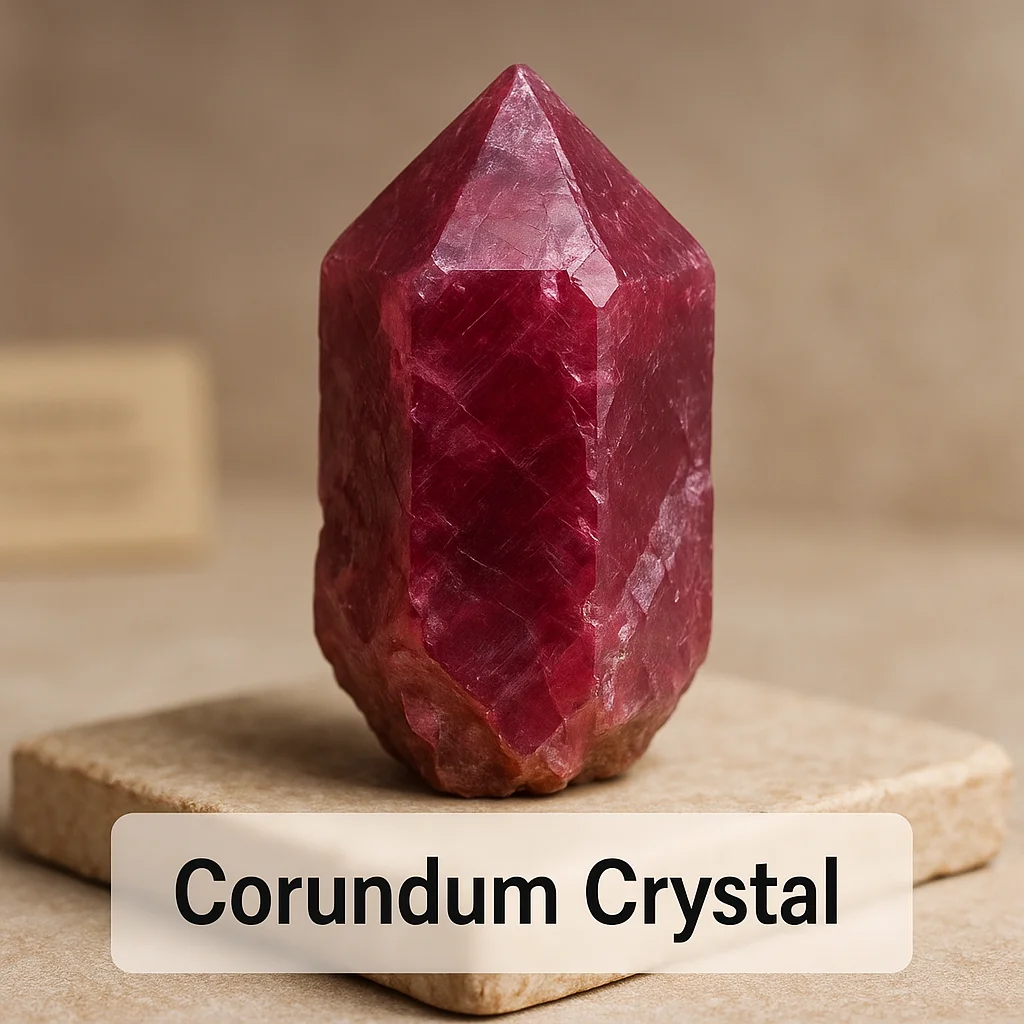
Corundum serves as a cornerstone in jewelry design, offering a spectrum of colors that can complement any style or preference. Sapphires and rubies, two of the most revered gemstones, are varieties of corundum. Their striking colors have captivated gem enthusiasts and designers for centuries.
This article will introduce you to the world of corundum crystals, exploring their features, origins, and significance in gemstone culture. You will learn about their formation, appearance, properties, cultural meanings, care, and how to distinguish them from imitations.
🌍 Where It Comes From
Corundum naturally forms in a variety of geological settings, primarily in igneous and metamorphic environments. It can also be found in sedimentary deposits, largely due to erosion and weathering processes that transport and deposit the mineral in secondary locations over time.
The presence of aluminum and oxygen under suitable conditions of heat and pressure leads to the formation of corundum. The unique geological conditions of regions like Myanmar, Sri Lanka, and parts of Africa have made them renowned sources of fine sapphires and rubies.
The origin of corundum can significantly influence its color and clarity. For example, rubies from Myanmar often display a deep red hue known as "pigeon blood," which is highly valued in the gemstone market. Similarly, sapphires from Sri Lanka are renowned for their vivid hues.
🔬 How It Forms
Corundum forms under high-temperature and high-pressure conditions typically found deep within the Earth's crust. This environment facilitates the combination of aluminum and oxygen, the key components of corundum crystals. These conditions typically arise in metamorphic rocks, where heat and pressure alter pre-existing rocks.
The color variations in corundum, such as the blue of sapphires or the red of rubies, are primarily due to trace elements. Chromium imparts the red color in rubies, while iron and titanium are responsible for the blue shades in sapphires. The presence and concentration of these trace elements determine the specific color of the corundum.
Corundum crystals often exhibit a hexagonal structure and can be found as hexagonal bipyramids or prisms in nature. The mineral's resistance to chemical and physical weathering allows it to persist in alluvial deposits, where it is mined alongside other gem-quality minerals.
🎨 Color and Look
Corundum crystals are admired for their vibrant colors and remarkable clarity. The primary colors seen in sapphires are blue, yellow, green, and pink, while rubies are best known for their luscious red tones. Corundum's luster can range from vitreous to subadamantine, adding to its appeal as a gemstone.
The cut and polish of a corundum gemstone significantly influence its final appearance. Expertly cut sapphires and rubies will display a brilliance that enhances their inherent color and optical properties. The clarity, or absence of inclusions, also plays a crucial role in determining the stone's value and visual appeal.
Common treatments used to enhance the color and clarity of corundum gemstones include heat treatment, which is widely accepted in the gemstone industry. It's crucial for buyers to inquire about such treatments to ensure transparency when purchasing corundum jewelry.
🧪 Properties That Matter
Corundum ranks at a remarkable 9 on the Mohs hardness scale, making it one of the hardest minerals, second only to diamond. This means corundum is highly scratch-resistant and well-suited for everyday wear in jewelry. Its toughness, or resistance to chipping and breaking, further enhances its durability.
While corundum lacks cleavage, it has a conchoidal fracture, which determines how it breaks. This property means it can withstand various forms of wear and remain relatively intact. The luster and transparency of corundum give it a captivating sparkle, whether set in a ring or featured in a pendant.
These qualities make corundum an excellent choice for jewelry pieces that endure frequent use, including engagement rings and bracelets. Beginners can confidently enjoy corundum gemstones in their daily lives, knowing they possess exceptional durability.
✨ Meanings, Birthstones, and Culture
In cultural traditions, corundum carries rich symbolism and significance. Sapphires, in particular, are associated with wisdom and royalty. They are traditionally seen as a talisman for protection and integrity. Rubies, however, are often linked to passion, vitality, and love.
Corundum gemstones are also recognized as birthstones in modern culture. Sapphire is the birthstone for September, symbolizing purity and nobility. Ruby serves as the birthstone for July, representing vitality and creativity. These associations add a layer of meaning for those who wear these stones.
It's important to view these cultural associations as traditional beliefs rather than scientific facts. They reflect societal values and have evolved over time, contributing to the allure of corundum as a cherished gemstone.
🧼 Care and Cleaning
Proper care and cleaning can preserve the beauty of corundum gemstones. Gentle soap and water are recommended for routine cleaning, using a soft cloth to dry and polish the stones. It's advisable to avoid harsh chemicals or abrasive cleaners that can damage any treatments applied to the stones.
Corundum should be stored away from other jewelry to prevent scratches, ideally in a soft pouch or jewelry box with separate compartments. While corundum is durable, it's wise to avoid exposing it to extreme heat or sudden temperature changes, which could potentially impact its structural integrity.
Regular maintenance will ensure that your corundum jewelry remains radiant and continues to delight for many years.
🛒 Buying Tips and What to Check
When buying corundum gemstones, several factors can influence their price and quality. These include the stone's color, clarity, cut, carat size, and the reputation of its origin. For instance, sapphires and rubies from certain regions may command higher prices due to their historical desirability.
Potential buyers should inquire about treatments, as most sapphires and many rubies undergo enhancements to improve their appearance. Requesting a lab report for high-value stones is a wise move, as it provides trustworthy information about the gemstone's attributes.
When shopping online, ensure you review clear, detailed photos, verify return policies, and assess the seller's reputation. Transparency regarding the stone's characteristics can lead to a more satisfying purchase experience.
⚠️ Real vs Fake and Common Look-Alikes
The market features corundum gemstones in various forms, including natural, synthetic (lab-grown), and imitation versions. Lab-grown corundum is not "fake" but shares the same chemical and physical properties as natural corundum, only differing in origin.
Imitation stones, often made of glass or composites, aim to mimic corundum's appearance but differ fundamentally in composition. Assembled stones, like doublets or triplets, combine layers to enhance appearance, potentially leading to confusion among buyers.
To accurately identify a gemstone's authenticity, professional testing conducted by certified gemologists is essential, as visual inspection alone is insufficient for reliable identification.
❓ Common Questions and Misconceptions
Is it a mineral or a rock? Corundum is a mineral.
Is it a birthstone? Yes, sapphire for September and ruby for July.
Will it scratch easily? No, it's very hard and scratch-resistant.
Can it go in water? Yes, but avoid chlorinated or heavily mineralized water.
Does color fade in sunlight? Corundum generally maintains color but handle with care.
What treatments are common? Most corundum is heat-treated to enhance color.
Is lab-grown "fake"? No, it's identical in properties, just not mined.
How do I store it safely? Use a soft pouch, separate from other jewelry.
Do inclusions always lower value? Not always; some inclusions are tolerated, especially in rubies.
How do I pick a good one for jewelry? Look for excellent color, moderate clarity, and quality cut.
📌 Summary
- Corundum is a durable mineral known for sapphires and rubies.
- It exhibits a range of colors, including blue, red, pink, yellow, and green.
- Formed under high heat and pressure in the Earth's crust.
- Highly scratch-resistant and durable, ideal for all jewelry types.
- Commonly treated to enhance colors; inquire about treatments.
- Clean with gentle soap and store separately to avoid scratches.
- Perfect for daily-wear rings, pendants, and bracelets.
- Lab-grown stones share the same properties but differ in origin.
- Authenticity confirmed through professional gemstone testing.
- Buying tips: check color, clarity, disclosed treatments, and origin.
- Birthstone for September (sapphire) and July (ruby) by tradition.
- A valuable gem known for its beauty and strength.