💎 Pyrite
🪨 What It Is
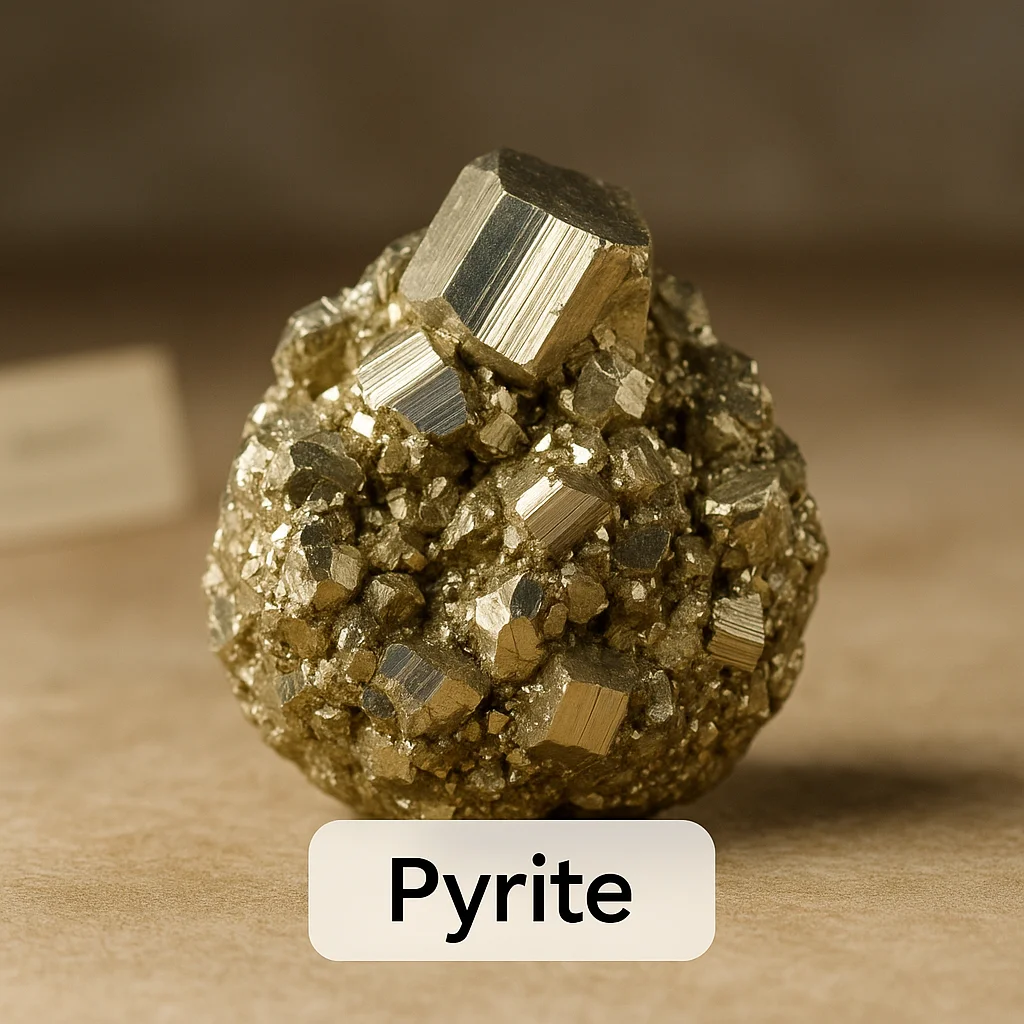
Pyrite, often referred to as "Fool's Gold," is a mineral known for its metallic luster and pale brass-yellow hue that gives it a distinctive resemblance to gold. Scientifically, pyrite belongs to the sulfide mineral group and is composed of iron sulfide (FeS2). While it is not a gemstone and lacks the properties making it suitable for jewelry, its intriguing appearance makes it a popular subject in mineral collections and educational displays.
In this article, we will explore the appearance, properties, origin, and care of pyrite, along with tips for buying and understanding its value. Readers will also learn about its formation and how it is distinguished from its golden look-alikes
Though not associated with any birthstone tradition, pyrite's shiny appearance makes it a point of fascination for both novices and experienced collectors within the gemstone and mineral communities.
🌍 Where It Comes From
Pyrite is commonly found in multiple geologic settings. It can appear within igneous, metamorphic, and sedimentary rocks. The mineral often forms in hydrothermal veins, where hot, mineral-rich water flows through fractures and pores in the rocks, depositing minerals as it cools.
This mineral can be located across the globe, with notable occurrences in parts of North and South America, Europe, and Asia. In some regions, pyrite is mined alongside more precious metals like gold and copper. Its widespread availability means that origin does not drastically affect market value but can influence its aesthetic variations, as specimens from different regions may present minor differences in crystal habit and form.
Origin can also matter for the collector due to specific mineralogical associations that can point to a specific locality, valuable to those interested in the particular geography and geologic history of their specimens.
🔬 How It Forms
Pyrite forms through various geologic processes that typically involve heat, pressure, and the presence of iron and sulfur-rich fluids. In igneous and metamorphic environments, pyrite crystallizes at high temperatures, often occurring alongside other sulfide minerals.
The mineral can also form in sedimentary environments when iron and sulfur combine in the absence of oxygen, common in deep marine settings or swamps. Over time, these environments lead to pyrite formation within layers of sediment that gradually transform into sedimentary rock.
Commonly found in cubic crystal form, pyrite may also occur in masses, nodules, or as a replacement mineral in fossils. Its crystalline structure contributes to its striking visual appeal.
🎨 Color and Look
Pyrite is recognized for its metallic luster and pale brass-yellow coloring, closely resembling gold. Its surface can range from shiny and reflective to more muted and tarnished, depending on environmental exposure and weathering effects.
The color of pyrite is naturally stable and does not typically change due to external treatments. However, its luster can be impacted by the mineral's state of preservation and the conditions where it's found. Handling and exposure to elements can dull its surface over time.
Polishing can enhance pyrite's appearance, but this is usually done for display pieces rather than in jewelry due to its lack of practical wearability.
🧪 Properties That Matter
With a Mohs hardness of around 6 to 6.5, pyrite is relatively hard but still prone to scratching and surface damage when compared to more durable gemstones. Notably, its toughness is low, meaning it can fracture easily due to its brittle nature.
Pyrite has no true cleavage, but it can fracture into more irregular, uneven surfaces when struck. Its brilliant metallic luster is one of its most striking features, capturing the look of gold but not its market value.
Due to its properties, pyrite is seldom used in traditional jewelry settings like rings that face daily wear. Instead, it is more suitable for collection or as a specimen in educational displays.
✨ Meanings, Birthstones, and Culture
Throughout history, pyrite has been associated with various cultural and symbolic meanings. It has been traditionally linked to prosperity and good luck due to its golden appearance, though this is based on folklore rather than scientific evidence.
Pyrite is not a traditional birthstone and doesn't feature prominently in modern jewelry traditions. However, its unique metallic sheen has made it a popular mineral for collectors seeking something visually striking.
Symbolically, pyrite is often considered to embody energy and vitality, but again, these associations belong to the realm of cultural symbolism rather than proven scientific effects.
🧼 Care and Cleaning
Proper care and cleaning of pyrite are essential to maintain its natural luster and appearance. It is recommended to use gentle soap and water, followed by drying with a soft cloth, to clean pyrite specimens. Harsh chemicals and abrasive cleaning methods should be avoided as they can damage the mineral's surface.
Pyrite should be kept away from excessively humid environments as moisture can lead to oxidation, causing tarnishing similar to rust. It's advised to store pyrite in a dry place, ideally within a protective casing or a separate compartment to avoid scratches from other harder minerals.
Never subject pyrite to extreme temperature changes or long soaking periods, as these factors can cause the mineral to fracture or dull.
🛒 Buying Tips and What to Check
When purchasing pyrite, factors affecting its price include crystal size, clarity, and overall aesthetic appeal. As coloration is consistent, the focus typically shifts to the shape and rarity of the specimen's crystal formations.
For those buying high-value specimens, asking for a mineral report or documentation of origin can be beneficial, as these can provide additional context and authenticity to the purchase.
When buying online, always examine photos, seek out a reputable seller with a good return policy, and ensure full transparency in the description of the specimen, especially regarding any treatments or enhancements that have been applied.
⚠️ Real vs Fake and Common Look-Alikes
Pyrite is natural and not synthetically produced for commercial purposes, so distinguishing between real and lab-grown versions is not a common concern. However, it is often confused with gold due to their similar appearance.
Common imitations of pyrite may include brass or other metallic composites. Reliable identification can only be confirmed through professional testing rather than risky home experiments.
Pyrite's resemblance to gold often leads to confusion, but it is much lighter and has a different texture. Knowing these key differences helps both novices and enthusiasts accurately identify the mineral.
❓ Common Questions and Misconceptions
- Is it a mineral or a rock? Pyrite is a mineral.
- Is it a birthstone? No, pyrite is not a traditional birthstone.
- Will it scratch easily? It can scratch, but with a Mohs hardness of 6–6.5, it offers moderate scratch resistance.
- Can it go in water? Brief exposure is fine, but long soaking might lead to surface tarnishing.
- Does color fade in sunlight? The color remains stable under sunlight.
- What treatments are common? Generally, pyrite undergoes no treatments beyond basic cleaning.
- Is lab-grown 'fake'? Interestingly, there are no commercially viable lab-grown versions of pyrite.
- How do I store it safely? Store in a dry, temperature-controlled environment away from more abrasive materials.
- Do inclusions always lower value? Inclusions are typical in natural pyrite; their impact on value varies.
- How do I pick a good one for jewelry? Consider size, crystal structure, and luster for the best visual appeal.
📌 Summary
- Pyrite is a metallic mineral known as Fool's Gold for its resemblance to gold.
- Typically displays a brass-yellow color with a metallic luster.
- Forms through various geological processes involving heat and sulfur-rich environments.
- Mohs hardness of 6–6.5; moderate scratch resistance with low toughness.
- No common treatments, with color naturally stable.
- Gently clean with soap and water; avoid long soaking or harsh chemicals.
- Best suited for display pieces rather than daily-wear jewelry.
- Commonly mistaken for gold due to similar color and luster.
- Authentication requires professional appraisal and testing.
- Checklist for buying includes size, crystal structure, and reputable seller policies.
- Not a birthstone, but traditionally seen as a symbol of prosperity.
- Memorable aspect: Pyrite's golden shine makes it striking, despite its modest material value.