💎 Rose Quartz
🪨 What It Is
Rose quartz is a variety of quartz distinguished by its delicate pink hue. Quartz itself is a common mineral formed from silicon dioxide. Rose quartz is often used in jewelry and decorative pieces due to its attractive color and relative affordability.
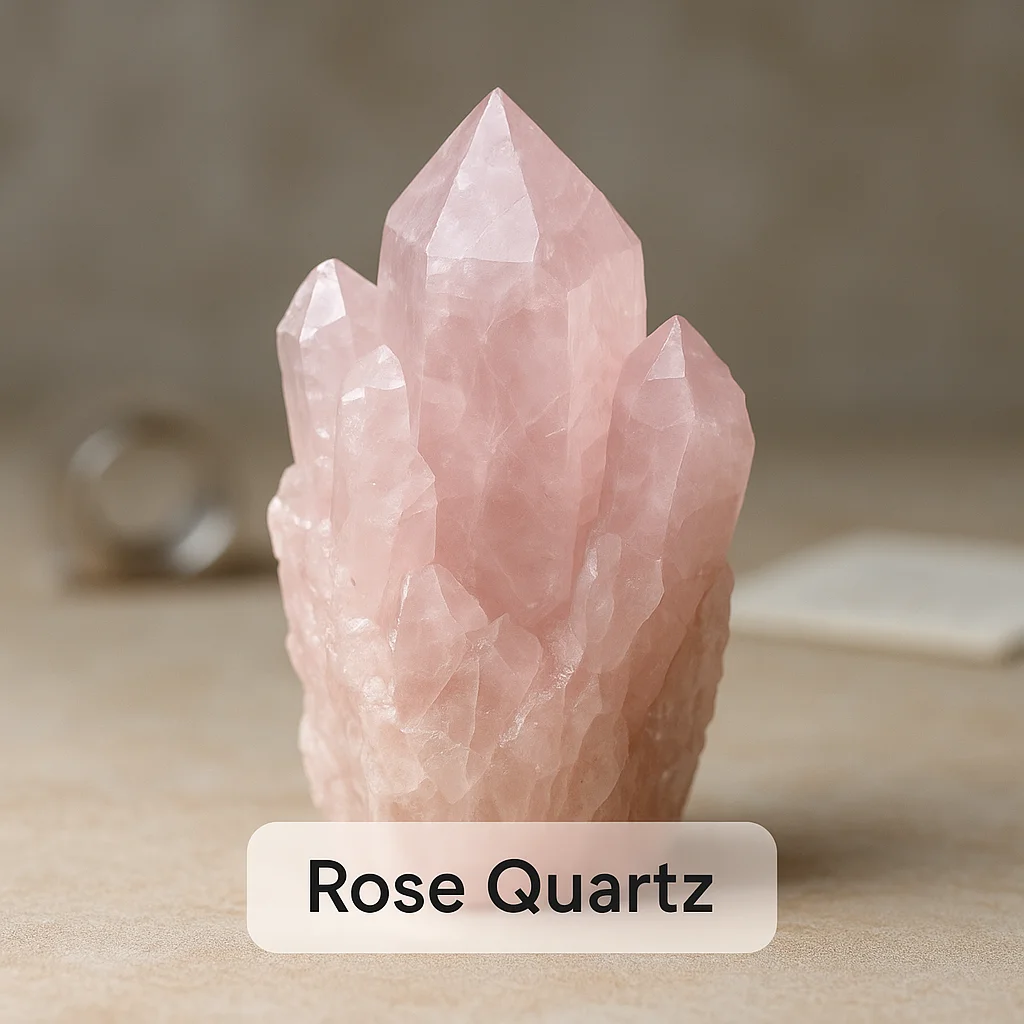
This gemstone is especially popular for its aesthetic appeal and is widely utilized in necklaces, bracelets, and other forms of personal adornments. It is cherished for its soft, pink tone which can range from pale to deep pink.
In this article, you will learn about the different aspects of rose quartz, including its geological origins, how it forms, its optical and physical properties, cultural significance, and guidelines for purchasing and caring for rose quartz.
🌍 Where It Comes From
Rose quartz is found in several geological settings, most commonly in pegmatites, which are igneous rocks formed from solidified magma. These large crystal structures provide an ideal environment for forming sizable rose quartz crystals.
The regions known for producing rose quartz include parts of Brazil, Madagascar, and South Dakota in the United States. Each source can impart slightly different characteristics to the stone, such as variations in color intensity and clarity.
The origin of rose quartz can influence its market reputation. For example, some regions are identified with higher quality or more intensely colored specimens, which can affect their desirability and value. However, the color and quality of individual rose quartz stones can vary widely even within a single source.
🔬 How It Forms
Rose quartz forms under specific geological conditions where silica-rich fluids are present. The pink color is primarily due to trace amounts of titanium, iron, or manganese, with recent studies suggesting that the color is due to thin microscopic fibers within the quartz.
The formation of rose quartz involves high temperatures and pressures, typically deep within the Earth's crust. Over time, these conditions allow the slow cooling and solidification of mineral-rich fluids, resulting in the crystalline structure of quartz.
Commonly, rose quartz appears in massive, anhedral formations rather than distinct crystals, meaning the boundaries of the stone's crystalline structure are typically rounded rather than sharply defined.
🎨 Color and Look
Rose quartz is known for its soft pink color that ranges from pale blush to a richer pink hue. The gemstone usually exhibits a milky and translucent appearance, often with zones of cloudiness caused by inclusions.
The appearance of rose quartz can be enhanced by cutting and polishing, bringing out its delicate luminosity. Its color can be more pronounced under certain lighting conditions, such as natural sunlight.
Treatments like irradiation have been used to enhance the color of quartz stones in general, although such interventions are not commonly reported in rose quartz due to its naturally appealing color.
🧪 Properties That Matter
Rose quartz has a Mohs hardness of 7, making it relatively resistant to scratches and suitable for use in various types of jewelry. Its toughness, however, is considered fair because it can still chip if subjected to a significant impact.
This gemstone lacks cleavage, which means it does not split along a plane of weakness. Instead, it has a conchoidal fracture, typical of quartz, resulting in smooth, shell-like breakage patterns.
Rose quartz's luster is described as vitreous, meaning it has a glass-like shine when polished. Most rose quartz is readily available and not typically associated with expensive fine jewelry, though its beauty makes it a desirable part of casual jewelry collections.
✨ Meanings, Birthstones, and Culture
Traditionally, rose quartz is associated with themes of love and compassion. It is often seen as a symbol of romance and emotional healing, though these associations belong more to folklore and cultural stories than to verified scientific phenomena.
Rose quartz is not a modern birthstone, but it is commonly celebrated in jewelry as a token of affection. Due to its gentle color, it is frequently incorporated into Valentine's Day gifts and other romantic gestures.
The gentle pink hue of rose quartz has also led to its use in decorative carvings and ornaments, where the cultural emphasis is placed on its calming and soothing appearance.
🧼 Care and Cleaning
To maintain its beauty, rose quartz should be cleaned with warm, soapy water using a soft cloth. It is important to rinse the stone thoroughly and dry it well to retain its luster.
Avoid using harsh cleaning agents or ultrasonic cleaners on rose quartz, as these can damage the stone. Similarly, exposing rose quartz to prolonged heat or extreme temperature changes can negatively affect its structural integrity.
Storing rose quartz separately from harder gemstones can minimize scratches. A soft pouch or a designated compartment in a jewelry box is ideal for this purpose.
🛒 Buying Tips and What to Check
When purchasing rose quartz, consider factors such as color consistency, clarity, cut, and overall size. A rich, uniform pink is usually preferred, though lighter shades can also be beautiful.
Inquire about any treatments the stone might have undergone. While rose quartz is not commonly enhanced, an honest seller should provide this information readily.
For higher value pieces, it is advisable to request a laboratory report to confirm the authenticity of the gemstone. Such reports typically include details about the stone's identity, natural origin, and any treatments detected.
⚠️ Real vs Fake and Common Look-Alikes
Natural rose quartz can sometimes be confused with pink glass or plastic imitations, which are less valuable. Laboratory-grown quartz, while chemically identical, is considered synthetic.
There are no known doublets or triplets for rose quartz, but careful examination is required to differentiate natural from synthetic stones. Only professional testing can reliably distinguish between them.
For those new to gemstones, consulting with a certified gemologist can be an excellent way to gain confidence in identifying genuine rose quartz.
❓ Common Questions and Misconceptions
Is it a mineral or a rock? Rose quartz is a mineral, a variety of quartz.
Is it a birthstone? Rose quartz is not a traditional birthstone.
Will it scratch easily? With a Mohs hardness of 7, it does not scratch easily.
Can it go in water? Rose quartz can be cleaned with water but avoid prolonged soaking.
Does color fade in sunlight? Prolonged exposure to sunlight may cause some fading in color over time.
What treatments are common? Irradiation for color enhancement is uncommon but possible.
Is lab-grown "fake"? Lab-grown quartz is synthetic but not fake; it shares the same composition as natural quartz.
How do I store it safely? Store separately to avoid scratches, ideally in a soft pouch.
Do inclusions always lower value? Inclusions may lower transparency but can sometimes add character.
How do I pick a good one for jewelry? Look for consistent color, good clarity, and an appealing cut.
📌 Summary
- Rose quartz is a pink variety of quartz favored for its beauty.
- Typical colors range from pale pink to deep rose.
- It forms in pegmatites with trace element coloring.
- Hardness is 7 on the Mohs scale; it is durable for jewelry.
- Few treatments are common; natural beauty is typical.
- Clean with gentle soap and water; avoid harsh conditions.
- Suitable for earrings, pendants, and less exposed rings.
- Look-alikes include pink glass and synthetic quartz.
- Authenticity requires professional evaluation for accuracy.
- Avoid impulsive buys; consider color and clarity first.
- Birthstone alternatives focus on emotional symbolism.
- Remember: Rose quartz combines beauty with affordability.