💎 Selenite
🪨 What It Is
Selenite is a variety of the mineral gypsum, known for its soft and delicate appearance. Unlike hard gemstones used frequently in jewelry, selenite is primarily appreciated for its ethereal, translucent beauty rather than durability. It falls under the category of minerals rather than being classified strictly as a gemstone due to its structure and composition.
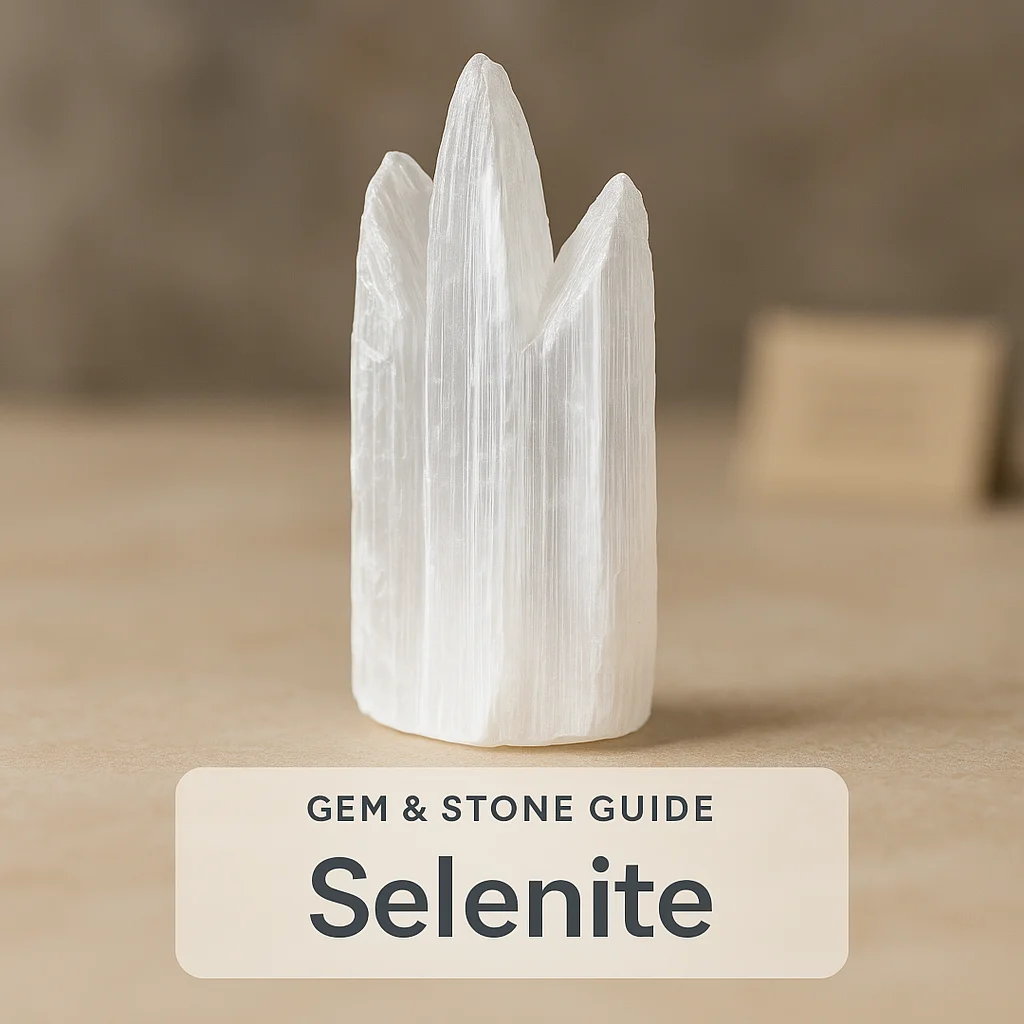
This mineral is recognized by its pearly luster and often appears in a milky-white color. Its name derives from the Greek word "selene," meaning moon, which reflects the stone’s moon-like glow. This provides a gentle, calming look that many people find attractive.
In this article, you will learn about selenite's appearance, geologic formation, properties, and cultural significance. Additionally, we’ll cover practical topics like value, care guidelines, buying tips, and how to distinguish real selenite from synthetic look-alikes.
🌍 Where It Comes From
Selenite occurs naturally in sedimentary environments. It forms as an evaporite mineral, meaning it's created when bodies of water evaporate, leaving behind mineral deposits. This process often happens in areas where seawater or saline lake water can slowly dry up, depositing selenite in the form of crystals or masses.
Widely found across the globe, selenite deposits are particularly well-known in regions like Mexico, Morocco, and certain parts of the United States, including Utah and Oklahoma. These areas often have arid conditions conducive to the formation of mineral-rich deposits.
Location can play a role in the appearance and quality of selenite. For instance, some regions might produce clearer or more luminescent selenite, which can be more valued in the marketplace. Therefore, knowing the origin can sometimes give insight into the quality and type of selenite you might purchase.
🔬 How It Forms
The formation of selenite is a fascinating process that involves the evaporation of mineral-rich water. As saline water starts to evaporate, it leaves behind gypsum, which can then crystallize into selenite under the right conditions.
Typically, selenite has a monoclinic crystal system, often forming in elongated tubular crystals. These crystals can come in various forms, including large, clear crystals and sheet-like masses known as 'desert roses' when they form in certain arid areas.
While selenite is commonly clear or white, trace elements like sodium or manganese might occasionally cause slight variations in color. However, such variations are relatively uncommon, and the stone remains classically transparent or milky.
🎨 Color and Look
Selenite is best known for its milky-white or clear appearance. The crystalline structure can occasionally exhibit chatoyancy, where light produces a band of reflected light similar to that of a cat’s eye. This effect can enhance the stone's visual appeal, especially when polished.
The stone’s aesthetic quality is often enhanced through cutting and polishing, which can bring out a silky luster. Selenite is typically untreated, although any enhancements would usually focus on improving its natural clarity through polishing.
Because of its softness, certain cuts or wrongful handling could easily scratch selenite, affecting its transparency. Therefore, it is often carved and polished into forms like wands and lamps rather than faceted for traditional gemstone settings.
🧪 Properties That Matter
Selenite is a very soft mineral with a Mohs hardness of approximately 2. This low hardness implies that it can be scratched by fingernails, making it unsuitable for daily-wear jewelry like rings. However, it can still be used creatively in less exposed pieces, such as earrings or pendants.
It exhibits perfect cleavage, meaning it can easily split along certain planes parallel to its crystallographic direction. This property makes it more prone to breaking or chipping, so it should be handled with care in jewelry applications.
Selenite shows a silky luster and tends to fracture in a fibrous manner. Being highly transparent to translucent, its appearance might change based on lighting, enhancing its soft glow. This property highlights its appeal as a decorative piece rather than a traditional gemstone.
✨ Meanings, Birthstones, and Culture
Traditionally, selenite is not associated with any specific month as a birthstone. However, it is often admired for its tranquil, calming appearance, leading various cultures to associate it with peace and serenity. It is frequently used in decorative items believed by some cultures to enhance the ambiance of a space.
In modern jewelry and decorative arts, selenite is prized for its gentle yet striking look. While not worn as a standard piece of jewelry due to its softness, it nevertheless enjoys popularity in crystal collections and interior décor.
It's important to note that while many cultures and traditions might imbue selenite with symbolic meanings, these associations are not scientifically validated but rather stem from historical and cultural contexts.
🧼 Care and Cleaning
Caring for selenite involves a very gentle approach. Use just a soft cloth and mild, soapy water to clean the mineral—never submerge it as prolonged water exposure can lead to degradation. Avoid household cleaners, as the chemicals they contain can damage selenite’s surface.
Selenite should be shielded from long exposure to heat or rapid temperature variations. These conditions can cause structural stress that leads to fracturing. It’s best kept away from humidity to prevent water damage and stored in a dry environment.
Store selenite in a padded box or wrap it in a soft fabric to protect it from nicks and scratches from harder minerals or metal objects. The stone’s softness means it should be at the top of any stacking arrangement to keep it safe from additional weight.
🛒 Buying Tips and What to Check
When buying selenite, inspect clarity and luster, as these factors greatly affect its attractiveness. Higher clarity with fewer inclusions or fractures generally signifies better quality. The reputation of the piece's origin can also further enhance its value.
Due to its softness, be sure to ask if the selenite has undergone any form of stabilization or enhancement. Although selenite is usually untreated, knowing this ensures transparency in your purchase.
When buying online, seek sellers with a good return policy and clear, high-quality photos. Check reviews and ratings to gauge seller reliability, and always ensure full disclosure regarding treatments or specific qualities.
⚠️ Real vs Fake and Common Look-Alikes
Selenite's natural form is not usually synthesized, but imitation materials like glass or plastic might replicate its look, though these lack the weight and luminescent glow of true selenite.
Distinguishing natural selenite from imitations or look-alikes typically requires professional testing, especially regarding mineral structure and clarity. Do not attempt to test hardness or fracture tendency at home, as this may damage the material.
Common stones that might be mistaken for selenite include alabaster or other forms of gypsum products, though these have subtle differences in luster and transparency.
❓ Common Questions and Misconceptions
"Is it a mineral or a rock?" Selenite is a mineral, specifically a variety of gypsum.
"Is it a birthstone?" No, selenite is not traditionally recognized as a birthstone.
"Will it scratch easily?" Yes, selenite scratches easily due to its low Mohs hardness of 2.
"Can it go in water?" No, it's advisable not to submerge selenite in water.
"Does color fade in sunlight?" Selenite typically maintains its color but can become brittle with extended exposure.
"What treatments are common?" Selenite is usually sold in its natural state, with minimal treatment.
"Is lab-grown 'fake'?" Lab-grown stones are not fake but can differ in some properties from natural selenite.
"How do I store it safely?" Store selenite in a soft cloth in a padded container to prevent scratching.
"Do inclusions always lower value?" Inclusions can affect clarity but often add to the unique character of the piece.
"How do I pick a good one for jewelry?" Look for high clarity, good luster, and minimal visible inclusions or fractures.
📌 Summary
- Selenite is a mineral variety of gypsum known for its soft, translucent appearance.
- Typically appears in milky white or clear colors, sometimes with chatoyancy.
- Forms in sedimentary environments with evaporating saline water.
- Softness means it's better suited for decorative pieces rather than wearables.
- Generally left untreated, but always verify with sellers regarding enhancements.
- Clean with mild soap and water; store carefully to prevent scratches.
- Best used in decorative applications, not ideal for rings due to softness.
- Can be mistaken for other gypsum forms or fiberglass imitations.
- Confirm authenticity through professional testing, not home experiments.
- Check clarity, luster, origin, and disclosures before purchasing.
- Not a birthstone but often associated with calmness and serenity in cultural contexts.
- Selenite offers a unique, gentle glow that works beautifully in interior design.