💎 Topaz Crystal
🪨 What It Is
Topaz is a popular gemstone that fascinates gem enthusiasts with its warm colors and intriguing versatility. It is a mineral that belongs to the silicate group, composed primarily of aluminum and fluorine. Known for its brilliant clarity and luster, topaz ranks among the favored stones in the jewelry world.
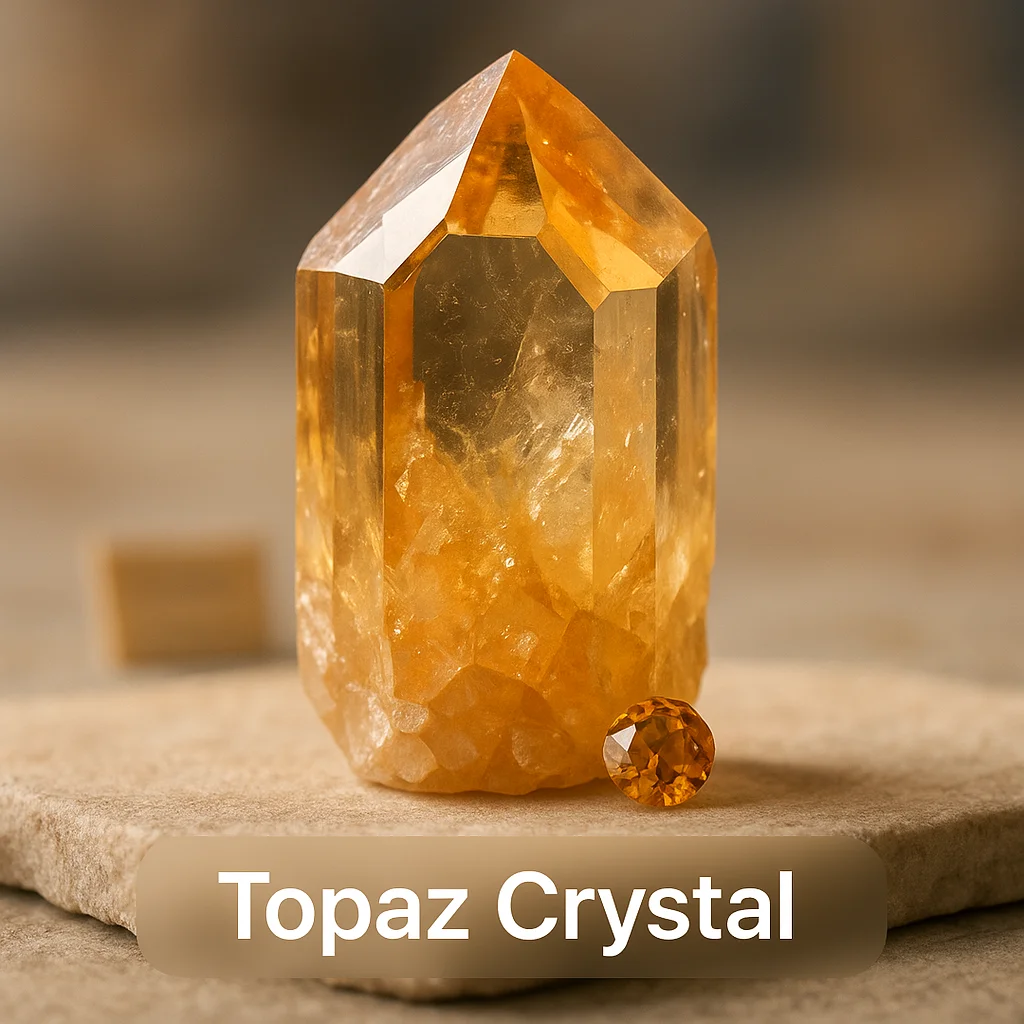
As November's birthstone, topaz makes a meaningful gift for those born in that month. It is also commonly used in various jewelry types, such as rings, necklaces, and earrings. This guide will provide insights into topaz's appearance, properties, origins, care instructions, and purchasing tips.
Topaz crystals are usually prismatic, and they can vary considerably in appearance based on their origin and treatment. Understanding these factors can help you make informed decisions when choosing this stunning gemstone for your collection or as a personal adornment.
🌍 Where It Comes From
Topaz is found worldwide but is especially prevalent in regions with volcanic and metamorphic rocks. These crystals often form in granitic igneous rocks and pegmatites. The presence of fluorine is essential for the crystal's formation, which is why certain geological conditions favor its growth.
Some famous topaz-producing areas include Brazil, which is known for its rich deposits of both colorless and colored varieties, Russia, where some of the finest examples have been mined, and parts of Africa and Asia. The geological setting and mineral composition of these regions significantly affect the quality and color of the topaz mined there.
Origin can matter not only because of distinct characteristics but also because of market reputation. For example, topaz from Ouro Preto, Brazil, is highly regarded for its natural golden to orange hues, often referred to as Imperial Topaz. This can influence both the gem's value and desirability in the market.
🔬 How It Forms
The formation of topaz takes place under specific geological conditions involving high temperatures, pressure, and the presence of fluorine-bearing vapors. Typically, it crystallizes from cooling igneous rocks, such as rhyolite or granite, in pegmatites or cavities.
What makes topaz unique among gemstones, especially in terms of its color variety, is the presence of trace elements. These elements, such as chromium and iron, can give topaz a range of colors from pale blue to deep orange. Heat treatment is often used to enhance or alter these colors where naturally occurring ideal colors are rare.
Topaz commonly forms as large, well-formed crystals that can be easily cut and polished for jewelry use. With its orthorhombic crystal system, topaz crystals tend to have elongated shapes with striated surfaces.
🎨 Color and Look
Topaz is renowned for its vast color spectrum. Naturally occurring topaz can be colorless, yellow, brown, pink, or blue. Irradiation and heat treatment commonly transform colorless topaz into the striking blue shades frequently found on the market.
The stone's luster is vitreous, meaning it has a glass-like shine that enhances its beauty when properly cut and polished. Clarity also plays a role in the stone's aesthetic appeal, with clearer stones usually valued higher.
Treatments like heat and irradiation are standard market practices to achieve popular colors. These treatments are considered stable but should be disclosed during the sale as they can impact value and care requirements.
🧪 Properties That Matter
Topaz scores an 8 on the Mohs hardness scale, making it a durable choice for jewelry and surviving everyday wear. However, its perfect cleavage in one direction means it can break under stress or impact, requiring careful handling.
The gemstone's toughness, or resistance to chipping, is generally good, but it can still be prone to damage if subjected to sharp blows. This makes protective settings advisable for pieces like rings.
The luster of topaz is quite appealing, and its transparency allows light to travel through the stone and reflect, generating a sparkling effect. These qualities make it suitable for use in various jewelry types, though care must be taken regarding potential cleavage.
✨ Meanings, Birthstones, and Culture
Culturally, topaz has been traditionally associated with warmth and strength. Its reputation for bringing joy and love in folklore is widespread but should be regarded as symbolic rather than factual.
As the birthstone for November, topaz symbolizes friendship and loyalty, making it a cherished gift for birthdays and anniversaries. Its rich cultural history adds depth to its appreciation as both a personal and decorative stone.
In modern jewelry traditions, it's often featured in engagement rings and pendants, valued not only for its radiant beauty but also its connection to special occasions such as birthdays and celebrations of milestones.
🧼 Care and Cleaning
Topaz should be cleaned with mild soap and lukewarm water, using a soft cloth to avoid scratching. It is advised to avoid ultrasonic cleaners, as the vibrations can exploit the stone's cleavage and cause damage.
Avoid harsh chemicals and sudden temperature changes, which could potentially lead to fracturing or discoloration. Topaz stones should be stored separately from other harder gemstones to prevent scratches.
Due to its susceptibility to damage through cleavage, topaz should also be protected from high-impact activities and stored in a cushioned jewelry box when not being worn.
🛒 Buying Tips and What to Check
When buying topaz, consider the Four Cs: color, clarity, cut, and carat weight. Vivid colors with rich saturation are more prized, and stones should be as free from inclusions as possible.
Inquire about any treatments the stone may have undergone and look for reputable reports from gemological institutes for high-value pieces. Such lab reports can verify treatments and provide assurance of authenticity, though they cannot determine the gem's market value.
For online purchases, focus on sellers with clear return policies, high-resolution photos, and thorough treatment disclosure. Reputation and customer reviews can also help assess the likelihood of a reliable transaction.
⚠️ Real vs Fake and Common Look-Alikes
Topaz may be confused with citrine or other quartz due to similar color ranges. Unlike topaz, citrine is a quartz variety and generally lacks the same level of luster or clarity.
Synthetic topaz is made in laboratories, identical in composition but without the natural origin. Imitations may include glass or plastic, which are noticeably softer and less brilliant.
Assembled stones, like doublets or triplets, can incorporate slices of topaz with other materials to enhance appearance or durability. Professional evaluation by gemologists can reliably distinguish these variations.
❓ Common Questions and Misconceptions
Is it a mineral or a rock? Topaz is a mineral.
Is it a birthstone? Yes, it is the birthstone for November.
Will it scratch easily? While durable, it can still scratch if contacted by harder substances.
Can it go in water? Yes, but avoid long soaking to prevent fading or damage.
Does color fade in sunlight? Prolonged exposure to sunlight may cause fading in some topaz colors.
What treatments are common? Heat and irradiation to enhance color.
Is lab-grown 'fake'? Lab-grown topaz is real topaz but not naturally formed.
How do I store it safely? Store separately to avoid scratches and protect from impacts.
Do inclusions always lower value? Generally, fewer inclusions are preferred for higher value.
How do I pick a good one for jewelry? Look for vivid color, clarity, and appropriate cut for maximizing sparkle.
📌 Summary
- Topaz is a silicate mineral often used in jewelry.
- Common colors include yellow, blue, and orange.
- Forms in igneous and metamorphic settings.
- Mohs hardness of 8; durable but with cleavage risk.
- Heat and irradiation often used to enhance color.
- Clean with soap and water, avoid sudden temperature changes.
- Ideal for rings, pendants, and earrings.
- Common look-alikes include citrine and synthetic stones.
- Professional testing confirms authenticity.
- Consider color, clarity, cut, and carat when buying.
- Birthstone for November; symbolic of strength and loyalty.
- Topaz's tailoring to many jewelry forms makes it versatile.